Lok Sabha begins debate on women’s reservation bills with political clashes over delimitation linkage. Key details, reactions, and implications explained.
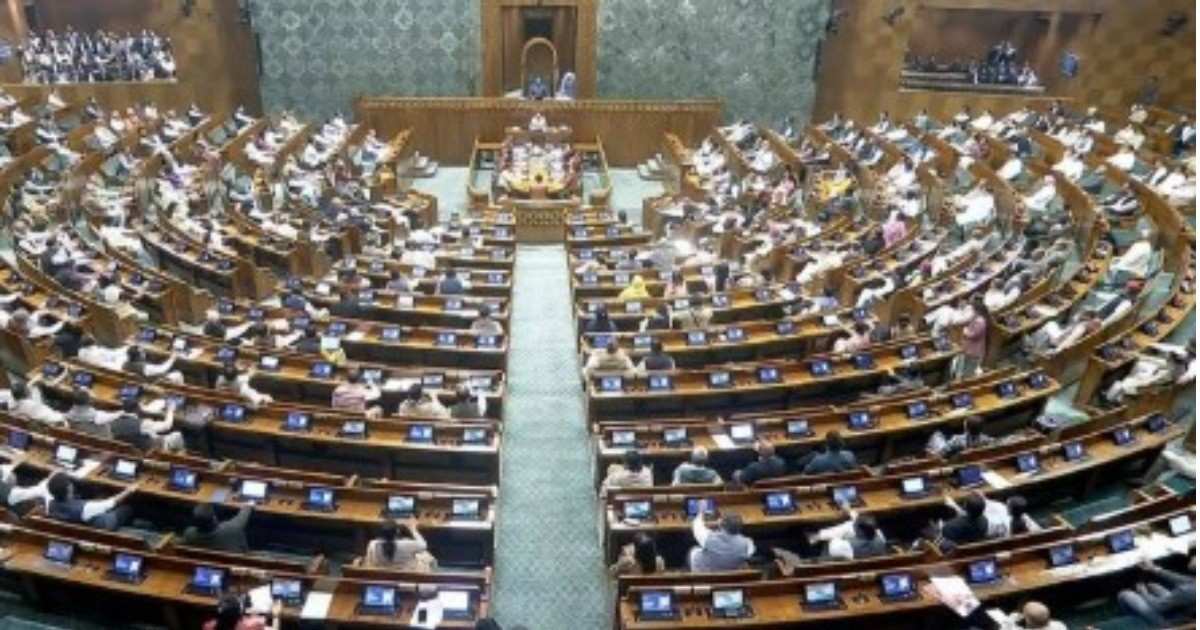
New Delhi, April 16: The Lok Sabha on Thursday initiated a crucial debate on a set of three legislations aimed at operationalising women’s reservation in legislative bodies, marking a significant moment in India’s ongoing political and constitutional discourse. The discussion began on the opening day of a special three-day sitting during the extended Budget Session, drawing sharp responses from both treasury and opposition benches.
The proposed laws, which include constitutional and administrative changes, are designed to implement 33 per cent reservation for women in the Lok Sabha and state legislative assemblies. However, the linkage of this implementation with the delimitation exercise has emerged as a central point of contention, triggering intense political debate.
Government Tables Three Key Bills
The legislative process commenced at 11 a.m., with Arjun Ram Meghwal, Minister of State for Law and Justice (Independent Charge), introducing the Constitution (131st Amendment) Bill, 2026, along with the Delimitation Bill, 2026. Subsequently, Union Home Minister Amit Shah tabled the Union Territories Laws (Amendment) Bill, 2026.
The introduction of these bills followed procedural voting in the House, where the motions were passed with 251 votes in favour and 185 against. The government maintained that the proposals meet the constitutional requirements for initiating amendments and reflect a long-standing commitment to enhancing women’s representation in governance.
The Speaker allotted 12 hours for the debate in the Lok Sabha, with provisions for extension based on demand. The Rajya Sabha is scheduled to take up the discussion on April 18, with 10 hours allocated for deliberation.
Core Objective: 33% Reservation for Women
At the heart of the legislative package lies the objective of reserving one-third of seats in Parliament and state assemblies for women. This aligns with the provisions envisioned under the broader framework of the women’s reservation policy, which has been debated for decades but has yet to be fully implemented.
The government has reiterated that the bills aim to institutionalise gender equity in political representation, ensuring that women have a stronger voice in legislative decision-making. However, the operationalisation of the quota is tied to the completion of the next census and a subsequent delimitation exercise, a condition that has drawn criticism from opposition parties.
Opposition Raises Concerns Over Delimitation Link
The debate witnessed immediate political friction, particularly over the linkage between women’s reservation and delimitation. Senior Congress leader K. C. Venugopal opposed the bills, arguing that the government is delaying the implementation of women’s reservation by tying it to processes that lack a clear timeline.
Venugopal contended that while the principle of women’s reservation is widely supported, the conditional framework could lead to indefinite postponement. He also questioned the absence of transparency regarding the delimitation exercise, including its criteria and methodology.
Responding to these objections, Amit Shah dismissed the criticism as largely technical, asserting that the government remains committed to defending the bills during the course of the debate. He indicated that a detailed response would be presented during the concluding session.
Divergent Positions Across Political Spectrum
The discussion also highlighted nuanced positions among various political parties. While opposing the legislative package in its current form, Samajwadi Party MP Dharmendra Yadav reiterated his party’s unequivocal support for women’s reservation.
Yadav emphasized that his party has historically backed measures aimed at increasing women’s participation in politics, but expressed reservations about the procedural aspects of the current proposals. He called for a clearer roadmap to ensure timely implementation without procedural delays.
Other opposition parties echoed similar concerns, stressing the need for consensus-building and broader consultation before proceeding with constitutional amendments of such significance.
Delimitation Debate Takes Centre Stage
The delimitation process, which involves redrawing electoral boundaries based on population changes, has emerged as a critical issue in the ongoing debate. Critics argue that conducting delimitation without a transparent and inclusive framework could disrupt the balance of representation among states.
Some opposition leaders have warned that population-based seat redistribution may disadvantage states that have successfully implemented population control measures. They have called for safeguards to ensure that federal principles and regional equity are preserved.
The government, however, maintains that delimitation is a constitutional requirement and must be carried out in accordance with established procedures. Officials argue that linking women’s reservation to delimitation ensures a more equitable and updated distribution of reserved seats.
Legislative Process and Next Steps
With the debate underway, the Lok Sabha is expected to vote on the bills on Friday at 4 p.m. The outcome will determine whether the proposals move forward to the Rajya Sabha, where they will undergo further scrutiny.
Given the requirement for constitutional amendments, the bills must secure a two-thirds majority in both Houses of Parliament. Additionally, certain provisions may require ratification by state legislatures, adding another layer to the legislative process.
The government has expressed confidence in securing the necessary support, while the opposition has indicated that it will continue to press for amendments and clarifications.
Broader Political and Social Implications
The introduction of the women’s reservation bills comes at a time when gender representation in Indian politics remains a subject of ongoing concern. While women’s participation has increased over the years, it still falls short of parity.
Advocates of the legislation argue that reservation is a necessary step to address structural barriers and create a more inclusive political landscape. They believe that greater representation of women can lead to more diverse perspectives in policymaking and improved governance outcomes.
However, critics caution that the effectiveness of the policy will depend on its timely implementation and the integrity of the processes linked to it. They stress that procedural delays or lack of clarity could undermine the intended impact.
A Defining Moment in Parliamentary Discourse
The ongoing debate in the Lok Sabha represents a defining moment in India’s legislative history, as lawmakers grapple with complex questions surrounding representation, federalism, and constitutional processes.
As discussions continue, the focus will remain on whether the government and opposition can find common ground on the path forward. The outcome of this legislative exercise is likely to have far-reaching implications for the future of political representation in the country.
The Road Ahead
With voting scheduled and further deliberations planned in the Rajya Sabha, the coming days will be critical in determining the fate of the women’s reservation bills. The debate has already underscored the importance of transparency, consensus, and constitutional integrity in shaping such landmark policies.
As Parliament moves forward, the challenge will be to balance competing concerns while ensuring that the objective of empowering women in governance is not lost in procedural complexities.
Inputs & Images: Hindusthan Samachar
Edited By: Akshaya Polepalli
Also Read: Italy to Launch New Grass-Court ATP Tournament Ahead of Wimbledon from 2028