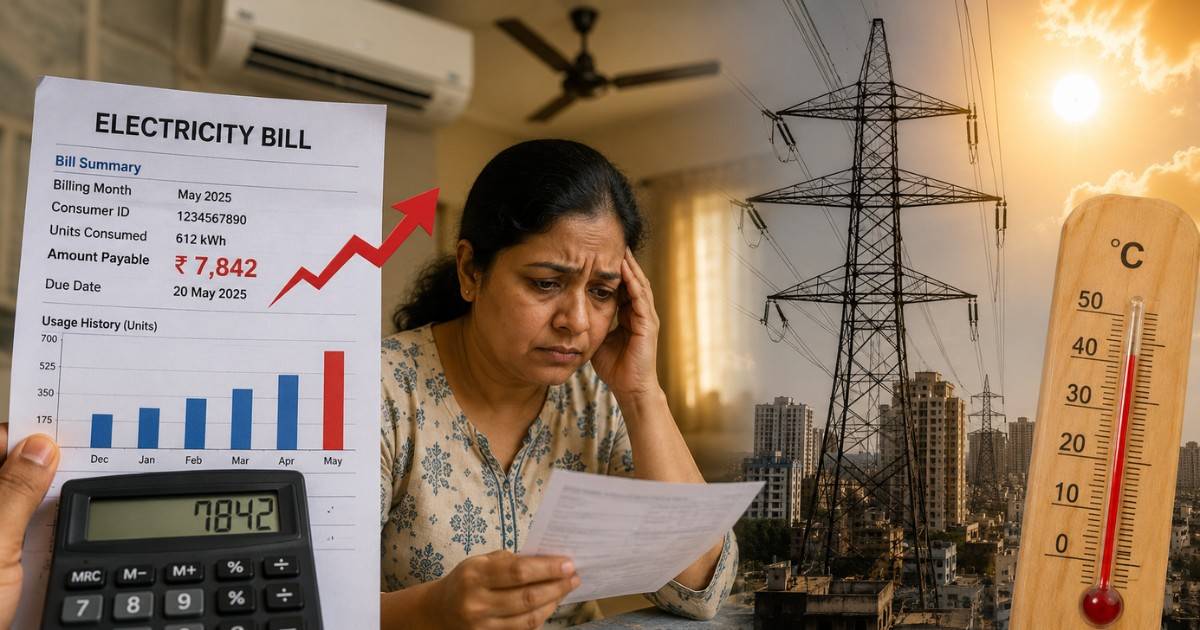
As temperatures climb across India, households are facing an unexpected financial burden in the form of a higher electricity bill. From metropolitan cities to smaller towns, consumers are reporting sharp increases in their monthly electricity bill as air conditioners, coolers, fans, refrigerators, and water pumps work harder to combat extreme heat. The ongoing heatwave has pushed power consumption to record levels, creating concerns for families already dealing with rising living costs.
Electricity Bill and the Heatwave Connection
The relationship between a rising electricity bill and a prolonged heatwave is straightforward. When temperatures remain unusually high for several days or weeks, people rely more heavily on cooling appliances. Air conditioners often run for longer hours, ceiling fans remain switched on throughout the day, and refrigerators consume additional energy to maintain internal temperatures.
As a result, electricity usage increases significantly. Since most electricity providers charge consumers based on units consumed, higher energy consumption directly translates into a larger electricity bill. In many Indian cities, consumers may also move into higher tariff slabs after crossing certain usage limits, making the electricity bill even more expensive.

Why Urban Households Are Seeing a Bigger Electricity Bill
Urban households are among the hardest hit by the current heatwave. Apartments and residential buildings in densely populated areas tend to retain heat, forcing residents to use cooling devices continuously. Families working from home are also spending more hours indoors, leading to greater electricity usage during daytime hours.
Many households now operate multiple cooling appliances simultaneously. An air conditioner may run in one room while fans, air coolers, and electronic devices operate in others. This combination significantly increases overall consumption and contributes to a higher electricity bill at the end of the month.
Power Demand Reaches New Highs
India’s power demand typically rises during summer, but recent heatwave conditions have intensified the trend. Electricity grids across several states have experienced unprecedented demand as millions of consumers seek relief from extreme temperatures.
Higher power demand means electricity generation companies must increase production to meet requirements. In some cases, utilities rely on more expensive sources of power during peak periods. Although consumers may not immediately notice these operational challenges, sustained high demand can influence electricity costs and contribute to concerns about future electricity bill increases.
Air Conditioners Play a Major Role in an Electricity Bill
Among household appliances, air conditioners have the greatest impact on an electricity bill during summer. A single air conditioner running for extended periods can consume a substantial amount of energy, especially if the unit is older or poorly maintained.
Experts note that setting an air conditioner at a moderate temperature rather than the lowest possible setting can reduce energy consumption. Regular servicing, clean filters, and proper insulation can also help limit the effect on an electricity bill. However, during severe heatwave conditions, many households prioritize comfort over energy savings, resulting in higher monthly costs.
Commercial Establishments Are Also Affected by Electricity Bill Growth
The impact of a rising electricity bill is not limited to households. Shops, restaurants, offices, malls, and other commercial establishments are experiencing similar challenges. Businesses often rely on air conditioning to maintain comfortable environments for employees and customers.
Long operating hours combined with increased cooling requirements can significantly increase electricity expenses. For small businesses already managing tight margins, a higher electricity bill can become a serious financial concern during the summer season.
How Tariff Slabs Affect the Electricity Bill
Many consumers are surprised when they receive a significantly higher electricity bill despite only a moderate increase in usage. One reason is the tariff slab system used by many electricity distribution companies.
Under this system, electricity charges increase once consumption crosses predefined thresholds. A household that moves into a higher slab may pay a greater rate for additional units consumed. During a heatwave, increased appliance usage can push consumers into these higher categories, leading to a larger electricity bill than expected.
Simple Ways to Reduce an Electricity Bill
While it may be difficult to avoid using cooling appliances during extreme weather, consumers can take several practical steps to manage their electricity bill.
Using energy efficient appliances can reduce power consumption. Keeping curtains closed during the hottest part of the day helps maintain indoor temperatures. Turning off unused lights and devices prevents unnecessary energy waste. Running air conditioners at recommended temperature settings and using fans to improve air circulation can also help lower an electricity bill.
Regular maintenance of appliances is equally important. Dirty filters, blocked vents, and aging equipment often consume more electricity than necessary.
The Consumer Impact of a Rising Electricity Bill
A growing electricity bill affects household budgets in multiple ways. Families may need to reduce spending in other areas to accommodate higher utility costs. For low and middle income households, recurring increases in an electricity bill can place additional pressure on monthly finances.
Consumer groups have highlighted the importance of energy awareness during heatwaves. Understanding how different appliances contribute to an electricity bill can help households make informed decisions about energy usage without compromising safety and comfort.
Will Electricity Bills Continue to Rise?
The future of the electricity bill will depend on several factors, including weather conditions, energy demand, and policy decisions. If heatwave events become more frequent and intense, power consumption is likely to remain elevated during summer months.
Experts believe that investments in renewable energy, improved grid infrastructure, and energy efficient technologies could help manage long term demand growth. However, in the short term, consumers may continue to experience pressure from increased electricity usage whenever temperatures soar.
Government Measures and Consumer Awareness for Managing an Electricity Bill
Several state governments and electricity distribution companies have started encouraging consumers to monitor usage more closely during periods of extreme heat. Mobile applications and online portals now allow households to track daily consumption, helping families understand which appliances contribute most to an electricity bill.
Public awareness campaigns are also promoting simple conservation practices. Switching to LED lighting, improving home ventilation, and using star rated appliances can lower long term energy consumption. Some experts recommend conducting a home energy audit to identify hidden sources of power waste. Even small behavioral changes, such as unplugging idle electronics and reducing unnecessary appliance use, can make a noticeable difference to an electricity bill over time.
Consumer awareness becomes especially important during heatwaves because energy demand can change rapidly. By paying attention to usage patterns and adopting practical efficiency measures, households can reduce financial stress while still maintaining comfort. Greater awareness, combined with responsible energy habits, can help consumers manage an electricity bill more effectively throughout the hottest months of the year during peak summer periods.
Conclusion
The recent surge in the electricity bill across Indian cities is closely linked to extreme heatwave conditions and rising power demand. As households and businesses depend more heavily on cooling appliances, electricity consumption naturally increases. Combined with tariff slabs and prolonged appliance usage, this trend is creating larger monthly expenses for millions of consumers.
Although completely avoiding a higher electricity bill during a heatwave may not be possible, adopting energy efficient habits can help reduce costs. With weather patterns becoming increasingly unpredictable, understanding the factors behind an electricity bill is becoming more important than ever for Indian consumers seeking to balance comfort, safety, and affordability.
Key Insights: Why Power Bills Are Suddenly Surging Across Indian Cities
- Extreme heatwave conditions are driving a sharp increase in electricity bills across households and businesses throughout India.
- Higher temperatures are causing increased use of cooling appliances such as air conditioners, fans, coolers, refrigerators, and water pumps, leading to greater electricity consumption.
- Air conditioners are the biggest contributors to rising power bills, especially when operated for extended hours during peak summer months.
- Urban households are experiencing the largest increases in electricity bills due to heat-retaining buildings, longer indoor stays, and simultaneous use of multiple appliances.
- India’s electricity demand has reached record highs, putting additional pressure on power grids and energy infrastructure.
- Many consumers are being pushed into higher tariff slabs, causing electricity costs to rise faster than actual consumption growth.
- Commercial establishments including offices, malls, restaurants, and retail stores are also facing significantly higher electricity expenses.
- Heatwaves are exposing the strong link between weather patterns and household energy costs, making electricity bills more sensitive to climate conditions.
- Older and poorly maintained appliances consume more electricity, increasing monthly utility expenses for consumers.
- Energy-efficient practices can help reduce bills, including moderate AC temperature settings, appliance maintenance, improved insulation, and reduced unnecessary power usage.
- Higher electricity bills are creating financial pressure on low- and middle-income households, forcing many families to adjust monthly budgets.
- State governments and power distribution companies are encouraging consumers to monitor electricity usage through digital tools and awareness programs.
- Tariff structures play a major role in bill increases, with higher consumption thresholds often triggering more expensive electricity rates.
- Growing frequency and intensity of heatwaves could lead to recurring summer electricity bill spikes in the future.
- Investments in renewable energy, grid modernization, and energy-efficient technologies are viewed as long-term solutions to managing rising power demand.
- Consumer awareness and responsible energy habits are becoming increasingly important for controlling electricity costs during extreme weather events.