Sonia Gandhi raises concerns over delimitation, calling it the real issue beyond women’s reservation. Highlights risks to federal balance and urges consensus.
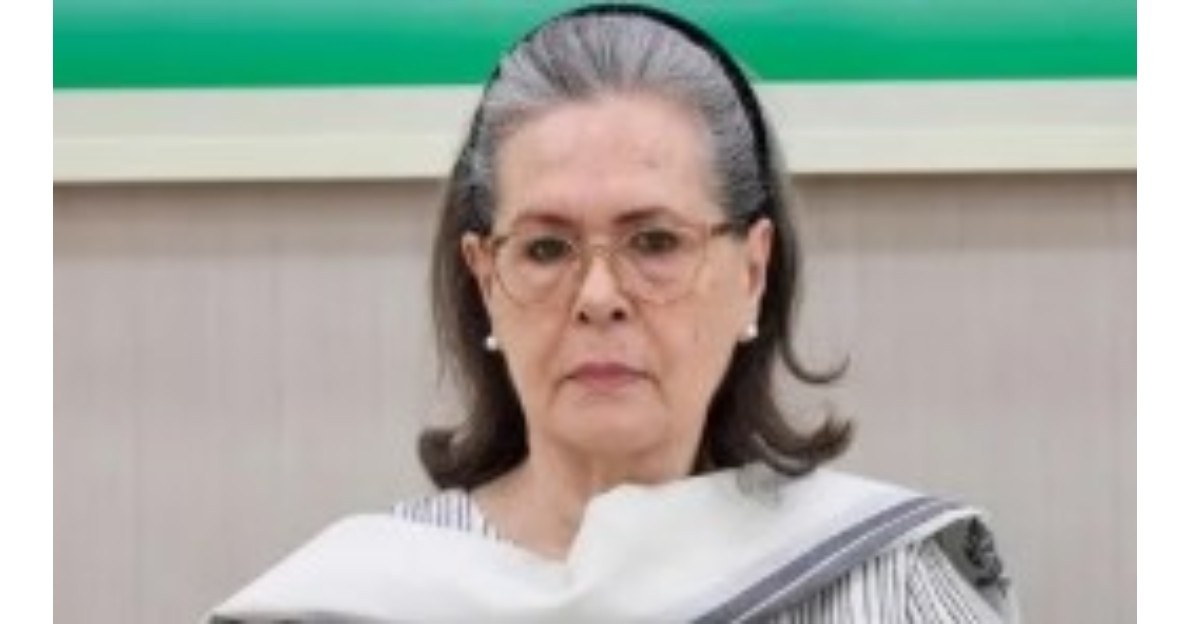
Senior Congress leader Sonia Gandhi has raised concerns over the current political discourse surrounding women’s reservation, asserting that the real issue facing the country is delimitation. In a recent opinion piece, she cautioned that any delimitation exercise conducted without transparency, clear criteria, and broad political consensus could disrupt the balance of representation among states and potentially undermine India’s federal structure.
Her remarks come amid ongoing debates over the implementation of the women’s reservation law and the timeline for the next census, both of which are closely linked to the delimitation process.
Delimitation at the Centre of Political Debate
According to Sonia Gandhi, the focus on women’s reservation in public discourse risks diverting attention from the more complex and consequential issue of delimitation. She described delimitation as a process that requires careful consideration, given its direct impact on the distribution of parliamentary and विधानसभा seats across states.
Delimitation refers to the redrawing of electoral constituency boundaries based on population changes, a process that ensures equitable representation. However, Gandhi emphasized that such an exercise cannot rely solely on population figures but must also account for regional balance and fairness.
She warned that states which have successfully implemented population control measures could face disadvantages if delimitation is conducted strictly on population-based criteria.
Concerns Over Federal Balance
Highlighting the potential implications of delimitation, Gandhi noted that an uneven redistribution of seats could alter the political weight of different states. This, she argued, may lead to tensions within India’s federal framework, which is designed to maintain a balance between the Centre and the states.
The Congress leader stressed that safeguarding this balance is essential for the stability of the constitutional system. Any perceived inequity in representation could trigger political discontent and weaken trust among states.
Her remarks underscore longstanding concerns among several southern and smaller states, which fear losing parliamentary representation relative to more populous regions.
Women’s Reservation Law and Implementation Delay
Sonia Gandhi also addressed the implementation of the Nari Shakti Vandan Adhiniyam, 2023, which provides for one-third reservation for women in the Lok Sabha and state legislative assemblies. While the law was passed with broad political support, its implementation has been linked to the completion of the next census and subsequent delimitation exercise.
She argued that this linkage has resulted in unnecessary delays in operationalizing the reservation, despite the political consensus that enabled the law’s passage. According to Gandhi, with sufficient political will, the provisions could have been implemented earlier.
Her comments reflect a broader debate on whether structural reforms like delimitation should be a prerequisite for advancing gender representation in legislatures.
Lack of Clarity on Delimitation Framework
A key concern raised by Gandhi is the absence of a clearly defined roadmap for the delimitation process. She pointed out that there has been no official communication outlining the methodology, criteria, or timeline for the exercise.
This lack of clarity, she suggested, has contributed to uncertainty and speculation, making it difficult for political stakeholders to prepare for potential changes in constituency boundaries.
Delimitation, she emphasized, is not merely a technical exercise but a politically sensitive process that requires careful planning and consultation.
Census Delays Add to Uncertainty
The Congress leader also highlighted delays in conducting the national census, noting that these delays have a cascading effect on various governance mechanisms. Since delimitation is contingent on updated population data, the absence of a recent census further complicates the process.
She observed that several government schemes and welfare programs rely on accurate population data for effective implementation. Delays in the census, therefore, not only affect electoral processes but also hinder policy planning and delivery.
Gandhi specifically mentioned the National Food Security Act as an example of legislation that depends on updated demographic data to function optimally.
Call for Political Consensus
Emphasizing the importance of democratic processes, Sonia Gandhi called for wider consultations and consensus-building before undertaking delimitation or related constitutional changes. She suggested that such significant decisions should not be rushed without adequate deliberation among all political parties.
According to her, convening an all-party meeting would provide a platform for discussing concerns, clarifying doubts, and ensuring that the process is inclusive and transparent.
She underscored that dialogue and cooperation are fundamental to India’s democratic framework, particularly when dealing with issues that have long-term implications for governance and representation.
Government’s Approach Questioned
In her remarks, Gandhi questioned what she described as the government’s urgency in advancing discussions around these issues without a clearly articulated plan. She argued that prioritizing procedural transparency and stakeholder engagement is essential for maintaining public trust.
Her comments reflect broader opposition concerns about the sequencing and prioritization of reforms related to electoral representation and governance.
Broader Political Implications
The debate over delimitation and women’s reservation has significant political implications, particularly in the context of upcoming elections and long-term governance reforms. While the ruling establishment has emphasized the importance of women’s representation, opposition leaders like Sonia Gandhi are drawing attention to structural issues that could reshape the political landscape.
Analysts note that the outcome of these debates could influence not only electoral dynamics but also the balance of power between states and the Centre.
A Critical Juncture for Electoral Reforms
Sonia Gandhi’s intervention highlights the complexity of balancing electoral reforms with constitutional principles. While the push for greater women’s representation remains widely supported, the underlying processes of census and delimitation present challenges that require careful handling.
Her call for transparency, consensus, and clarity underscores the need for a structured approach to reforms that affect the core of India’s democratic system.
As discussions continue, the focus is likely to remain on how best to align the goals of equitable representation, gender inclusion, and federal balance within the framework of the Constitution.
Inputs & Images: Hindusthan Samachar
Edited By: Akshaya Polepalli
Also Read: UDF Projects 80+ Seats in Kerala Assembly Elections, Counters LDF’s Confidence