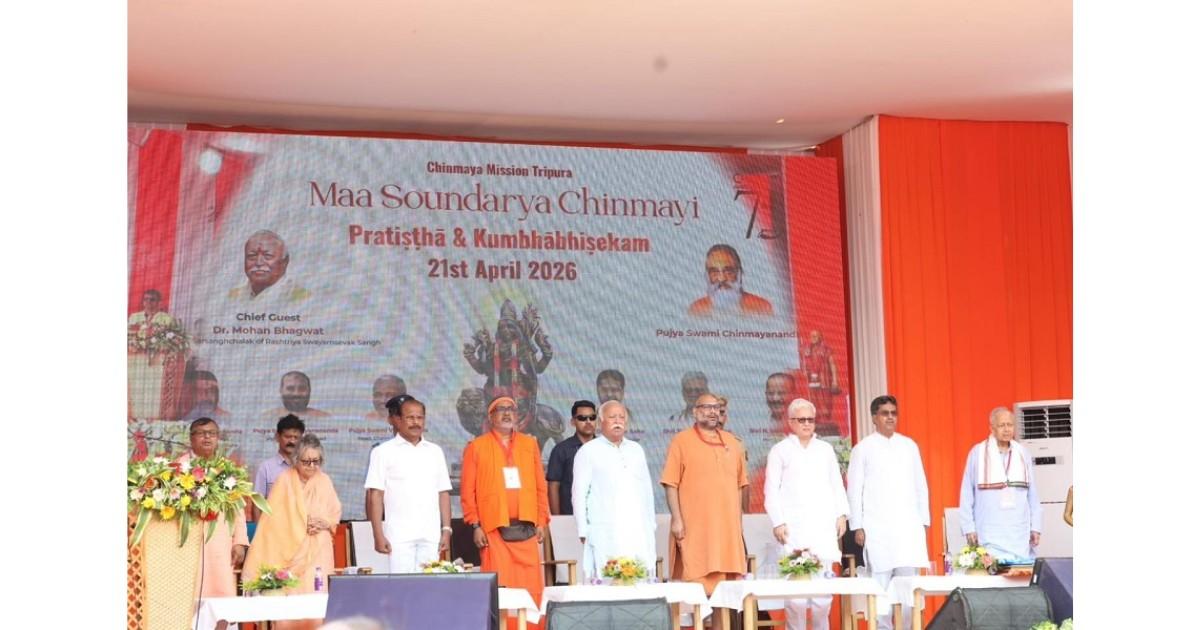
Mohan Bhagwat, the Sarsanghchalak of the Rashtriya Swayamsevak Sangh, participated in the Pran Pratishtha and Kumbh Abhishek ceremony of the newly constructed Maa Chinmayi Saundarya Temple in Tripura on Tuesday. The event, held at Fakiramura in Mohanpur near Agartala, drew a large gathering of devotees, spiritual leaders, and political dignitaries, marking a significant religious and cultural occasion in the northeastern state.
The ceremony, conducted with elaborate Vedic rituals, signified the formal consecration of the temple dedicated to Goddess Tripura Sundari, an important deity in Hindu spiritual tradition. The event highlighted not only religious devotion but also the region’s cultural vibrancy and architectural innovation.
High-Profile Attendance Reflects Significance
The ceremony was attended by several prominent leaders, underlining its importance at both religious and administrative levels. Among those present were Indrasena Reddy Nallu, Jishnu Dev Varma, and Manik Saha. Their presence, alongside Bhagwat, reflected the broader national attention the event received.
Officials noted that Bhagwat had arrived in Tripura a day earlier via Maharaja Bir Bikram Airport, where he was welcomed by Amit Rakshit, who is associated with the Chinmaya Mission. The temple project itself has been closely linked with the efforts of the Chinmaya Seva Trust, which aims to promote spiritual learning and cultural values.
Rituals Rooted in Tradition
The Pran Pratishtha ceremony—considered one of the most sacred rituals in Hindu temple traditions—was conducted by priests from Nepal, adhering strictly to established customs and scriptures. The rituals included chanting of Vedic hymns, ceremonial offerings, and the invocation of divine presence into the idol.
The Kumbh Abhishek, another key component of the ceremony, involved the ritualistic pouring of sanctified water over the temple structure and deity, symbolizing purification and divine blessing. Devotees present at the event participated with reverence, creating an atmosphere of spiritual fervour.
Architectural Distinction and Symbolism
The Maa Chinmayi Saundarya Temple stands out for its distinctive design, which blends traditional symbolism with modern architectural elements. One of its most striking features is the presence of 27 black stone pillars sourced from Tamil Nadu. These pillars represent the 27 nakshatras, or lunar constellations, in Hindu astrology, embedding cosmic symbolism into the temple’s structure.
Unlike conventional temples, the structure has been designed without a traditional roof. According to the organisers, this architectural choice symbolizes an open and direct connection with the divine, allowing devotees to experience spirituality without physical barriers.
At the heart of the temple is a 15-foot-high black stone idol of Goddess Tripura Sundari, revered as a manifestation of divine feminine energy. In addition to the main idol, a smaller deity styled after the iconic Tripura Sundari Temple has been installed for daily worship, ensuring continuity in ritual practices.
Spiritual Texts and Cultural Integration
The temple complex is adorned with inscriptions and engravings drawn from sacred texts such as “Saundarya Lahari,” a revered composition attributed to Adi Shankaracharya. These inscriptions add a philosophical dimension to the temple, offering visitors not just a place of worship but also a space for reflection and learning.
Organisers said the integration of textual elements into the temple’s architecture is intended to deepen spiritual engagement and promote awareness of India’s rich scriptural heritage. The presence of these inscriptions further enhances the temple’s identity as a centre for both devotion and knowledge.
A Hub for Devotion and Community Gathering
The event witnessed the participation of hundreds of devotees from across Tripura and neighbouring regions. Many described the ceremony as a moment of spiritual renewal and cultural pride. Local authorities ensured smooth arrangements, including crowd management, security, and logistical support, to facilitate the large turnout.
The temple is expected to emerge as a significant religious destination in the region, attracting pilgrims and tourists alike. Officials believe that such initiatives contribute to the promotion of cultural tourism while strengthening community bonds.
Broader Cultural and Spiritual Context
Tripura, known for its rich cultural traditions and spiritual heritage, has long been associated with the worship of Goddess Tripura Sundari. The establishment of the Maa Chinmayi Saundarya Temple adds another dimension to this legacy, offering a contemporary space rooted in ancient traditions.
Experts note that such developments reflect a broader trend of revitalising religious spaces with modern infrastructure while preserving traditional values. The involvement of organisations like the Chinmaya Mission further underscores the role of spiritual institutions in shaping cultural narratives.
Emphasis on Tradition and Continuity
Speakers at the event emphasised the importance of preserving spiritual traditions while adapting to contemporary contexts. They highlighted that temples serve not only as places of worship but also as centres for cultural education and social cohesion.
Bhagwat’s participation was seen as a reaffirmation of these values, aligning with the RSS’s broader emphasis on cultural and spiritual revival. While he did not deliver a formal public address at the event, his presence was interpreted as a gesture of support for initiatives that promote India’s civilisational heritage.
Looking Ahead
With its unique architectural features, spiritual significance, and strong institutional backing, the Maa Chinmayi Saundarya Temple is poised to become a landmark in Tripura’s religious landscape. Authorities and organisers expressed optimism that the temple will attract visitors from across the country, contributing to both spiritual enrichment and regional development.
Conclusion Alternative Heading: A New Spiritual Landmark in Tripura
The inauguration of the Maa Chinmayi Saundarya Temple marks an important milestone in Tripura’s cultural and spiritual journey. By combining traditional rituals, symbolic architecture, and community participation, the temple stands as a testament to the enduring relevance of India’s spiritual heritage in a modern context.
Inputs & Images: Hindusthan Samachar
Edited By: Akshaya Polepalli
Also Read: Jagatsinghpur Schools Shift to Early Morning Timings Amid Intensifying Heatwave