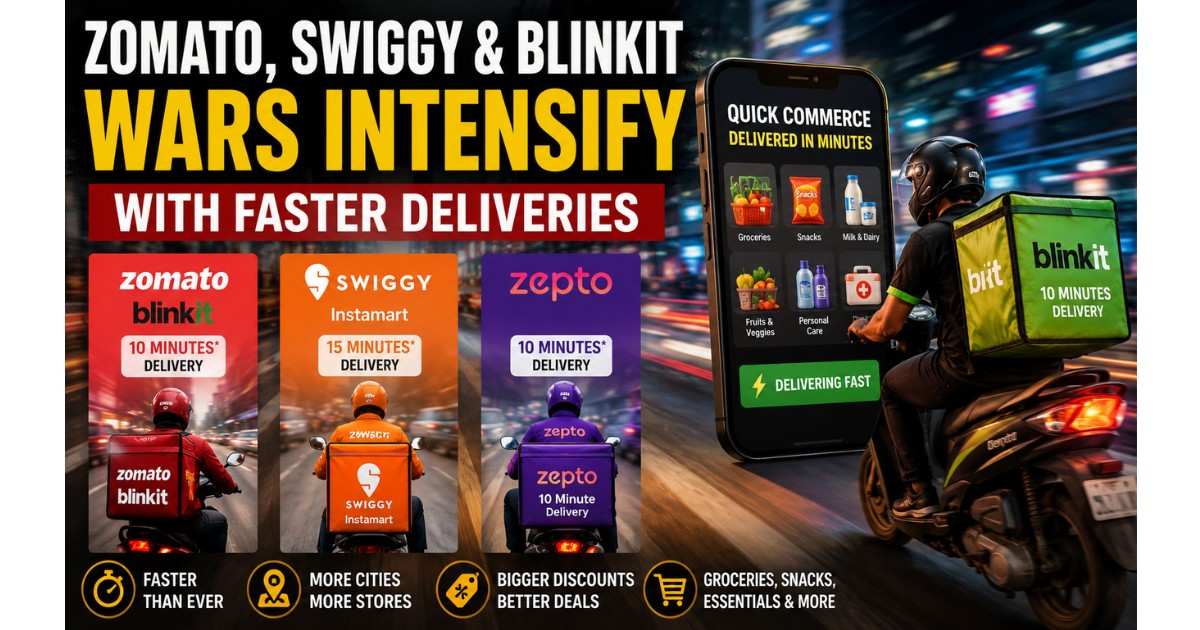
The battle for dominance in quick commerce India is becoming more intense than ever as major delivery platforms race to offer faster services, deeper discounts and wider product selections to customers. Companies such as Zomato, Swiggy, Blinkit, Zepto and Instamart are aggressively expanding operations across Indian cities in an attempt to win the attention of urban consumers who increasingly prefer instant delivery services.
The rapid rise of quick commerce India has transformed shopping habits, especially among Gen Z users, working professionals and urban households. Consumers are now ordering groceries, snacks, medicines and even electronic gadgets through mobile apps expecting deliveries within minutes. As competition grows, companies are investing heavily in technology, warehouses and delivery networks to reduce delivery times further.
Social media discussions around quick commerce India have intensified after users began comparing delivery speeds between platforms. Viral videos showing riders racing through traffic, countdown delivery timers and “10-minute delivery challenges” have attracted millions of views online. Many users are now treating delivery speed almost like a competitive sport between apps.
Blinkit, which operates under Zomato, has emerged as one of the most recognizable names in quick commerce India. The company has focused heavily on expanding dark stores and optimizing delivery logistics to maintain ultra-fast service in major metropolitan areas. Blinkit’s aggressive marketing campaigns and quick delivery promises have helped it gain strong visibility among young urban consumers.
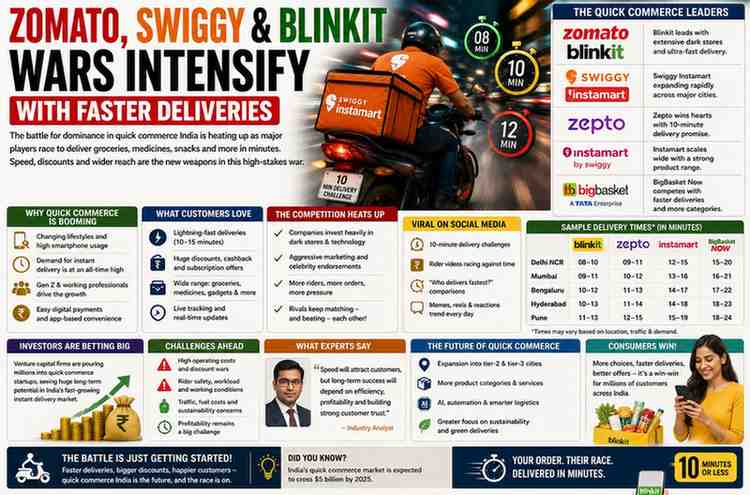
Swiggy has also strengthened its position through Instamart, expanding its quick delivery network in multiple cities. The company continues investing in technology and delivery infrastructure to compete with rivals in the rapidly growing quick commerce India market. Swiggy’s ability to integrate food delivery and grocery delivery within the same ecosystem has become a major advantage.
Meanwhile, Zepto has gained massive attention for its youth-focused branding and extremely fast delivery model. The startup quickly became one of the biggest names in quick commerce India by targeting speed-conscious customers. Social media users frequently discuss Zepto’s delivery timings and compare them with competing platforms.
Industry experts believe the competition in quick commerce India is being driven by changing consumer behavior and increasing smartphone penetration. Urban consumers now expect convenience, speed and app-based shopping experiences for daily essentials. The demand for instant deliveries has encouraged companies to expand aggressively even into smaller cities.
The growing quick commerce India market has also attracted investor attention. Analysts believe the sector has strong long-term growth potential due to rising urbanization and digital payment adoption. Venture capital firms and major investors continue supporting companies involved in fast delivery services and hyperlocal commerce.
However, the intense competition has also raised concerns regarding profitability and sustainability. Experts warned that maintaining ultra-fast delivery promises requires enormous spending on warehouses, riders, discounts and operational systems. Many companies are currently prioritizing customer growth over immediate profits.
Delivery riders have become the face of quick commerce India as they navigate crowded roads and traffic conditions to complete orders within tight timelines. Viral social media clips showing riders rushing through rain, heat and traffic congestion sparked conversations regarding working conditions and delivery pressure.
Several users praised the convenience offered by quick commerce India, especially during emergencies and busy work schedules. Customers living in metropolitan areas said fast delivery apps save time and reduce the need for frequent supermarket visits. For many working professionals, quick commerce platforms have become part of daily life.
At the same time, critics argued that unrealistic delivery expectations may create pressure on riders and increase road safety risks. Some social media users questioned whether companies should focus more on rider welfare instead of competing purely on speed.
The competition in quick commerce India has also expanded beyond groceries. Platforms are increasingly delivering beauty products, mobile accessories, kitchen items and electronic gadgets within minutes. Experts believe this broader product strategy may help companies increase customer spending and improve business growth.
Marketing campaigns have played a major role in shaping public perception around quick commerce India. Companies frequently use humor, memes and influencer partnerships to target younger audiences. Viral advertising campaigns highlighting “faster than ever” delivery promises have become common across social media platforms.
Consumers are also comparing subscription benefits, discounts and loyalty rewards while choosing between apps. Cashback offers, free delivery schemes and festival discounts have intensified competition further. Analysts believe customer retention will become one of the biggest challenges in the quick commerce India sector.
Interestingly, the rise of quick commerce India has started affecting traditional retail shopping habits. Small neighborhood stores in urban areas are increasingly facing competition from app-based instant delivery services. However, some experts believe local stores may adapt by partnering with delivery platforms in the future.
The expansion of dark stores and mini-warehouses across cities has become another important trend in quick commerce India. Companies are setting up strategically located fulfillment centers to reduce delivery distances and improve operational efficiency. This infrastructure race is expected to continue as companies compete for faster service.
Environmental concerns have also entered discussions surrounding quick commerce India. Critics pointed to increased packaging waste, traffic congestion and fuel usage associated with ultra-fast deliveries. Sustainability advocates urged companies to adopt eco-friendly packaging and electric delivery vehicles.
Financial analysts said the future of quick commerce India will likely depend on balancing speed, profitability and customer experience. While fast delivery attracts users initially, companies will also need to maintain service quality and operational efficiency to remain competitive.
Social media creators continue producing viral content comparing app delivery timings in different cities. Reels featuring “Who delivers fastest in India?” challenges have generated significant engagement online, particularly among younger audiences interested in technology and convenience culture.
The ongoing quick commerce India battle has also highlighted India’s rapidly evolving startup ecosystem. Indian consumers are increasingly comfortable using app-based services for everyday needs, creating enormous opportunities for digital businesses.
Experts believe smaller cities may become the next major battleground in quick commerce India. As internet access and smartphone usage expand, companies are expected to target tier-2 and tier-3 markets aggressively in search of new customers.
Meanwhile, investors and industry observers remain closely focused on how companies manage rising competition and operational costs. The ability to balance customer growth with long-term profitability will likely determine which platforms emerge as leaders in quick commerce India.
For now, the rivalry between Zomato, Swiggy, Blinkit, Zepto and Instamart continues generating massive online attention. Consumers are enjoying faster deliveries and better offers, while companies keep pushing innovation to stay ahead in the rapidly growing quick commerce India market.
As delivery apps become an increasingly important part of urban lifestyles, the competition is expected to grow even stronger in the coming months. Whether ordering groceries late at night or receiving essentials within minutes, millions of Indians are now actively participating in the fast-moving world of quick commerce India.
Key Insights
- The intensifying competition among Zomato, Swiggy, Blinkit and other quick-commerce players reflects the rapid transformation of India’s urban retail and delivery ecosystem.
- The rise of ultra-fast delivery models is being driven largely by changing consumer behaviour, particularly among urban youth and working professionals who increasingly prioritise convenience, speed and app-based purchasing.
- Competition in the quick-commerce sector is no longer limited to food delivery, as platforms are rapidly expanding into groceries, electronics, medicines, personal care products and daily essentials to increase customer retention and order frequency.
- Companies are investing heavily in dark stores, logistics networks, AI-based demand prediction and hyperlocal warehousing to reduce delivery times and improve operational efficiency.
- The aggressive race for faster deliveries has intensified pressure on profitability, with firms balancing customer acquisition costs, delivery incentives and infrastructure expansion while attempting to achieve sustainable business models.
- The sector’s rapid growth is also reshaping employment patterns in India’s gig economy, increasing dependence on delivery workers while raising concerns around worker safety, incentives, working conditions and income stability.
- Growing consumer demand for instant deliveries is influencing broader retail trends, forcing traditional supermarkets and e-commerce companies to adapt to shorter fulfillment expectations.
- Industry analysts view quick commerce as one of the fastest-growing segments in India’s startup ecosystem, supported by rising smartphone penetration, digital payments adoption and increased comfort with app-based services.
- The “delivery speed war” is also driving brand differentiation strategies, where companies increasingly compete through subscription models, exclusive partnerships, discounts and user experience rather than pricing alone.
- Concerns remain regarding long-term sustainability, as ultra-fast delivery commitments can significantly increase operational costs, traffic congestion and environmental impact in densely populated urban centres.
- The strong social media engagement around “who delivers fastest” demonstrates how quick commerce has evolved beyond a utility service into a consumer lifestyle and brand loyalty battleground in urban India.
Edited By: Akshaya Polepalli
Also Read: Gold Prices Hit New Highs Again — Investors Rush In
Follow us on google news: Click Here