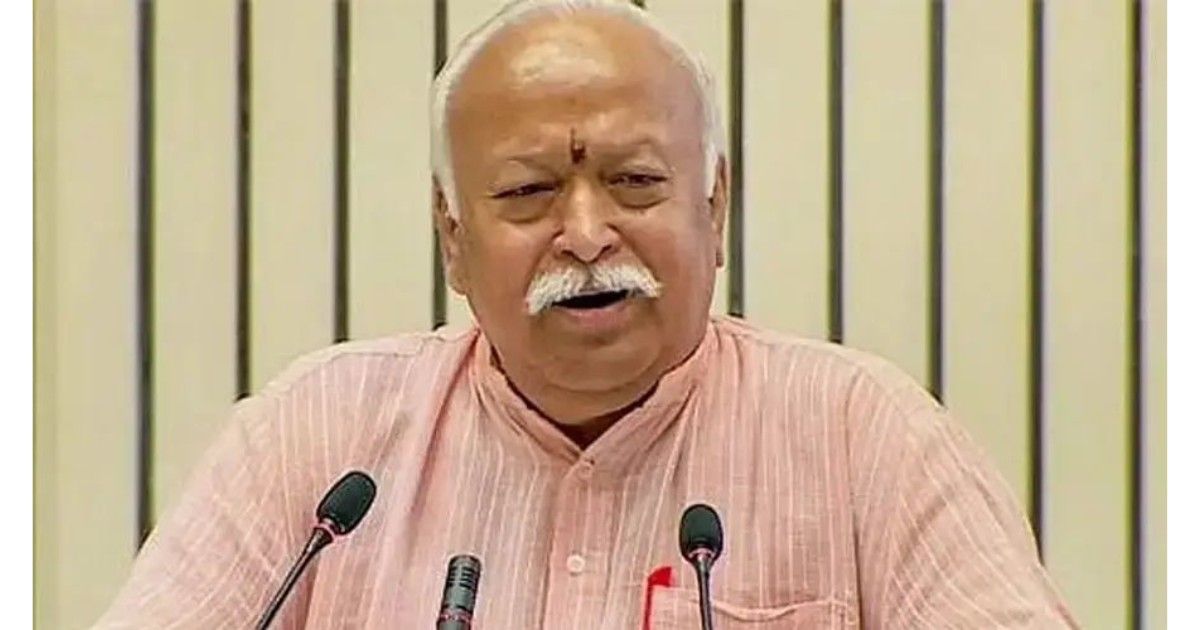
Emphasising the enduring relevance of India’s classical heritage, Mohan Bhagwat on Monday said that learning Sanskrit is essential for understanding the country’s civilisational traditions, knowledge systems, and cultural identity.
The remarks were made during the inauguration of a new central office of Sanskrit Bharati, named “Pranav,” located on Pandit Deendayal Upadhyaya Marg. The event coincided with the auspicious occasion of Akshaya Tritiya, which Bhagwat described as symbolically significant for beginning initiatives that are intended to endure.
Sanskrit Beyond Language: A Civilisational Foundation
Addressing the gathering, Bhagwat characterised Sanskrit not merely as a linguistic medium but as a foundational pillar of India’s ancient worldview. He said the language encapsulates centuries of philosophical thought, scientific knowledge, and cultural values that continue to shape Indian society.
According to him, India should not be viewed only as a geographical entity but as a living tradition sustained through generations. In this context, he asserted that access to Sanskrit is crucial for those seeking to understand and preserve this legacy.
He further noted that Sanskrit serves as a unifying thread among India’s diverse linguistic landscape. Since many Indian languages derive vocabulary and structure from Sanskrit, its study, he said, strengthens linguistic harmony rather than diminishing regional languages.
Inauguration of ‘Pranav’ and Its Symbolism
The newly inaugurated office, named “Pranav,” holds symbolic meaning rooted in Indian philosophical thought. Bhagwat explained that the term represents the primordial sound associated with creation, often linked to the sacred syllable “Om.”
Highlighting the importance of institutions, he said that infrastructure such as buildings and offices are tools to support larger missions. However, he stressed that the true strength of any organisation lies in the dedication of its members rather than physical resources.
The establishment of the office, he added, should be seen as a step forward in expanding outreach and engagement, but not as an end in itself.
Focus on Conversational Learning
A key aspect of Bhagwat’s address was his emphasis on making Sanskrit accessible to the general public. He challenged the widely held perception that Sanskrit is difficult to learn, describing it as a misconception.
He pointed out that language acquisition becomes easier when approached through conversation rather than formal grammar-heavy methods. In this regard, he praised Sanskrit Bharati’s initiatives, particularly its conversational camps, which aim to familiarise people with spoken Sanskrit in a short period.
These programmes, he said, have successfully generated interest among diverse groups, including students, professionals, and homemakers. He encouraged the organisation to continue expanding such efforts to reach a broader audience.
Cultural Continuity and Social Values
Bhagwat underscored that the mission of Sanskrit Bharati extends beyond language instruction. He described it as an effort to reinforce cultural values and ethical principles embedded in India’s traditions.
He argued that revitalising Sanskrit can contribute to strengthening societal cohesion by reconnecting people with shared cultural narratives. This, in turn, could foster a deeper sense of identity and continuity.
The RSS chief also highlighted the role of cultural knowledge in shaping individual and collective behaviour. He suggested that understanding traditional texts and ideas could provide guidance in navigating contemporary challenges.
Role of Workers and Community Participation
Calling upon volunteers and members of Sanskrit Bharati, Bhagwat urged them to transform the new office into a vibrant centre for cultural and linguistic engagement. He envisioned it as a space where visitors are encouraged to interact in Sanskrit and develop an interest in the language.
He stressed that the success of such initiatives depends on sustained commitment and community participation. By creating an inclusive and welcoming environment, he said, the organisation can attract more people to its activities.
Broader Context of Language Revival Efforts
The emphasis on Sanskrit revival comes amid broader discussions in India about preserving classical languages and promoting indigenous knowledge systems. Various institutions and organisations have undertaken initiatives to integrate Sanskrit into educational and cultural programmes.
Proponents argue that such efforts can help bridge the gap between traditional knowledge and modern applications, particularly in fields like philosophy, linguistics, and even computational studies.
At the same time, debates continue regarding the role of classical languages in contemporary education and public life. Advocates of linguistic diversity emphasise the importance of balancing Sanskrit promotion with the preservation of regional languages.
Presence of Dignitaries
The inauguration ceremony was attended by several prominent figures associated with Sanskrit Bharati. Among them were Ramesh Kumar Pandey, president of the organisation, and Praneev Kant. The proposal for the event was presented by Jayaprakash Gautam.
Their presence underscored the organisational commitment to expanding Sanskrit outreach and strengthening institutional frameworks for its promotion.
Language, Identity, and the Future
Bhagwat’s remarks reflect a broader perspective that links language with identity and continuity. By positioning Sanskrit as a key to understanding India’s past, he highlighted its potential role in shaping the future.
He expressed confidence that sustained efforts by organisations like Sanskrit Bharati would contribute to the gradual revival of the language, making it more accessible and relevant to contemporary society.
At the same time, he reiterated that such efforts should be inclusive and participatory, ensuring that people from all backgrounds feel encouraged to engage with Sanskrit.
Toward a Living Cultural Continuum
The inauguration of Sanskrit Bharati’s new office and the emphasis on conversational learning signal a renewed push toward making Sanskrit a living, accessible language. By framing it as a bridge between India’s past and present, Mohan Bhagwat highlighted its role not only in preserving heritage but also in shaping cultural awareness.
As initiatives to promote Sanskrit continue to evolve, their impact will likely depend on how effectively they balance tradition with accessibility, ensuring that the language remains a shared resource rather than a specialised domain.
Inputs & Images: Hindusthan Samachar
Edited By: Akshaya Polepalli
Also Read:India–South Korea CEPA Upgrade Talks Begin, PM Modi Calls Partnership “Future-Oriented”