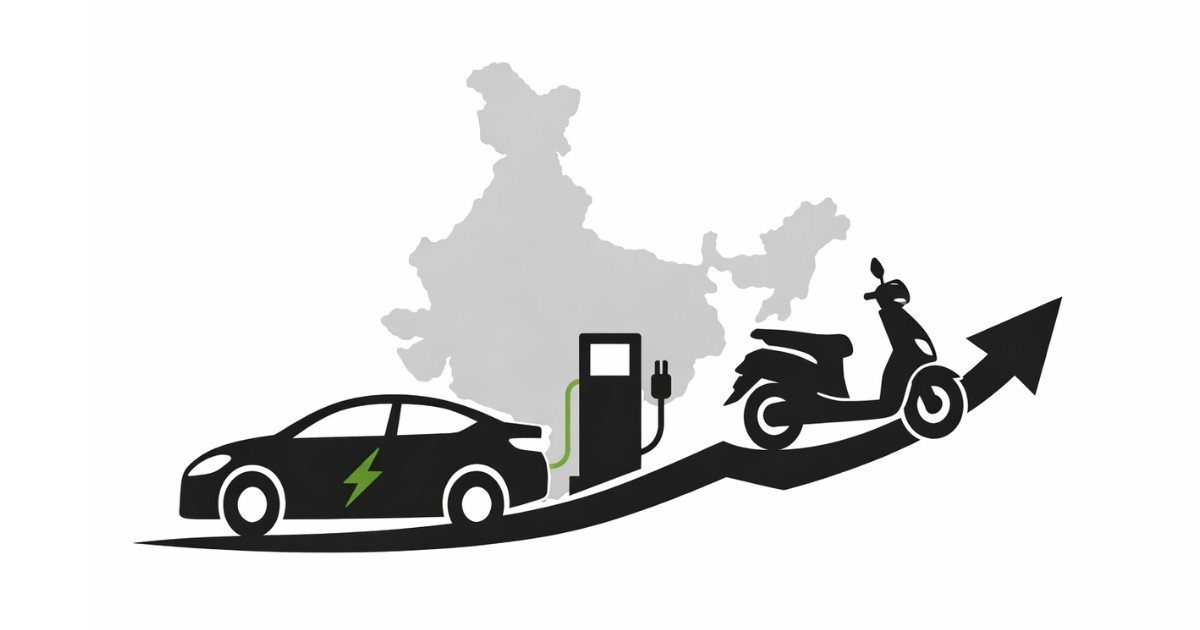
Indian Auto Sector Outlook 2026 indicates steady growth in EV and two-wheeler sales. Analysts highlight demand trends, policy support, exports, and investment momentum.
Indian Auto Sector Outlook 2026 is drawing strong attention from investors and industry observers as analysts project steady expansion across electric vehicles and two-wheelers. After a phase of supply chain disruptions and cost pressures, the Indian Auto Sector Outlook suggests stability, rising consumer demand, and policy-backed transformation.
Market researchers indicate that rural demand recovery, improved financing access, and infrastructure expansion will support volumes in the coming year. The Indian Auto Sector Outlook 2026 reflects cautious optimism rather than aggressive expansion, signaling sustainable growth over rapid spikes.
Below are seven powerful growth signals shaping the Indian Auto Sector Outlook.
1. Indian Auto Sector Outlook 2026 Driven by EV Acceleration
A key pillar of the Indian Auto Sector Outlook 2026 is accelerating electric vehicle adoption. Analysts forecast double-digit growth in EV sales, supported by government incentives and expanding charging networks.
Passenger EV penetration remains relatively low compared to global markets, but steady improvements in battery efficiency and cost reduction are boosting affordability. The Indian Auto Sector Outlook suggests that urban buyers are increasingly considering EV options for daily commuting.
State-level subsidies and production-linked incentives are expected to strengthen domestic manufacturing. As a result, the Indian Auto Sector Outlook indicates improved supply chain localization and reduced import dependence.
2. Two-Wheeler Recovery Strengthens Indian Auto Sector Outlook 2026
Two-wheelers remain the backbone of domestic mobility. The Indian Auto Sector Outlook 2026 highlights strong rural demand and improving disposable income trends.
After experiencing volatility due to inflation and financing constraints, two-wheeler sales are showing stable recovery. Analysts believe that festive season demand and affordable financing schemes will further support volumes.
The Indian Auto Sector Outlook also points to rising interest in electric scooters and entry-level motorcycles. Manufacturers are expanding product portfolios to cater to both urban commuters and rural buyers.
3. Export Momentum Boosts Indian Auto Sector Outlook 2026
Exports are another significant driver in the Indian Auto Sector Outlook. India continues to strengthen its position as a manufacturing hub for small cars and two-wheelers.
Emerging markets in Africa, Latin America, and Southeast Asia remain key export destinations. The Indian Auto Sector Outlook 2026 reflects expectations of stable export growth supported by competitive pricing and production efficiency.
Currency stability and trade agreements may further improve export competitiveness.
4. Infrastructure and Charging Expansion
Charging infrastructure expansion is critical to the Indian Auto Sector Outlook 2026. Public and private investments are increasing the number of charging stations across highways and metro cities.
Improved charging access reduces range anxiety among consumers. Analysts suggest that infrastructure rollout will directly influence EV adoption rates.
The Indian Auto Sector Outlook 2026 indicates collaboration between state governments and private operators to accelerate deployment.
5. Financing and Consumer Credit Trends
Access to vehicle financing plays a major role in the Indian Auto Sector Outlook 2026. Banks and non-banking financial companies are expanding loan offerings.
Lower interest rates and flexible repayment plans are expected to support first-time buyers. Analysts believe improved credit availability will strengthen entry-level and mid-range vehicle demand.
The Indian Auto Sector Outlook 2026 also highlights digital loan processing systems that speed up approvals.
6. Technological Advancements and Localization
Technological upgrades are shaping the Indian Auto Sector Outlook 2026. Automakers are investing in advanced driver assistance systems, connected vehicle platforms, and software integration.
Localization of battery manufacturing and semiconductor sourcing is improving resilience. The Indian Auto Sector Outlook 2026 reflects reduced vulnerability to global supply shocks.
Industry leaders believe domestic R&D investments will strengthen competitiveness in global markets.
7. Policy Support and Regulatory Stability
Government policy remains central to the Indian Auto Sector Outlook 2026. Emission standards, safety norms, and EV incentives continue to guide market direction.
Production-linked incentive schemes aim to boost domestic manufacturing. Analysts say regulatory clarity provides confidence for long-term investment decisions.
The Indian Auto Sector Outlook 2026 indicates that consistent policy support will sustain investor sentiment.
Passenger Vehicle Segment Trends
Passenger vehicle demand is stabilizing after previous fluctuations. Urban consumers are showing interest in compact SUVs and hybrid models.
Analysts believe that product diversification will help manufacturers target multiple income segments. The Indian Auto Sector Outlook 2026 expects moderate but steady growth in passenger car sales.
Inventory management and dealer network efficiency remain critical for maintaining profitability.
Rural Market Revival
Rural markets contribute significantly to overall volumes. The Indian Auto Sector Outlook 2026 suggests that improved agricultural income and infrastructure spending could stimulate demand.
Affordable two-wheelers and small commercial vehicles are expected to benefit from rural mobility needs.
Manufacturers are strengthening rural distribution networks to capture untapped demand.
Investment and Capital Expenditure Plans
Automakers have announced capital expenditure plans focused on EV production and battery assembly. The Indian Auto Sector Outlook 2026 reflects confidence in long-term electrification trends.
New manufacturing facilities and modernization of existing plants are underway. Analysts note that capacity expansion aligns with projected demand growth.
Foreign direct investment continues to flow into component manufacturing and EV startups.
Competitive Landscape and Market Share Dynamics
Competition remains intense across segments. The Indian Auto Sector Outlook 2026 anticipates strategic pricing and new model launches.
Legacy players are expanding EV portfolios, while startups focus on innovation. Market share battles are likely to intensify, especially in electric two-wheelers.
Brand loyalty and after-sales service quality will influence purchasing decisions.
Risks and Challenges
Despite optimism, the Indian Auto Sector Outlook 2026 acknowledges potential risks. Commodity price volatility and global economic slowdown could impact margins.
Battery raw material availability remains a concern. Exchange rate fluctuations may also influence export competitiveness.
However, analysts believe diversified supply chains and policy support will mitigate risks.
Broader Economic Linkages
The auto sector contributes significantly to employment and GDP. The Indian Auto Sector Outlook 2026 suggests that steady growth in vehicle sales could support ancillary industries.
Component manufacturers, logistics providers, and dealerships benefit from rising volumes.
Increased EV adoption may also stimulate renewable energy demand.
Indian Auto Sector Outlook 2026 presents a picture of balanced expansion rather than aggressive acceleration. Steady EV adoption, rural recovery in two-wheelers, export momentum, and policy stability form the foundation of growth expectations.
Market analysts remain cautiously optimistic. While challenges persist, structural drivers such as infrastructure investment, technological advancement, and financing support strengthen the trajectory.
The Indian Auto Sector Outlook 2026 ultimately reflects an industry transitioning toward electrification and efficiency while maintaining its role as a critical pillar of India’s economic landscape.
Also Read: India T20 World Cup Setback: 5 Big Warning Signs After Costly South Africa Defeat
Follow us on google news: Click Here