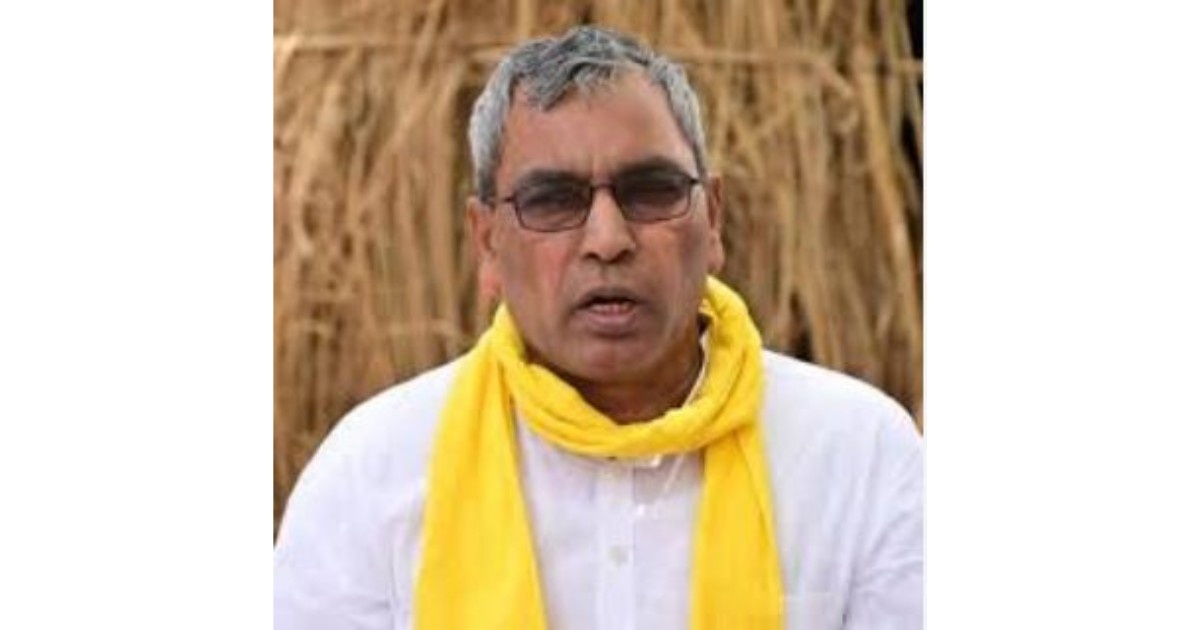
Om Prakash Rajbhar criticizes Akhilesh Yadav over electricity claims in Uttar Pradesh, calling free power promise misleading.
A fresh political exchange has erupted in Uttar Pradesh after Om Prakash Rajbhar, president of the Suheldev Bharatiya Samaj Party and the state’s Minority Welfare Minister, criticized Samajwadi Party chief Akhilesh Yadav over his claims related to electricity supply and proposed welfare measures.
Addressing the media in Lucknow, Rajbhar accused Yadav of “misleading the public” and questioned the credibility of his recent promise to provide 300 units of free electricity if his party returns to power.
Allegations Over Past Electricity Supply
Om Prakash Rajbhar alleged that during the tenure of Akhilesh Yadav as Chief Minister, electricity supply in rural areas was severely limited.
He claimed that villages received only around five hours of electricity daily, while urban areas had approximately ten hours of supply. According to him, uninterrupted 24-hour electricity was restricted to select districts such as Rampur, Etawah, and Mainpuri.
“These claims about free electricity should be viewed in light of past performance,” Rajbhar said, suggesting that the current promises lack credibility.
Criticism of Free Power Promise
Responding to the Samajwadi Party’s proposal to provide 300 units of free electricity, Rajbhar questioned its feasibility and intent.
He argued that during the earlier administration, infrastructure challenges such as frequent transformer failures were common. According to him, local communities often had to contribute funds to replace damaged transformers.
“In those days, people had to pay from their own pockets for basic electricity infrastructure. Today, that situation has changed,” he said.
Comparison With Current Government
Rajbhar contrasted past conditions with the present scenario under the state government led by Yogi Adityanath.
He stated that electricity supply has improved significantly, with villages reportedly receiving up to 18 hours of power, tehsils around 20 hours, and district headquarters enjoying nearly uninterrupted supply.
He also highlighted improvements in maintenance, claiming that faulty transformers are now replaced within 24 hours without financial burden on residents.
Political Context and Ongoing Debate
The exchange comes amid heightened political activity in Uttar Pradesh, where parties are actively outlining their policy agendas and welfare promises.
Electricity supply remains a key issue in the state’s political discourse, often used by leaders to highlight governance performance and connect with voters.
Analysts note that such debates are likely to intensify as political competition grows, with parties emphasizing both past achievements and future commitments.
Remarks on Women’s Reservation
In addition to the electricity debate, Om Prakash Rajbhar also commented on the broader issue of women’s representation in politics.
Referring to the Nari Shakti Vandan Act, he said the initiative reflects a vision to bring more women into the mainstream of governance.
He claimed that opposition parties did not support the measure, which he said affected its progress.
Discussion on Delimitation and Representation
Rajbhar further touched upon the issue of parliamentary representation, noting that the number of seats in the Lok Sabha has remained unchanged despite significant population growth.
He pointed out that when the current structure was established, India’s population was around 680 million, compared to over 1.4 billion today. According to him, proposals to increase the number of seats based on census data have faced opposition.
Political Messaging and Voter Outreach
The statements by Om Prakash Rajbhar reflect ongoing efforts by political leaders to shape public perception ahead of future electoral contests.
By focusing on issues such as electricity supply, infrastructure, and welfare schemes, parties aim to address concerns that directly impact daily life.
Observers suggest that such narratives play a crucial role in influencing voter sentiment, particularly in a state as politically significant as Uttar Pradesh.
Political Debate Over Governance and Promises Intensifies
The latest remarks underline the continuing political contest over governance records and future commitments in Uttar Pradesh. As leaders exchange claims and counterclaims, issues like electricity supply and public welfare remain central to the discourse.
With competing visions being presented to the electorate, the debate is expected to evolve further, highlighting the broader dynamics of policy, performance, and political messaging in the state.
Inputs & Images: Hindusthan Samachar
Edited By: Akshaya Polepalli
Also Read: Crude Oil Rally Continues as Brent Nears $100 Amid Strait of Hormuz Tensions