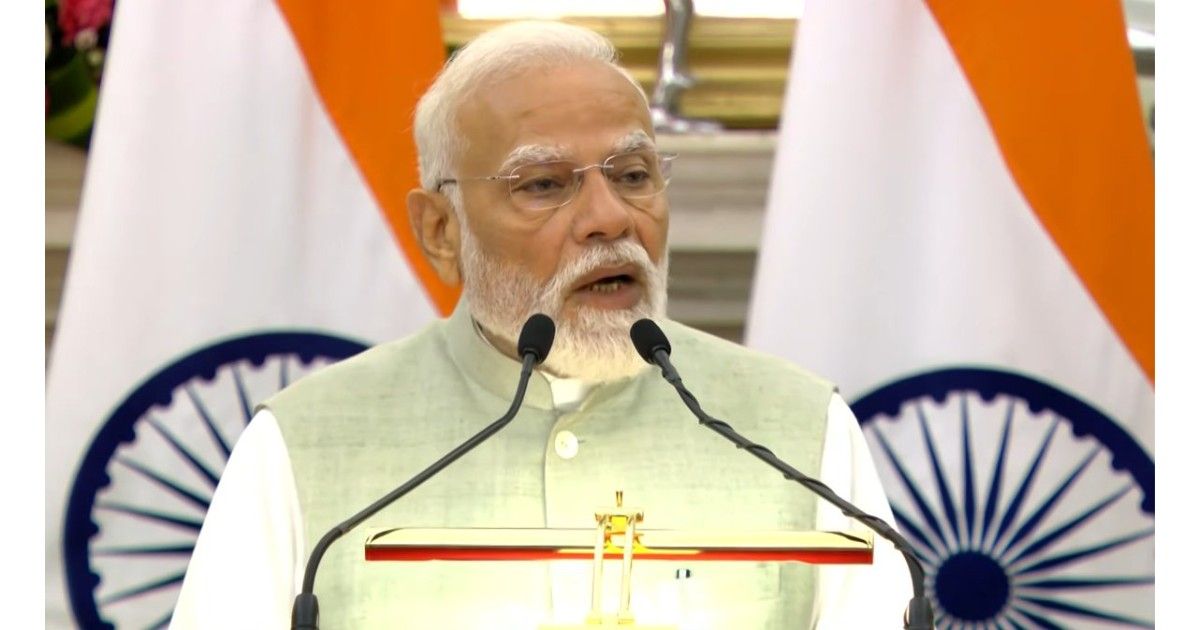
India and South Korea have agreed to initiate negotiations to upgrade their existing trade pact, marking a significant step toward strengthening economic and strategic ties between the two nations. The announcement came after bilateral discussions between Prime Minister Narendra Modi and South Korean President Lee Jae-myung at Hyderabad House on Monday.
The decision to review and enhance the Comprehensive Economic Partnership Agreement (CEPA) reflects a shared intent to deepen economic collaboration at a time when global trade dynamics are undergoing rapid changes due to geopolitical tensions and supply chain disruptions.
Strategic Push to Economic Partnership
Addressing a joint press conference, Prime Minister Narendra Modi described the evolving partnership as forward-looking and multidimensional. Emphasising the breadth of cooperation, he stated that both countries aim to build new opportunities “from chips to ships, from talent to technology, from entertainment to energy.”
The CEPA upgrade is expected to address existing trade bottlenecks, expand market access, and align the agreement with emerging sectors such as digital trade, green energy, and advanced manufacturing.
Currently, bilateral trade between India and South Korea stands at approximately $27 billion. Both nations have set an ambitious target to nearly double this figure to $50 billion by 2030, signalling confidence in the long-term potential of the partnership.
New Institutional and Financial Frameworks
As part of efforts to achieve this trade expansion, both sides agreed to establish an India–Korea Financial Forum. This platform is expected to facilitate investment flows, enhance financial cooperation, and provide a structured mechanism for resolving trade and investment challenges.
In addition, several memoranda of understanding (MoUs) were exchanged during the meeting, covering sectors such as infrastructure, innovation, and industrial collaboration. These agreements aim to create a more enabling environment for businesses from both countries.
Focus on Technology and Innovation
A major highlight of the bilateral talks was the announcement of the “India–Korea Digital Bridge” initiative. This framework is designed to strengthen cooperation in cutting-edge sectors including artificial intelligence, semiconductors, and information technology.
Both countries see technology as a key driver of future growth. South Korea’s expertise in electronics and semiconductor manufacturing complements India’s expanding digital ecosystem and skilled workforce, creating opportunities for mutual benefit.
The collaboration is also expected to support supply chain diversification, particularly in the semiconductor sector, which has gained strategic importance globally.
Cultural and Historical Connections
Beyond economic ties, the leaders underscored the deep cultural linkages between India and South Korea. Prime Minister Modi referred to the historical narrative of Princess Suriratna from Ayodhya and King Kim Suro of Korea, describing it as a symbol of the longstanding relationship between the two civilizations.
Cultural exchange continues to play a vital role in strengthening bilateral relations. Korean popular culture, including music and television content, has gained significant traction in India, while Indian cinema and cultural traditions are increasingly appreciated in South Korea.
To further promote people-to-people connections, both nations announced plans to organise the “India–Korea Friendship Festival” in 2028. The event is expected to showcase cultural diversity and foster deeper engagement between citizens of the two countries.
Cooperation on Global and Regional Issues
The discussions also touched upon broader geopolitical concerns, with both leaders emphasising the importance of maintaining peace and stability in the Indo-Pacific region. India and South Korea share similar perspectives on ensuring a free, open, and inclusive regional order.
Prime Minister Modi highlighted the need for coordinated efforts to address global challenges, including economic uncertainty and security concerns. He reiterated India’s commitment to working with like-minded partners to promote sustainable development and regional stability.
President Lee Jae-myung echoed these sentiments, noting that global peace and stability are essential for economic growth. He also mentioned that both leaders discussed developments in the Middle East and agreed on the importance of restoring stability in the region.
Advancing Digital and Financial Integration
In a move aimed at enhancing convenience for travellers and businesses, the two countries agreed to link their electronic payment systems. This initiative will enable seamless transactions using local QR codes in each other’s countries, simplifying cross-border payments.
Such measures are expected to boost tourism, business travel, and retail transactions, further strengthening economic ties at the grassroots level.
Institutional Reforms and Global Cooperation
Both leaders also stressed the importance of reforms in global institutions to better reflect contemporary realities. They called for greater cooperation on international platforms to address emerging global challenges.
India and South Korea have increasingly collaborated in multilateral forums, and the latest developments indicate a shared commitment to strengthening this cooperation.
Strengthening Trade Amid Global Uncertainty
The decision to upgrade the CEPA comes at a time when global trade is facing uncertainties due to geopolitical tensions and shifting economic alliances. By revisiting their trade agreement, India and South Korea aim to create a more resilient and adaptable economic partnership.
Experts believe that the revised agreement could unlock new opportunities in sectors such as renewable energy, electric mobility, digital services, and advanced manufacturing.
Expanding Scope of Bilateral Engagement
The evolving partnership reflects a broader trend of India strengthening ties with key Asian economies. South Korea, known for its technological prowess and industrial capabilities, is seen as a crucial partner in India’s growth trajectory.
For South Korea, India represents a large and rapidly growing market with significant potential across sectors. The enhanced partnership is expected to benefit businesses, investors, and consumers in both countries.
A Forward-Looking Partnership
The outcomes of the bilateral talks indicate a clear intent to move beyond traditional areas of cooperation and explore new avenues for collaboration. By focusing on technology, trade, and cultural exchange, India and South Korea are positioning their relationship for the future.
The planned CEPA upgrade, along with new initiatives such as the Digital Bridge and Financial Forum, underscores the commitment of both nations to building a comprehensive and dynamic partnership.
A Renewed Economic and Strategic Trajectory
The latest developments in India–South Korea relations mark a significant step toward deepening bilateral engagement across multiple domains. With a clear roadmap for expanding trade, enhancing technological collaboration, and strengthening cultural ties, both countries are working to create a partnership that is resilient, inclusive, and future-ready.
As negotiations on the upgraded CEPA move forward, the coming years are likely to witness greater economic integration and strategic alignment between the two nations, reinforcing their role as key partners in an increasingly interconnected world.
Inputs & Images: Hindusthan Samachar
Edited By: Akshaya Polepalli
Also Read: Election Commission Imposes Dry Days for Assembly Elections and By-Polls to Ensure Fair Voting