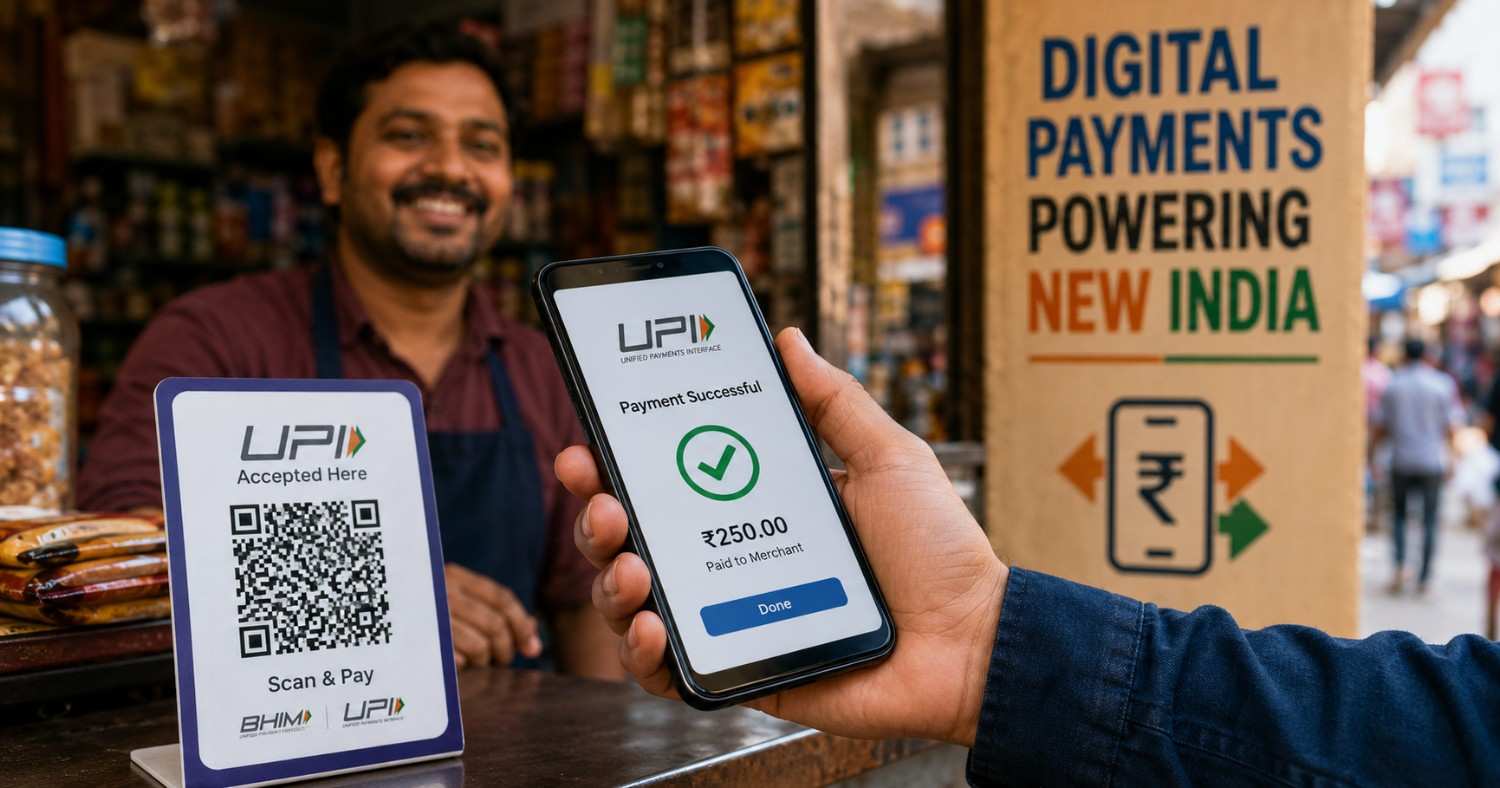
UPI payments are continuing to break records across India as the country’s digital payment ecosystem expands faster than ever before. From small roadside tea stalls to luxury shopping malls, millions of Indians are now using smartphones and QR codes for everyday transactions. The rapid rise of digital payments has completely changed how consumers spend money, how businesses operate, and how India is positioning itself as a global leader in fintech innovation.
The success of UPI payments has become one of the biggest financial transformation stories in modern India. Over the past few years, digital transactions have moved beyond urban areas and reached smaller towns and villages. This growth has been supported by affordable smartphones, cheaper internet access, government-backed digital initiatives, and the increasing popularity of apps like PhonePe, Google Pay, and Paytm.
Today, UPI payments are no longer viewed as a modern convenience alone. For millions of users, they have become an essential part of daily life. Whether people are paying utility bills, ordering food, shopping online, or transferring money instantly to family members, digital transactions are becoming faster, easier, and more reliable.
Why UPI Payments Are Growing So Quickly
One major reason behind the explosive rise of UPI payments is convenience. Users can instantly transfer money directly from bank accounts without needing physical cash or debit cards. This simplicity has encouraged consumers across different age groups to adopt digital payment platforms for regular spending.
Another factor driving UPI payments is the expansion of digital India initiatives. Government campaigns promoting cashless transactions and financial inclusion have encouraged more citizens to use digital banking services. As internet connectivity improves in rural regions, digital payment systems are becoming accessible to first-time users who previously relied heavily on cash.
The COVID-19 pandemic also accelerated the growth of UPI payments. During lockdowns and health restrictions, consumers preferred contactless payment methods for safety and convenience. Even after restrictions ended, many people continued using digital payments because they had become comfortable with QR code scanning and instant transfers.
Merchants have also benefited significantly from UPI payments because the system reduces dependency on cash handling. Small business owners can now receive instant payments directly into bank accounts without investing in expensive payment machines. Street vendors, grocery stores, restaurants, and auto drivers have rapidly embraced digital transactions because they improve efficiency and reduce payment delays.
Digital India and the Fintech Revolution
The rise of UPI payments is closely linked to the broader vision of digital India. Over the last decade, India has invested heavily in digital infrastructure, banking access, and financial technology. These developments created the foundation for a payment ecosystem capable of handling billions of transactions every month.
Experts believe UPI payments are helping India become one of the world’s fastest-growing fintech markets. Global investors and technology companies are paying close attention to India’s payment revolution because the scale of adoption is unmatched in many countries. International businesses are increasingly viewing India as a model for digital financial innovation.
Fintech startups are also benefiting from the rapid expansion of UPI payments. Many companies are developing advanced financial services connected to digital payments, including lending platforms, expense tracking tools, investment applications, and business payment solutions. This growing ecosystem is generating jobs, attracting investment, and encouraging further innovation.
Banks are adapting quickly to the popularity of UPI payments as well. Traditional banking institutions are strengthening digital services to remain competitive in a market increasingly driven by mobile-first consumers. Several banks are now investing heavily in user-friendly apps, cybersecurity systems, and AI-powered customer support.
How UPI Payments Changed Consumer Habits
UPI payments have significantly changed spending behavior among Indian consumers. People now expect faster and smoother transactions in both online and offline environments. Cashless payments have become particularly popular among younger users who prefer mobile-based financial solutions over traditional banking methods.
One important impact of UPI payments is the rise of impulse purchases and instant transactions. Consumers can complete payments within seconds without worrying about carrying cash or waiting for card approvals. This convenience has increased digital commerce activity across multiple sectors.
The popularity of UPI payments has also improved financial transparency for many users. Digital transaction histories help individuals track spending patterns more efficiently. Small business owners are increasingly using transaction records for budgeting, tax filing, and business planning.
In addition, UPI payments are helping introduce millions of first-time users to formal banking systems. Financial experts say digital payments are supporting financial inclusion by connecting underserved populations to banking services through simple smartphone technology.
Challenges Facing UPI Payments Growth
Despite massive success, UPI payments still face several challenges. Cybersecurity risks remain one of the biggest concerns in India’s digital payment ecosystem. As online transactions increase rapidly, fraud attempts and phishing scams are also rising. Experts are urging users to remain cautious about fake links, unauthorized apps, and suspicious payment requests.
Network issues and technical outages can also affect UPI payments occasionally, especially during high transaction periods. Payment delays or server problems sometimes frustrate users who depend heavily on digital transactions for daily activities.
Another challenge involves digital literacy. While urban consumers are highly familiar with mobile payments, some first-time users in rural areas still require guidance regarding safe digital banking practices. Financial awareness campaigns remain important for ensuring secure adoption.
Competition among fintech companies is another factor shaping the future of UPI payments. Payment platforms are constantly introducing cashback offers, rewards programs, and new features to attract users. While competition encourages innovation, it also increases pressure on companies to maintain profitability.
Future Outlook for UPI Payments in India
The future of UPI payments appears extremely strong as India continues moving toward a more digitally connected economy. Industry experts believe transaction volumes will continue increasing because consumers now view digital payments as a normal part of everyday life.
The integration of artificial intelligence and advanced financial technologies may further strengthen UPI payments in the coming years. AI-powered fraud detection systems, personalized financial recommendations, and smarter payment interfaces could improve user experience and security.
Cross-border payment partnerships may also create new opportunities for UPI payments internationally. India is already exploring collaborations with multiple countries to enable easier global digital transactions for travelers and businesses.
Government support is expected to remain a major growth driver for UPI payments. Policymakers continue promoting digital infrastructure, fintech innovation, and financial inclusion programs aimed at expanding digital access across the country.
As digital India continues evolving, UPI payments are becoming far more than a payment method. They represent a major shift in how Indians interact with money, technology, and commerce. From urban professionals to small-town entrepreneurs, digital transactions are shaping the future of India’s economy.
The continued rise of UPI payments highlights how quickly India is embracing technology-driven financial solutions. With increasing smartphone penetration, expanding internet access, and growing consumer trust, the country’s digital payment revolution shows no signs of slowing down anytime soon.
Key Insights
- UPI payments are rapidly transforming India into one of the world’s fastest-growing digital payment economies.
- Digital transactions have become mainstream across India, from roadside tea stalls and local kirana shops to malls, restaurants, taxis, and e-commerce platforms.
- The rise of QR code-based transactions is reshaping consumer behavior, business operations, and India’s overall fintech ecosystem.
- PhonePe, Google Pay, and Paytm remain among the most widely used digital payment platforms driving UPI adoption.
- UPI payments are no longer seen as just a convenience feature but as an essential part of daily life for millions of Indians.
- Consumers increasingly rely on digital payments for utility bills, food delivery, online shopping, local purchases, peer-to-peer transfers, and transportation services.
- Convenience is one of the biggest reasons behind the explosive growth of UPI payments because users can transfer money instantly without carrying cash or using debit cards.
- Government-backed Digital India initiatives have significantly accelerated the adoption of digital banking and cashless payment systems.
- Affordable smartphones and cheaper internet access have enabled UPI expansion into smaller towns and rural regions.
- The COVID-19 pandemic played a major role in accelerating contactless payment adoption across India.
- Even after pandemic restrictions ended, consumers continued using UPI payments because of the ease and speed of QR-based transactions.
- Merchants and small business owners are benefiting because UPI reduces dependence on cash handling and expensive payment infrastructure.
- Street vendors, grocery stores, auto drivers, restaurants, and local businesses have rapidly embraced digital payments due to faster settlements and operational convenience.
- India’s digital payment ecosystem is becoming a global fintech success story because of the scale and speed of adoption.
- International investors and technology companies are closely monitoring India’s UPI ecosystem as a model for digital financial innovation.
- Fintech startups are building new services around UPI payments, including lending tools, expense management systems, investment apps, and merchant solutions.
- The rapid expansion of digital payments is generating employment opportunities and attracting significant investment into India’s fintech sector.
- Traditional banks are aggressively improving mobile apps, cybersecurity systems, and AI-powered support services to stay competitive in a digital-first market.
- UPI payments have changed consumer spending habits by enabling faster and smoother transactions in both online and offline environments.
- Cashless transactions are especially popular among younger users who prefer mobile-first financial solutions over traditional banking methods.
- Instant payment convenience is contributing to more impulse purchases and higher digital commerce activity.
- Digital transaction records are helping users and businesses improve budgeting, expense tracking, and financial transparency.
- UPI adoption is also improving financial inclusion by connecting millions of first-time users to formal banking systems through smartphones.
- Cybersecurity remains one of the biggest concerns in the digital payment ecosystem due to phishing scams, fraud attempts, and fake payment links.
- Experts are encouraging users to remain cautious about unauthorized apps and suspicious payment requests.
- Technical outages and network delays during peak usage periods can occasionally disrupt UPI transactions and frustrate users.
- Digital literacy remains an important challenge, especially among first-time users in rural regions who require guidance on safe online banking practices.
- Competition among fintech companies is increasing rapidly as platforms introduce cashback offers, loyalty programs, and new features to attract users.
- Industry experts believe UPI transaction volumes will continue growing as digital payments become fully integrated into everyday life.
- Artificial intelligence may strengthen future UPI systems through smarter fraud detection, personalized financial tools, and improved user experiences.
- India is exploring cross-border digital payment collaborations that could expand UPI usage internationally for travelers and businesses.
- Government support for digital infrastructure, fintech innovation, and financial inclusion is expected to remain a major driver of UPI growth.
- The article positions UPI payments as a symbol of India’s broader digital transformation, where technology, banking, and commerce are increasingly interconnected.
Edited By: Akshaya Polepalli
Also Read: Indian Tech Stocks in Focus Amid AI Boom
Follow us on google news: Click Here