100% LPG supply ensured across India amid crisis, Centre confirms no shortages while fertiliser stocks and port operations remain stable.
The Government of India on Thursday assured that domestic liquefied petroleum gas (LPG) supply remains fully stable across the country, with no shortages reported at distributor levels despite ongoing geopolitical tensions in West Asia. Officials emphasised that proactive planning, strong logistics and coordinated inter-ministerial efforts have ensured uninterrupted supply of essential commodities, including cooking gas and fertilisers.
The assurance came during a high-level press briefing in the national capital, where senior officials from multiple ministries outlined the government’s preparedness to manage supply chains amid global uncertainties.
No LPG Shortages, Supply Chain Fully Functional
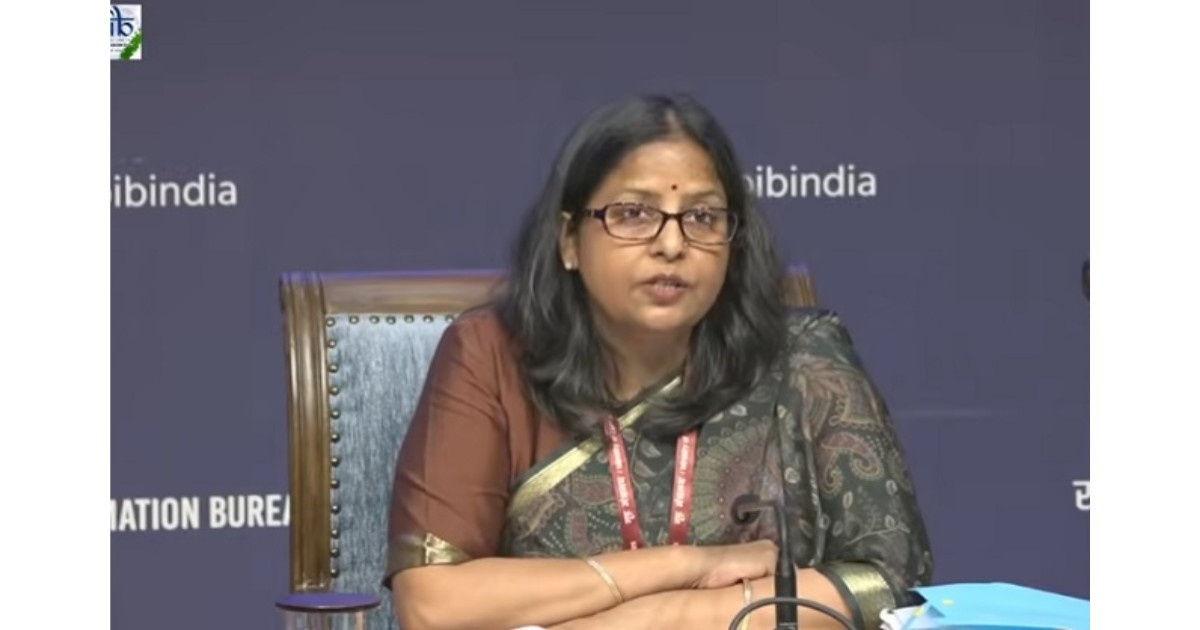
Addressing the media, Sujata Sharma, Joint Secretary in the Ministry of Petroleum and Natural Gas, confirmed that LPG availability stands at 100% nationwide, with seamless distribution across both urban and rural regions.
She stated that:
- No LPG distributor in the country is facing stock depletion
- Supply chains remain uninterrupted
- Booking cycles are being managed efficiently
The government has also leveraged digital systems to streamline delivery processes. According to officials, nearly 98% of LPG bookings are now being made online, reflecting a significant shift toward digital platforms.
Additionally, around 93% of LPG cylinder deliveries are being authenticated through the Delivery Authentication Code (DAC) system, ensuring transparency and accountability in distribution.
Commercial LPG Supply Gradually Restored
While domestic LPG supply remains fully stable, the government also reported steady recovery in the commercial LPG segment, which had experienced temporary disruptions earlier.
Officials confirmed that:
- Commercial LPG supply has reached approximately 70% restoration
- A total of 192,532 tonnes of commercial LPG has been sold this month
- Around 8,500 tonnes were supplied in a single day recently
A dedicated coordination mechanism involving oil marketing companies is overseeing the situation. A three-member committee comprising executive directors from these companies is working closely with state governments to ensure uninterrupted supply.
This coordinated approach has helped stabilise the commercial LPG market, particularly for industries and businesses dependent on bulk gas supply.
Fertiliser Stocks Remain Strong Ahead of Kharif Season
In addition to LPG supply, the government also reviewed the availability of fertilisers ahead of the crucial Kharif agricultural season.
Aparna S. Sharma, Joint Secretary in the Ministry of Chemicals and Fertilisers, stated that fertiliser stocks across the country are robust and sufficient to meet demand.
Key highlights include:
- Total requirement for Kharif 2026 estimated at 390.54 lakh metric tonnes (LMT)
- Current availability stands at 193.38 LMT, nearly 50% of total requirement
Breakdown of key fertilisers:
- Urea: 73.81 LMT available
- DAP (Di-Ammonium Phosphate): 23.47 LMT available
- Other fertilisers are also adequately stocked
Officials clarified that maximum retail prices (MRPs) remain unchanged, ensuring affordability for farmers.
Strategic Planning and Imports Strengthen Supply
The government credited its preparedness to early planning, advance stocking, and diversified sourcing strategies.
Officials noted that:
- Total fertiliser availability has increased by approximately 78 LMT
- 62.37 LMT from domestic production
- 15.39 LMT from imports
To further strengthen supply:
- Global tenders have been secured for around 38 LMT of urea
- Additional tenders for 19 LMT of phosphatic and potassic fertilisers have been issued
This multi-pronged approach has helped insulate the country from global supply disruptions, ensuring that agricultural operations remain unaffected.
Seafarer Safety and Maritime Operations Remain Stable
The Ministry of Ports, Shipping and Waterways also provided updates on maritime operations and the safety of Indian seafarers in the region affected by geopolitical tensions.
Mukesh Mangal, Additional Secretary in the ministry, confirmed that:
- All Indian seafarers in the affected region are safe and secure
- No incidents involving Indian-flagged vessels have been reported in the past 24 hours
- Port operations across the country remain normal and congestion-free
The ministry has been maintaining close coordination with:
- The Ministry of External Affairs
- Indian missions abroad
- Maritime stakeholders
Control Room Handles High Volume of Queries
Since the onset of the crisis in West Asia, the government has activated a control room to assist Indian seafarers and their families.
Officials reported that:
- 8,155 calls and over 17,000 emails have been handled so far
- In the last 24 hours alone, 121 calls and 285 emails were received
The control room has played a crucial role in addressing concerns and providing real-time assistance.
Evacuation Efforts and Safe Return of Seafarers
The government has also facilitated the safe return of Indian seafarers affected by the crisis.
According to officials:
- Over 2,857 Indian seafarers have been repatriated so far
- 28 seafarers returned safely in the last 24 hours
These efforts highlight the government’s focus on ensuring the safety and welfare of Indian nationals working in international waters.
Integrated Approach Ensures Stability
The briefing underscored the importance of an integrated, multi-ministerial approach in managing the impact of global crises on domestic supply chains.
Key elements of this strategy include:
- Real-time monitoring of supply levels
- Coordination between central and state governments
- Use of digital systems for transparency
- Strategic imports and domestic production
This comprehensive framework has enabled the government to maintain stability in essential services despite external challenges.
Economic and Social Implications
Ensuring uninterrupted supply of LPG and fertilisers has significant implications for both households and the broader economy.
For Households
- Continued access to cooking gas ensures daily life remains unaffected
- Stable supply prevents price volatility
For Agriculture
- Adequate fertiliser availability supports timely sowing
- Stable prices protect farmers from financial stress
For Industry
- Restoration of commercial LPG supply supports business operations
- Smooth logistics prevent disruptions in manufacturing and services
A System Under Pressure, Yet Holding Firm
The current global scenario has tested supply chains worldwide, but India’s experience so far suggests a system that is both resilient and responsive.
By combining policy planning, logistical efficiency, and technological integration, the government has managed to maintain stability in critical sectors.
Officials reiterated that the situation is being closely monitored and that necessary measures will continue to be taken to address any emerging challenges.
Supply Stability Amid Global Uncertainty
As geopolitical tensions continue to influence global markets, India’s ability to maintain 100% LPG supply and strong fertiliser availability highlights the effectiveness of its preparedness strategy.
The government’s assurance comes as a reassurance to millions of households, farmers, and businesses that essential supplies will remain uninterrupted.
With continuous monitoring, coordinated action, and strategic planning, authorities remain confident in their ability to navigate the evolving situation while ensuring stability across sectors.
Inputs & Images: Hindusthan Samachar
Edited By: Akshaya Polepalli
Also Read: PM Modi Urges Record Turnout as West Bengal Assembly Elections 2026 Enter Crucial Phase-2
Follow us on google news: Click Here