Narendra Modi on Thursday emphasised the need for continuous improvement in public service delivery, stating that a modern, responsive, and citizen-centric administrative system is essential for achieving the vision of a developed India by 2047.
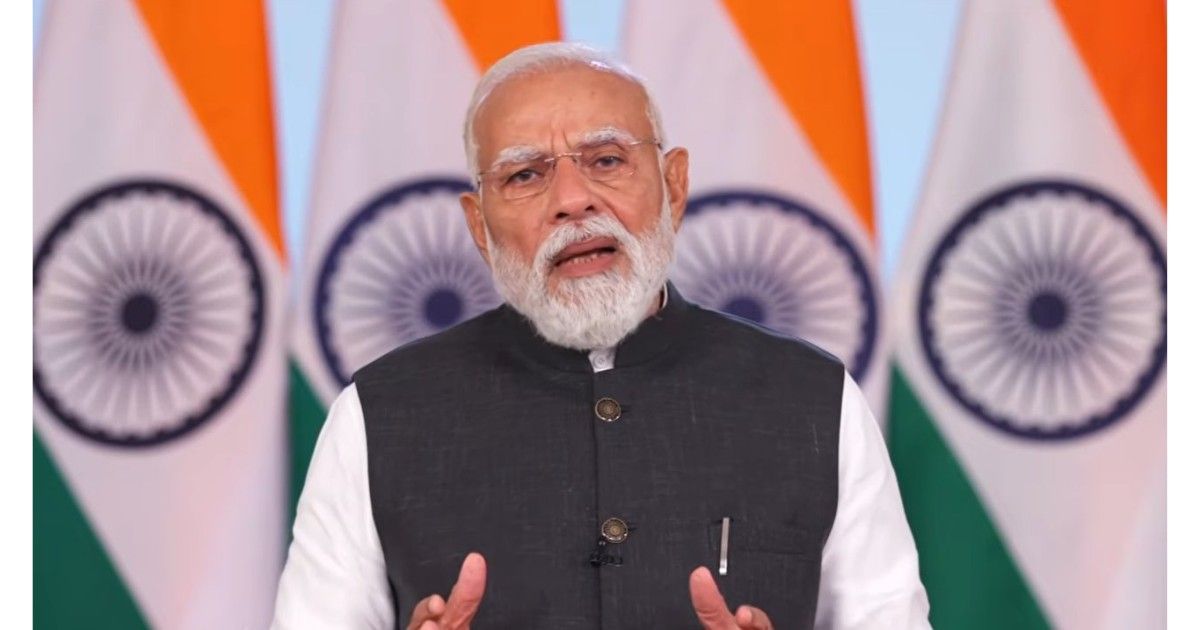
Speaking via video address at the inauguration of Karmayogi Sadhana Saptah, the Prime Minister underlined that governance systems must evolve in line with rapid global changes to meet the aspirations of citizens.
Focus on Modernising Public Services
Addressing government officials and stakeholders, Narendra Modi said that India is progressing rapidly in the 21st century, and administrative systems must remain “time-aligned” to emerging challenges.
He stressed that public services should not remain static but must continuously adapt to changing needs, technologies, and expectations.
According to the Prime Minister, efficient governance today requires a combination of capability, sensitivity, and responsiveness.
Karmayogi Sadhana Week: A Capacity-Building Initiative
The programme, Karmayogi Sadhana Saptah, is part of broader efforts to strengthen the skills and work culture of government employees.
The initiative aims to:
- Enhance administrative efficiency
- Promote continuous learning
- Encourage a service-oriented mindset among officials
The Prime Minister expressed confidence that such initiatives would contribute to building a more capable and future-ready administrative workforce.
‘Citizen is Supreme’ as Guiding Principle
Highlighting the philosophy of governance, Narendra Modi referred to the concept of “Nagrik Devata Bhav,” which places citizens at the centre of policymaking and service delivery.
He said that the success of governance should be measured by improvements in citizens’ “ease of living” and overall quality of life.
This approach, he noted, requires government systems to be more accessible, transparent, and responsive to public needs.
Aspirational India and Administrative Responsibility
Describing India as an “aspirational society,” the Prime Minister said that citizens today have higher expectations and ambitions.
He emphasised that the role of the government is to support these aspirations by creating enabling systems and delivering efficient services.
Administrative machinery, he added, must be proactive in addressing challenges and facilitating growth opportunities for all sections of society.
Emphasis on Continuous Learning
Narendra Modi urged government officials to adopt a culture of lifelong learning.
He encouraged officers and staff to develop the habit of learning something new every day, stating that continuous self-improvement is key to effective governance.
The concept of a “karmayogi,” he explained, involves viewing work as a form of service and striving for excellence in public duty.
Shift Towards Duty-Centric Governance
The Prime Minister highlighted a shift in administrative thinking from a focus on authority to a focus on responsibility.
He said that earlier approaches often emphasised “being an officer,” whereas modern governance requires a “duty-conscious” mindset.
Officials, he added, should reflect on their responsibilities before making decisions, ensuring that outcomes are beneficial for society and aligned with national goals.
Role of Technology and Data in Governance
A significant part of the Prime Minister’s address focused on the role of technology in transforming governance.
He noted that digital tools have already improved service delivery in recent years and that emerging technologies like artificial intelligence (AI) will further accelerate this transformation.
According to him, future administrators must be proficient in:
- Data analysis
- Digital platforms
- Technology-driven decision-making
Such capabilities, he said, will enhance transparency, efficiency, and accountability in governance.
Strengthening Institutional Capacity
Narendra Modi emphasised the importance of sustained investment in capacity building.
He called for regular training programmes and institutional reforms to ensure that government personnel are equipped to handle evolving challenges.
He also extended greetings on the foundation day of the Capacity Building Commission, acknowledging its role in enhancing administrative capabilities.
Whole-of-Government Approach
The Prime Minister stressed the need for a “whole-of-government” approach, which involves better coordination among different departments and levels of administration.
He said that siloed functioning must be replaced by collaborative efforts to achieve common goals.
Referring to India’s federal structure, he highlighted that the country’s overall progress depends on the collective advancement of all states.
He also called for moving beyond outdated classifications of states and focusing instead on inclusive growth.
Building Public Trust Through Local Governance
Narendra Modi noted that for many citizens, the nearest government office represents the face of the entire governance system.
The behaviour and efficiency of officials at the local level, he said, play a crucial role in shaping public trust in democratic institutions.
Maintaining this trust requires professionalism, empathy, and accountability in everyday interactions with citizens.
Broader Context: Governance Reforms in India
India has undertaken several governance reforms in recent years, focusing on:
- Digitalisation of services
- Simplification of procedures
- Improved transparency
Initiatives like Karmayogi Sadhana Saptah are part of a larger framework aimed at modernising public administration and making it more citizen-centric.
These reforms are aligned with the long-term vision of transforming India into a developed nation by 2047, marking 100 years of independence.
Public Impact and Significance
For citizens, improved public services translate into:
- Faster access to government schemes
- Reduced bureaucratic delays
- Better quality of life
The emphasis on capacity building and technology adoption is expected to enhance service delivery across sectors such as healthcare, education, and infrastructure.
Outlook Ahead
As India moves towards its long-term development goals, the focus on modernising public services is expected to remain a key priority.
The vision outlined by Narendra Modi underscores the importance of continuous reform, innovation, and citizen-centric governance.
Programmes like Karmayogi Sadhana Saptah are likely to play a significant role in shaping the administrative framework needed to support India’s growth journey in the coming decades.
Inputs & Images: Hindusthan Samachar
Edited By: Akshaya Polepalli
Also Read: Gold Prices Surge by ₹3,000+, Silver Jumps ₹5,000/kg as Bullion Market Sees Strong Rally