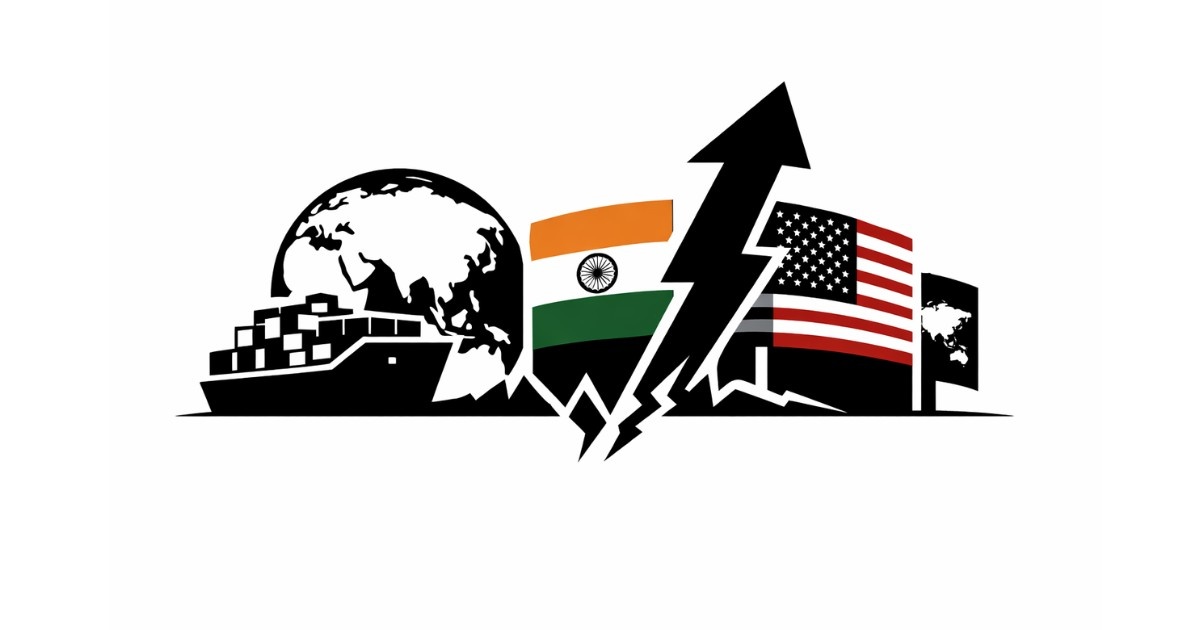
The global trade landscape shifted sharply this week after US Raises Global Import Tariffs on a wide range of industrial and consumer goods. The move has triggered immediate reactions from major exporting nations, including India. Trade experts say the decision could reshape supply chains, alter pricing patterns, and impact investor confidence across emerging markets.
When the US Raises Global Import Tariffs, it does not only affect direct trade partners. It creates ripple effects across interconnected economies. For India, which has steadily expanded exports in sectors such as pharmaceuticals, textiles, engineering goods, and electronics, the development raises both concerns and strategic questions.
Why the US Raises Global Import Tariffs Now
According to policy analysts, the decision to raise tariffs is linked to domestic economic priorities. The US administration has emphasized protecting local manufacturing, reducing trade deficits, and strengthening supply chain resilience. When the US Raises Global Import Tariffs, it signals a stronger protectionist stance that could influence global economic diplomacy.
Experts believe inflation control, election-year pressures, and industrial policy alignment may have influenced the move. However, higher tariffs often result in increased import costs, which may ultimately affect American consumers and businesses.
Immediate Impact on India’s Export Sectors
The biggest question for Indian exporters is how the move will affect shipments to the United States. When the US Raises Global Import Tariffs, exporters face either reduced margins or higher end-prices in the American market.
Key sectors likely to feel pressure include:
- Engineering goods
- Auto components
- Steel and aluminum products
- Textiles and apparel
- Specialty chemicals
If the US Raises Global Import Tariffs across these categories, Indian firms may need to renegotiate contracts or explore alternative markets. Exporters operating on thin margins may face short-term stress.
Trade Balance and Currency Movements
Economists say that when the US Raises Global Import Tariffs, it can trigger volatility in currency markets. A stronger dollar combined with trade tensions may impact emerging market currencies, including the rupee.
India’s trade balance could also be influenced. If export volumes slow down due to tariff barriers, India may see pressure on its current account deficit. However, some analysts argue that diversified trade relationships could cushion the blow.
Global Supply Chains Under Pressure
Modern manufacturing relies heavily on global supply chains. When the US Raises Global Import Tariffs, companies often reassess sourcing strategies. This could lead to shifts in manufacturing hubs and logistics networks.
India has positioned itself as a trusted alternative manufacturing base under its production-linked incentive schemes. If companies seek to diversify away from heavily tariffed regions, India may benefit in selected sectors. However, uncertainty may delay immediate investment decisions.
Expert Views on Long-Term Implications
Trade economists suggest that when the US Raises Global Import Tariffs, the long-term outcome depends on global response. If other nations retaliate, trade wars could intensify. If negotiations follow, the situation may stabilize.
Indian trade experts say this could be a moment to accelerate free trade agreements and deepen partnerships with Europe, Southeast Asia, and Africa. Diversification remains critical to reduce dependency on any single market.
Some experts argue that higher tariffs might encourage American firms to invest directly in India to bypass trade barriers. That could create new opportunities in manufacturing and technology.
Impact on Jobs and MSMEs
Small and medium exporters are often the most vulnerable when the US Raises Global Import Tariffs. Larger corporations may absorb cost increases temporarily, but MSMEs may struggle with pricing pressure.
If orders decline, job creation in export-driven clusters could slow. Textile hubs, auto component zones, and chemical manufacturing clusters could feel the strain. Policymakers may need to introduce targeted support measures if export momentum weakens.
At the same time, strategic repositioning toward new markets could create fresh employment avenues in logistics, trade compliance, and global marketing.
Investor Sentiment and Market Reaction
Financial markets tend to react quickly when the US Raises Global Import Tariffs. Equity investors monitor export-heavy sectors closely. Any indication of margin compression may lead to short-term stock corrections.
However, seasoned investors often look beyond immediate turbulence. If India uses the situation to strengthen domestic manufacturing and trade diversification, the long-term outlook could remain stable.
Foreign portfolio flows may also respond to global risk sentiment. Emerging markets typically experience volatility during periods of trade tension.
Policy Response from India
Government officials are expected to study the tariff changes carefully. When the US Raises Global Import Tariffs, diplomatic engagement becomes essential. India may seek clarifications, exemptions, or sector-specific negotiations.
Trade policy experts suggest that India could accelerate bilateral trade talks and expand export incentives. Strengthening logistics infrastructure and improving cost competitiveness will also be important.
The situation could push policymakers to focus more on value-added exports rather than raw material shipments. High-value manufacturing reduces vulnerability to tariff shocks.
Strategic Opportunities Amid Challenges
While risks are evident, some analysts see opportunity. When the US Raises Global Import Tariffs on certain countries more aggressively, global buyers may look for alternative suppliers.
India’s improving ease of doing business, digital trade systems, and manufacturing reforms could make it an attractive choice. Sectors such as electronics assembly, renewable energy equipment, and specialty chemicals may benefit if companies reconfigure sourcing strategies.
Businesses that adapt quickly by upgrading technology and expanding into new geographies may emerge stronger.
Global Trade Diplomacy at a Crossroads
The decision comes at a time when global trade growth has already moderated. When the US Raises Global Import Tariffs, it adds uncertainty to an already cautious environment.
Multilateral institutions may call for dialogue to avoid escalation. Trade experts warn that prolonged tariff battles can slow global GDP growth and reduce consumer welfare.
India, as one of the world’s fastest-growing major economies, will play a balancing role. Maintaining strong ties with the United States while expanding trade partnerships elsewhere will be key.
The Road Ahead for Exporters
For Indian businesses, the immediate focus will be cost management and market diversification. When the US Raises Global Import Tariffs, agility becomes crucial.
Companies may:
- Explore Latin American and African markets
- Strengthen regional trade within Asia
- Invest in product differentiation
- Enhance quality standards to justify pricing
Long-term resilience depends on innovation and global competitiveness rather than tariff dependency.
Monitoring Economic Indicators
In the coming months, analysts will closely track export data, currency trends, and bilateral trade flows. When the US Raises Global Import Tariffs, the first signals appear in shipment volumes and pricing adjustments.
If demand in the US remains strong despite higher duties, the overall impact may be limited. But if buyers shift sourcing rapidly, exporters will need quick strategy adjustments.
Economic think tanks emphasize the importance of transparent communication between governments and industries during such transitions.
Broader Economic Perspective
Trade policies often reflect broader economic strategies. When the US Raises Global Import Tariffs, it highlights a preference for domestic industrial strength over open market expansion.
For India, the episode reinforces the need to build a self-reliant yet globally integrated economy. Expanding manufacturing capacity, strengthening innovation ecosystems, and supporting exporters through policy reforms will be central.
The coming quarters will determine whether the move leads to prolonged friction or constructive negotiations.
What remains clear is that when the US Raises Global Import Tariffs, global markets listen closely. India’s response, adaptability, and strategic planning will shape how deeply the impact is felt across industries.
As experts continue to decode the policy shift, businesses and policymakers alike are preparing for a period of recalibration in international trade.
Also Read: 9 Powerful Signals Behind India’s AI Market Boom as L&T and NVIDIA Plan Gigawatt-Scale AI Factories
Follow us on google news: Click Here