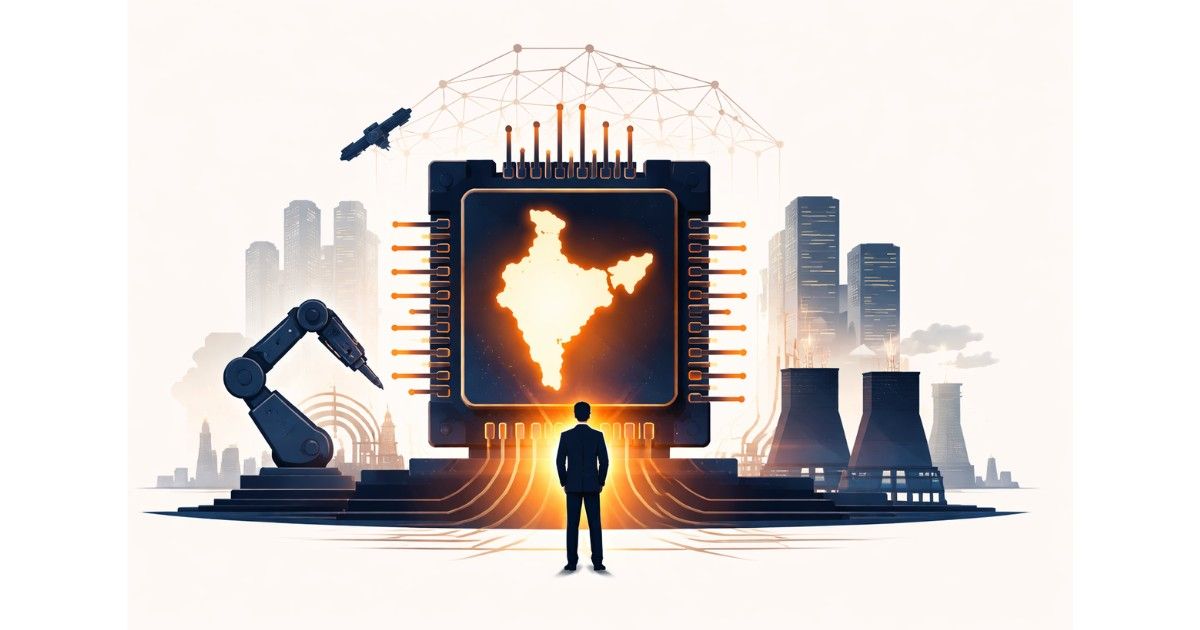
India’s AI Market Boom gathers pace as L&T and NVIDIA unveil gigawatt-scale AI factory plans, with major implications for jobs, investment, and long-term innovation across the technology ecosystem.
India’s AI Market Boom has entered a decisive phase after fresh announcements around large-scale AI infrastructure and manufacturing capacity. The spotlight is on engineering giant Larsen & Toubro and global chip leader NVIDIA, whose proposed gigawatt-scale AI factory plans could reshape the country’s technology manufacturing base.
The India’s AI Market Boom is no longer limited to software startups or digital services. It is moving into heavy infrastructure, high-performance computing, and semiconductor-linked ecosystems. The new factory proposals signal that India wants to become a serious production and deployment hub for artificial intelligence systems.
This shift marks a transition from being mainly a services-driven IT powerhouse to becoming a technology manufacturing and innovation center.
L&T’s Infrastructure Strength in the AI Push
Larsen & Toubro has long been associated with large engineering and infrastructure projects. Now, it is positioning itself at the center of India’s AI Market Boom by exploring advanced data centers and AI-ready industrial parks.
The company’s expertise in power systems, smart grids, and heavy construction gives it an advantage in building gigawatt-scale AI infrastructure. AI factories require stable energy supply, cooling systems, fiber connectivity, and high security. L&T’s experience in executing mega projects can help accelerate these developments.
By linking its engineering capabilities with AI-focused infrastructure, the firm may help anchor the next stage of India’s AI Market Boom.
NVIDIA’s Role in High-Performance AI Infrastructure
NVIDIA has emerged as a global leader in AI chips and computing platforms. Its possible collaboration on gigawatt-scale AI factories in India reflects confidence in the India’s AI Market Boom.
High-performance GPUs power generative AI models, research tools, and enterprise automation systems. Establishing large AI factories equipped with advanced computing clusters could attract multinational companies to deploy workloads locally.
This development supports data sovereignty goals and reduces reliance on overseas cloud centers. It also aligns with national ambitions to make the India’s AI Market Boom more self-reliant and globally competitive.
Gigawatt-Scale AI Factories Explained
Gigawatt-scale AI factories are massive data and computing facilities designed to support artificial intelligence workloads at scale. They combine energy generation, data storage, high-speed networking, and specialized processors.
For the India’s AI Market Boom, such factories can become the backbone of digital transformation. From healthcare analytics to financial modeling and defense applications, large AI clusters allow faster training of advanced models.
Building these facilities in India could cut latency, improve security, and make AI services more affordable for domestic firms.
Job Creation Across Skill Levels
One major impact of the India’s AI Market Boom will be job creation. Gigawatt-scale AI factories require engineers, technicians, cybersecurity experts, data scientists, and facility managers.
Construction alone could create thousands of temporary roles. Once operational, the factories would need ongoing technical support, research teams, and compliance professionals.
Beyond direct employment, ancillary industries such as component suppliers, cooling system manufacturers, and network providers may benefit. This multiplier effect strengthens the overall ecosystem and deepens the India’s AI Market Boom.
Boost to Domestic Manufacturing
India has been pushing to expand local manufacturing under various production-linked incentive programs. The India’s AI Market Boom fits into this larger strategy.
If AI factories begin sourcing equipment locally, it could encourage semiconductor packaging, server assembly, and power electronics manufacturing within the country. Over time, this may reduce import dependence and strengthen supply chains.
A stronger manufacturing base also improves resilience during global disruptions. The integration of AI infrastructure with domestic production capabilities could redefine India’s role in global technology supply networks.
Attracting Foreign Direct Investment
Large-scale AI projects often attract global investors. The India’s AI Market Boom could see increased foreign direct investment from technology funds, sovereign wealth funds, and venture capital firms.
Gigawatt-scale AI factories require significant capital expenditure. International investors may view such projects as long-term infrastructure plays with steady demand growth.
This influx of capital can help finance research centers, startup accelerators, and university collaborations. As a result, the India’s AI Market Boom could become more diversified and innovation-driven.
Policy Support and Regulatory Framework
The success of the India’s AI Market Boom depends on clear policies. Government support in areas such as land allocation, energy pricing, and digital security will be crucial.
Data protection rules must balance privacy with innovation. Clear guidelines on cross-border data flows can encourage multinational participation. Incentives for green energy use in AI factories may also shape the sector’s sustainability path.
Strong governance ensures that the India’s AI Market Boom grows responsibly while maintaining investor confidence.
Energy Demand and Sustainability Concerns
Gigawatt-scale AI factories consume significant power. This raises questions about energy sourcing and environmental impact. For the India’s AI Market Boom to remain sustainable, renewable energy integration will be vital.
Solar and wind projects linked to AI clusters can reduce carbon footprints. Advanced cooling technologies can lower water use and improve efficiency.
Balancing growth with sustainability will determine the long-term credibility of the India’s AI Market Boom on the global stage.
Innovation Spillover Effects
Large AI facilities often attract startups and research labs. The India’s AI Market Boom could lead to innovation corridors near these factories.
Universities may collaborate with industry partners to develop new algorithms, robotics systems, and AI-driven industrial tools. This creates a cycle where infrastructure supports research, and research drives further demand.
Such spillover effects can strengthen India’s position in advanced technologies beyond software services.
Strengthening Data Sovereignty
Data localization is a strategic priority for many nations. By expanding domestic AI infrastructure, the India’s AI Market Boom supports greater control over sensitive data.
Local AI factories allow government agencies and enterprises to process information within national borders. This reduces exposure to geopolitical risks and strengthens cybersecurity frameworks.
As digital services expand, secure domestic capacity becomes a strategic asset.
Competition and Global Positioning
Several countries are racing to build AI infrastructure. The India’s AI Market Boom must compete with established hubs in the United States, Europe, and East Asia.
However, India’s strengths include a large technology workforce, cost advantages, and a growing digital economy. Partnerships between domestic engineering firms and global chip leaders may provide the scale needed to compete internationally.
If executed effectively, gigawatt-scale AI factories could position India as a major AI infrastructure hub.
Challenges in Execution
Despite optimism, the India’s AI Market Boom faces hurdles. Land acquisition, regulatory approvals, and energy supply coordination can delay projects.
High capital requirements also pose risks if demand projections change. Technology cycles move fast, and infrastructure must remain adaptable.
Careful planning and phased development can reduce these risks and ensure steady progress.
Impact on Small and Medium Enterprises
While large corporations lead the push, smaller firms may benefit from service contracts, hardware supply, and specialized software development. The India’s AI Market Boom can create opportunities for MSMEs in areas such as maintenance, cybersecurity, and AI integration.
Inclusive growth ensures that benefits are widely distributed rather than concentrated among a few major players.
Investor Outlook and Market Confidence
Financial markets often respond positively to large technology investments. The India’s AI Market Boom could strengthen investor confidence in the broader tech sector.
Listed companies involved in data centers, renewable energy, and advanced manufacturing may see renewed interest. Long-term infrastructure bets can stabilize earnings expectations and attract institutional investors.
Such developments signal that AI is becoming a structural growth driver rather than a short-term trend.
Strategic Turning Point for Tech Manufacturing
The collaboration between engineering expertise and advanced computing technology may represent a turning point. The India’s AI Market Boom is evolving from policy discussions to concrete infrastructure commitments.
Gigawatt-scale AI factories are not just about servers and chips. They symbolize ambition to integrate energy, data, and manufacturing into a unified ecosystem.
If these plans move from blueprint to execution, they could reshape technology manufacturing, create high-value jobs, and strengthen India’s innovation capacity for decades.
The coming years will reveal how effectively these projects are implemented. Yet one fact is clear: the India’s AI Market Boom has entered a transformative stage, driven by partnerships that combine domestic industrial strength with global technological leadership.
Also Read: 7 Critical Insights on India’s AI Ecosystem Surge After the 2026 AI Impact Summit
Follow us on google news: Click Here