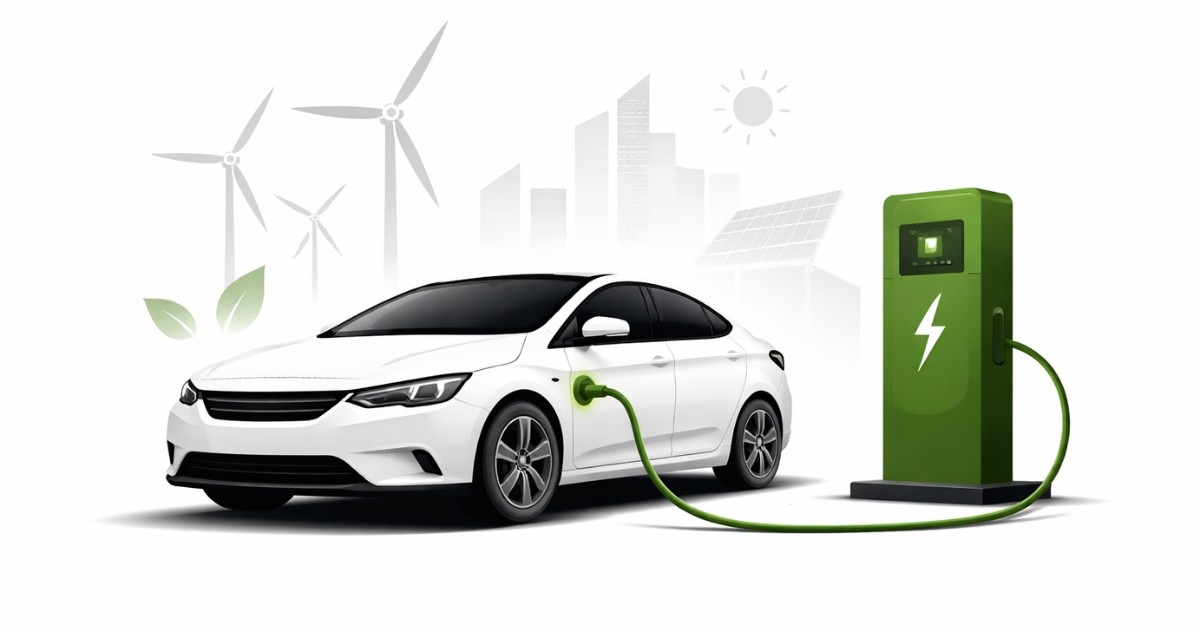
The EV Revolution in India 2026 is gaining strong momentum as price cuts, new launches, and rising fuel costs push more buyers toward electric vehicles. Car makers are expanding their EV line-ups, state governments are offering incentives, and consumers are actively searching for affordable electric options.
Over the past year, India’s electric vehicle market has shifted from a niche segment to a fast-growing mainstream category. With improved battery range and better charging infrastructure, electric mobility is becoming more practical for daily use.
Price Drops Boost Demand
One of the biggest drivers of the EV Revolution in India 2026 is price correction. Several automakers have reduced prices due to falling battery costs and government policy support.
Lower lithium prices globally have helped manufacturers cut production costs. As a result, entry-level electric cars and two-wheelers are becoming more affordable for middle-class buyers.
In many cities, state subsidies further reduce on-road prices. Buyers also benefit from lower registration charges and road tax exemptions in certain states.
Market analysts say price sensitivity remains high in India. Even small price drops can lead to a noticeable increase in bookings.
New EV Models Expanding Choices
The EV Revolution in India 2026 is also driven by a wide range of new launches across segments.
Electric Cars
Car manufacturers are introducing compact SUVs, hatchbacks, and premium electric sedans. Improved driving range, often above 300–400 km per charge, has reduced range anxiety among urban buyers.
Affordable compact EVs are attracting first-time car buyers. At the same time, premium electric SUVs are drawing interest from urban professionals.
Electric Two-Wheelers
Electric scooters continue to dominate EV sales in India. Lower running costs and easy charging options make them attractive for daily commuters.
Delivery companies and gig workers are also shifting toward electric two-wheelers due to lower fuel expenses.
Electric Buses and Commercial Vehicles
The EV Revolution in India 2026 is not limited to personal vehicles. State transport corporations are adding electric buses to their fleets. Logistics companies are investing in electric delivery vans to reduce fuel costs and carbon emissions.
Charging Infrastructure Expands
Charging infrastructure has improved significantly over the past two years. Major cities now have fast-charging stations in malls, office complexes, and highways.
Private companies and oil marketing firms are expanding charging networks across highways. This has made long-distance EV travel more practical.
The growth of charging stations is a key factor behind rising buyer confidence. The EV Revolution in India 2026 depends heavily on reliable charging access.
Home charging solutions are also becoming more common in urban apartments and gated communities.
Government Policies Supporting Growth
Central and state governments continue to promote electric mobility. Policy measures include:
- Subsidies under national EV schemes
- State-level purchase incentives
- Tax benefits for EV buyers
- Support for battery manufacturing
These measures are designed to reduce import dependence on fossil fuels and lower pollution levels.
The EV Revolution in India 2026 aligns with India’s long-term clean energy goals.
Buyer Interest Trends in 2026
Search trends show rising interest in electric vehicles, especially related to:
- EV price comparisons
- Battery replacement costs
- Charging station locations
- Government subsidy eligibility
Buyers are also researching total cost of ownership. Electric vehicles offer lower running and maintenance costs compared to petrol or diesel vehicles.
Fuel price volatility has further increased interest in EV options. Many urban commuters see electric mobility as a long-term savings strategy.
The EV Revolution in India 2026 reflects a shift in consumer mindset from curiosity to serious purchase consideration.
Cost of Ownership Advantage
One major reason behind the EV Revolution in India 2026 is lower operating cost.
Electric vehicles have fewer moving parts than internal combustion engine vehicles. This reduces servicing expenses.
Electricity cost per kilometer remains significantly lower than petrol or diesel cost per kilometer. Over five years, buyers may save a substantial amount on fuel and maintenance.
Fleet operators and cab services are rapidly adopting EVs for this reason.
Challenges Still Remain
Despite rapid growth, some challenges continue:
- High upfront cost compared to petrol vehicles
- Limited charging infrastructure in rural areas
- Battery replacement cost concerns
- Resale value uncertainty
However, industry experts believe these issues will gradually reduce as volumes increase and technology improves.
The EV Revolution in India 2026 is still in a growth phase, and structural improvements are ongoing.
Impact on Traditional Auto Industry
The growth of EVs is changing the competitive landscape. Traditional automakers are investing heavily in electric platforms.
New startups are also entering the market, increasing competition. This competition is pushing innovation and price correction.
Auto component manufacturers are adapting by focusing on EV-specific parts like battery packs, motors, and power electronics.
The EV Revolution in India 2026 is reshaping the entire automobile supply chain.
Investor and Market Perspective
The electric mobility sector has also attracted strong investor interest. Companies involved in battery manufacturing, charging infrastructure, and EV production have seen increased valuations.
Stock market analysts say EV-linked companies may benefit from long-term structural growth. However, they advise investors to evaluate fundamentals carefully.
The EV Revolution in India 2026 is not just a consumer trend but also a major economic transformation.
Urban vs Rural Adoption
Urban areas continue to lead EV adoption due to better charging infrastructure and higher income levels.
However, electric two-wheelers are slowly gaining traction in smaller towns as well. Improved awareness and falling prices are expanding the market beyond metro cities.
Government schemes targeting rural electrification may further support EV growth in semi-urban areas.
Environmental Impact
Electric vehicles play a key role in reducing air pollution in cities. With rising concern over climate change, many consumers are considering EVs for environmental reasons.
While electricity generation sources still matter, long-term plans to increase renewable energy share may strengthen the environmental benefits of EV adoption.
The EV Revolution in India 2026 represents both economic and environmental change.
What to Expect Next
Looking ahead, experts expect:
- More affordable entry-level EVs
- Faster charging technology
- Better battery life and warranties
- Expansion of public charging networks
If battery prices continue to fall, EV price parity with petrol cars may arrive sooner than expected.
The EV Revolution in India 2026 appears to be entering a decisive phase, where adoption could accelerate rapidly.
Final Outlook on EV Revolution in India 2026
The EV Revolution in India 2026 is being driven by price drops, new model launches, strong policy support, and rising consumer awareness. While challenges remain, the long-term outlook remains positive.
Electric mobility is no longer a future concept in India. It is becoming a present-day reality across cities and sectors.
For buyers, this may be an ideal time to evaluate electric options as competition increases and pricing becomes more attractive.
The coming years will determine how quickly India transitions toward cleaner and more sustainable transportation.
Also Read: International Fleet Review 2026: 7 Powerful Signals of India’s Rising Naval Diplomacy
Follow us on google news: Click Here