Indian Language Summer Camp 2026 has begun across Uttar Pradesh with a focus on Indian languages, folk traditions and creative education under the National Education Policy 2020.
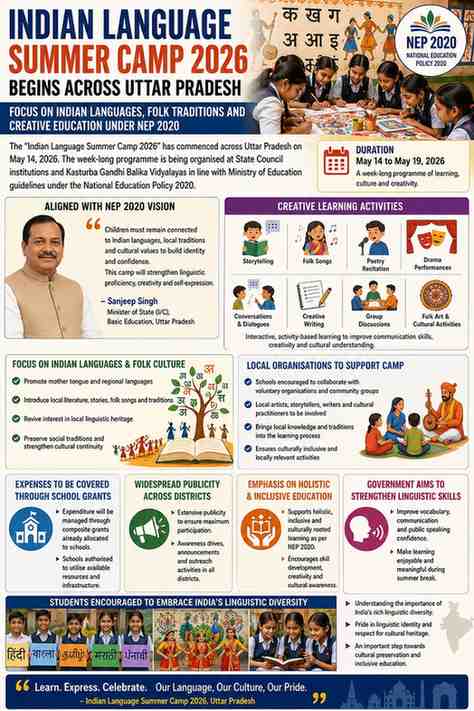
The “Indian Language Summer Camp 2026” commenced across Uttar Pradesh on Wednesday with an emphasis on promoting Indian languages, folk traditions and creative education among school students. The week-long programme is being organised in accordance with the guidelines of the Ministry of Education under the framework of the National Education Policy (NEP) 2020.
The camp is being conducted at State Council institutions and Kasturba Gandhi Balika Vidyalayas across the state and will continue until May 19, 2026.
Officials said the initiative seeks to encourage children to engage more deeply with their mother tongues and India’s linguistic and cultural diversity through interactive and activity-based learning.
Camp Organised in Line with NEP 2020
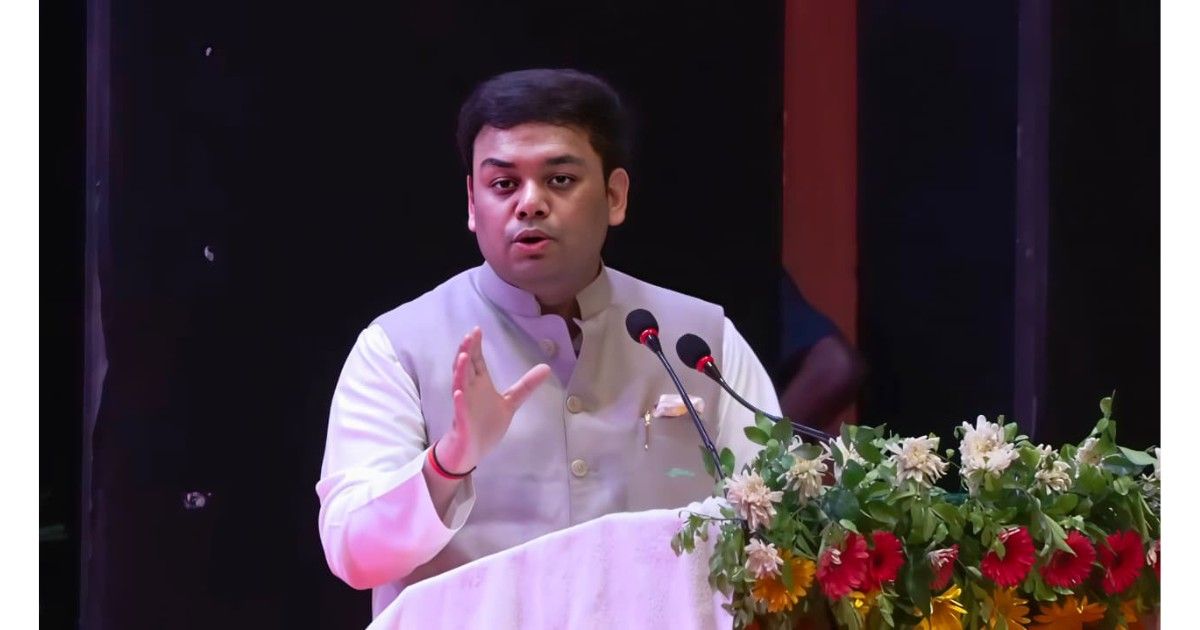
Sandeep Singh, Minister of State (Independent Charge) for Basic Education in Uttar Pradesh, said the initiative aligns with the vision of the National Education Policy 2020, which places strong emphasis on multilingual learning and cultural awareness.
According to the minister, children must remain connected to Indian languages, local traditions and cultural values to develop a stronger sense of identity and confidence.
He said the Indian Language Summer Camp 2026 would serve as an important platform to strengthen linguistic proficiency, creativity and self-expression among students.
“Through this initiative, children will get an opportunity to understand, appreciate and embrace their mother tongue along with the rich heritage of Indian languages,” the minister said.
Education officials noted that the programme has been designed not merely as a language-learning exercise but also as a broader cultural and educational engagement initiative.
Creative Learning Activities Planned Across Schools
The Basic Education Department has prepared a wide range of activities to make the camp interactive and engaging for students.
Officials said the programme will focus on language learning through storytelling, folk songs, poetry recitation, drama performances, conversations, dialogues and cultural presentations.
Students participating in the camp will also take part in creative writing sessions, group discussions, local folk art activities and interactive educational exercises aimed at improving communication skills.
Monica Rani, Director General of School Education, instructed district-level officials to ensure effective implementation of the programme in all participating institutions.
She directed DIET principals, Basic Education Officers, Block Education Officers and district coordinators to closely monitor the organisation of the camp and ensure active student participation.
According to officials, the camp aims to make learning enjoyable and activity-oriented rather than confined to traditional classroom methods.
Focus on Indian Languages and Folk Culture
One of the major objectives of the summer camp is to strengthen awareness and appreciation of Indian languages among younger generations.
Education authorities said special attention would be given to introducing students to regional literature, local stories, traditional songs and folk narratives that reflect India’s cultural diversity.
The programme also seeks to revive interest in local linguistic traditions at a time when concerns are often raised regarding declining usage of regional languages among children.
Officials stated that folk culture and local expressions play an important role in preserving social traditions and strengthening cultural continuity.
By integrating cultural elements with education, the department hopes to create a more meaningful and relatable learning environment for students.
Local Organisations to Support Camp Activities
To make the initiative more impactful, the Education Department has encouraged schools to collaborate with local voluntary organisations and community groups.
Authorities said such collaborations would help bring local artists, storytellers, writers and cultural practitioners into the educational process, thereby enriching the overall experience for students.
District administrations have been instructed to ensure that the activities remain locally relevant and culturally inclusive.
Officials added that community participation would also help create greater public awareness about the importance of Indian languages and cultural heritage.
The Education Department has already shared a suggested activity framework with districts to guide institutions in organising programmes effectively during the week-long camp.
Expenses to Be Covered Through School Grants
The government clarified that the expenditure incurred in organising the camp would be managed through the composite grants already allocated to schools.
Officials stated that schools have been authorised to utilise available educational resources and infrastructure to conduct the activities smoothly.
The department also directed schools to ensure proper planning so that students can participate comfortably and safely throughout the programme.
Education authorities believe the initiative can be implemented effectively without placing additional financial pressure on institutions.
Widespread Publicity Ordered Across Districts
The Basic Education Department has instructed all districts to ensure extensive publicity for the programme so that maximum participation can be achieved.
Officials said schools and local authorities have been asked to inform parents, students and communities about the objectives and schedule of the camp.
Awareness drives, announcements and local outreach activities are expected to be conducted in several districts to encourage student enrollment in the initiative.
The department believes broader participation will help strengthen the campaign’s impact and improve awareness regarding multilingual education.
Emphasis on Holistic and Inclusive Education
The launch of the Indian Language Summer Camp 2026 reflects the broader educational approach promoted under the National Education Policy 2020, which advocates holistic, inclusive and culturally rooted learning.
The policy encourages education systems to integrate local languages and traditions into mainstream learning processes while supporting skill development and creativity.
Education experts have often argued that learning in one’s mother tongue improves comprehension, confidence and emotional connection with education during the foundational years.
Officials associated with the programme said the camp would provide students with an environment where language learning becomes interactive, enjoyable and culturally enriching.
Government Aims to Strengthen Linguistic Skills
The Basic Education Department said one of its core objectives is to improve students’ linguistic capabilities through practical and creative engagement rather than rote-based learning.
The programme is expected to help children develop vocabulary, communication skills, public speaking confidence and creative expression.
Authorities believe such initiatives can also contribute to improving overall learning outcomes and participation levels in schools.
By combining education with cultural activities, the government aims to create a more student-friendly learning atmosphere during the summer break period.
Students Encouraged to Embrace India’s Linguistic Diversity
Officials said the camp has been designed to help students understand the importance of India’s linguistic diversity and cultural richness.
India is home to hundreds of languages and dialects, many of which carry deep historical, literary and cultural significance.
Through the Indian Language Summer Camp 2026, students will be introduced to different forms of language-based expression and cultural storytelling traditions.
Education authorities expressed hope that the initiative would encourage children to take pride in their linguistic identity while remaining open to learning from the country’s diverse cultural traditions.
Initiative Seen as Step Toward Cultural Preservation
Observers in the education sector view the programme as an important step toward preserving regional languages and promoting culturally rooted education.
Several educational experts have noted that increasing urbanisation and digital influence have contributed to reduced usage of local languages among younger generations.
The summer camp initiative is therefore being seen as an attempt to reconnect children with India’s traditional knowledge systems, linguistic heritage and folk traditions.
Officials said the success of the programme would depend on active participation from schools, parents, local communities and students themselves.
As the week-long camp gets underway across Uttar Pradesh, education authorities are hopeful that the initiative will strengthen awareness, creativity and appreciation for Indian languages among students across the state.
Inputs & Images: Hindusthan Samachar
Edited By: Akshaya Polepalli
Also Read: Chandramohan Patowary Appointed Protem Speaker of Assam Assembly Ahead of First Session
Follow us on google news: Click Here