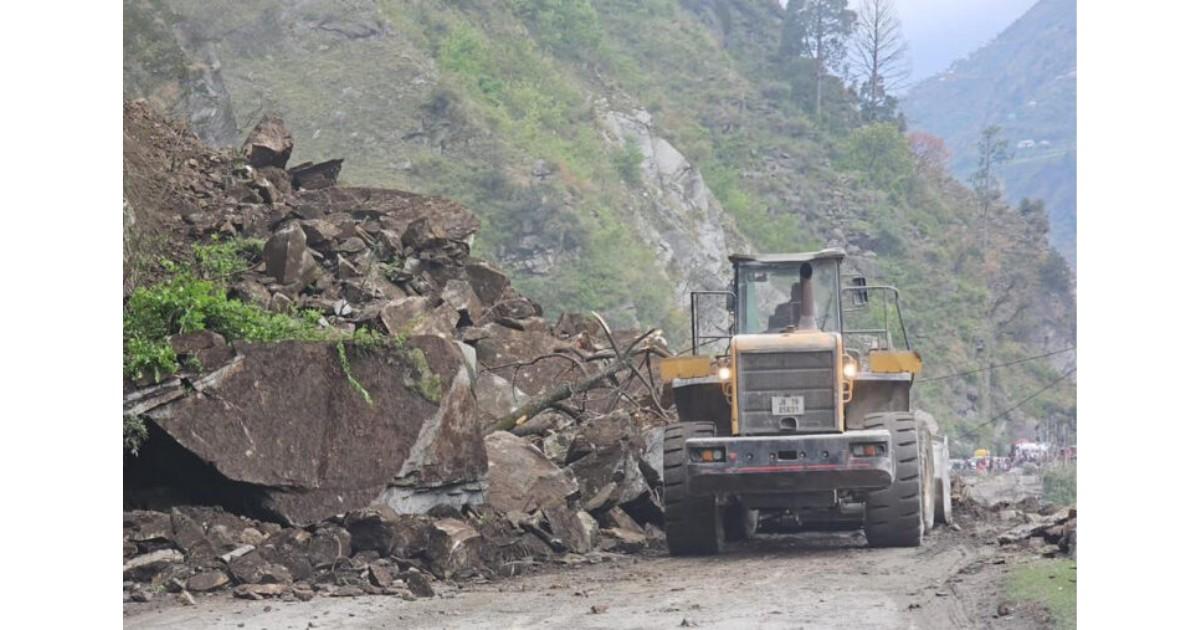
Traffic on the vital Jammu-Srinagar National Highway (NH-44) remained suspended for the second straight day on April 8 after multiple landslides triggered by persistent rainfall blocked key stretches in Jammu and Kashmir’s Ramban district. Authorities confirmed that restoration work is ongoing, but adverse weather conditions continue to hamper progress, leaving hundreds of vehicles stranded along the route.
The highway, which spans approximately 270 kilometers, serves as the only all-weather road link connecting the Kashmir Valley with the rest of India. Its closure has once again highlighted the vulnerability of the region’s transport infrastructure to extreme weather events, particularly during periods of heavy rainfall.
Officials said that while the highway was briefly reopened for a few hours on Tuesday morning, fresh landslides at multiple locations forced authorities to shut it down again, prioritizing commuter safety.
Key Blockage Points: Shalgarhi, Banihal, and Digdol-Khooni Nallah Stretch
According to the latest traffic advisory issued by authorities, major clearance operations are currently underway at Shalgarhi and Banihal—two critical points along the highway that have been severely affected by landslides.
A traffic police spokesperson stated that one of the most significant disruptions occurred between Digdol and Khooni Nallah, where a massive landslide completely blocked the road in both directions.
“The road is entirely blocked at this stretch. Movement from Jammu towards Srinagar and vice versa has been halted until further notice,” the spokesperson said.
The landslides have deposited large volumes of debris, including mud, rocks, and fallen trees, making the clearance operation both time-consuming and technically challenging.
Over 400 Vehicles Stranded Amid Continuous Rainfall
Authorities estimate that more than 400 vehicles, including passenger cars, buses, and goods carriers, are currently stranded at various points along the highway. Many travelers have been forced to wait for extended periods, facing uncertainty as weather conditions continue to deteriorate.
Truck drivers transporting essential commodities, including food supplies and fuel, are among those most affected. The disruption is expected to have a ripple effect on supply chains in the Kashmir Valley if the highway remains closed for an extended period.
Passengers have also expressed concerns over basic amenities, as prolonged waiting times in remote areas can pose challenges related to food, water, and shelter.
Restoration Efforts Intensified, But Weather Remains a Challenge
Road clearance operations are being carried out by multiple agencies, including the Border Roads Organisation (BRO), local administration, and traffic police. Heavy machinery such as excavators and bulldozers has been deployed to remove debris and restore connectivity.
However, officials acknowledged that intermittent rainfall is significantly slowing down progress. Wet soil conditions increase the risk of additional landslides, making operations hazardous for workers on the ground.
“Men and machinery have been mobilized on a war footing, but continuous rainfall is affecting the pace of restoration work. It will take time before the road is fully cleared and declared safe for travel,” an official involved in the operation said.
Safety Advisory Issued: Avoid Travel Until Clearance
Authorities have issued a strict advisory urging commuters to avoid traveling on NH-44 until the highway is completely cleared and deemed safe. Travelers have been asked to rely only on official updates provided by the traffic police and not to fall for unverified information circulating on social media.
“People are advised not to undertake travel on the Jammu-Srinagar National Highway until further notice. Please check official traffic updates before planning your journey,” the advisory stated.
The administration has also emphasized the importance of public cooperation to ensure that restoration work proceeds smoothly without additional congestion or risk.
Recurring Disruptions Highlight Infrastructure Vulnerability
The frequent closure of the Jammu-Srinagar highway due to landslides has been a recurring issue, particularly during the monsoon and winter seasons. Experts point out that the region’s fragile geology, combined with heavy rainfall and ongoing construction activities, makes it highly susceptible to such disruptions.
The Ramban sector, in particular, has been identified as a landslide-prone zone due to its steep terrain and unstable slopes. Efforts have been made in recent years to improve road stability through engineering interventions, but challenges persist.
The government has been working on alternative connectivity solutions, including tunnels and road widening projects, to reduce dependence on vulnerable stretches. However, such infrastructure projects require time and sustained investment.
Impact on Economy and Daily Life
The closure of NH-44 has far-reaching implications beyond immediate travel disruptions. The highway serves as a critical lifeline for the movement of goods, services, and people between Jammu and Kashmir.
Prolonged closures can lead to shortages of essential commodities in the Kashmir Valley, increased transportation costs, and delays in the delivery of perishable goods such as fruits and vegetables.
For local residents, especially those dependent on daily travel for work or medical emergencies, such disruptions can significantly affect daily life.
Authorities Monitor Situation Closely
Senior officials are closely monitoring the situation and coordinating efforts across departments to expedite road clearance. Emergency response teams have also been kept on standby to address any unforeseen incidents.
The administration has reiterated its commitment to restoring normalcy at the earliest while ensuring the safety of both commuters and workers involved in the clearance operations.
Outlook: When Will the Highway Reopen?
While authorities have not provided a specific timeline for reopening the highway, they indicated that restoration will depend largely on weather conditions. If rainfall subsides and no further landslides occur, partial movement may be restored in phases.
However, officials cautioned that safety assessments will be conducted before allowing traffic to resume, ensuring that the road is stable and secure for travel.
What Travelers Should Do Now
- Avoid planning journeys on NH-44 until official clearance is issued
- Monitor updates from traffic police and government channels
- Prepare for delays and disruptions if travel is unavoidable
- Stay informed about weather conditions in the region
Looking Ahead: Need for Long-Term Solutions
The repeated disruptions on the Jammu-Srinagar highway underline the urgent need for long-term infrastructure resilience in the region. Investments in slope stabilization, advanced weather monitoring systems, and alternative transport routes could help mitigate risks in the future.
As climate patterns become increasingly unpredictable, ensuring reliable connectivity to the Kashmir Valley remains a critical priority for policymakers and infrastructure planners alike.
Conclusion: A Critical Lifeline Under Stress
The continued closure of the Jammu-Srinagar National Highway due to landslides in Ramban serves as a stark reminder of the challenges posed by geography and weather in maintaining essential connectivity. With over 400 vehicles stranded and restoration efforts ongoing, authorities are racing against time and nature to reopen this crucial route.
Until then, travelers and residents alike must exercise caution, patience, and vigilance as the situation unfolds.
Inputs & Images: Hindusthan Samachar
Edited By: Akshaya Polepalli
Also Read: Major Boost: BEL Secures 75 Hectares, Chitrakoot Defense Node Set for Rapid Growth