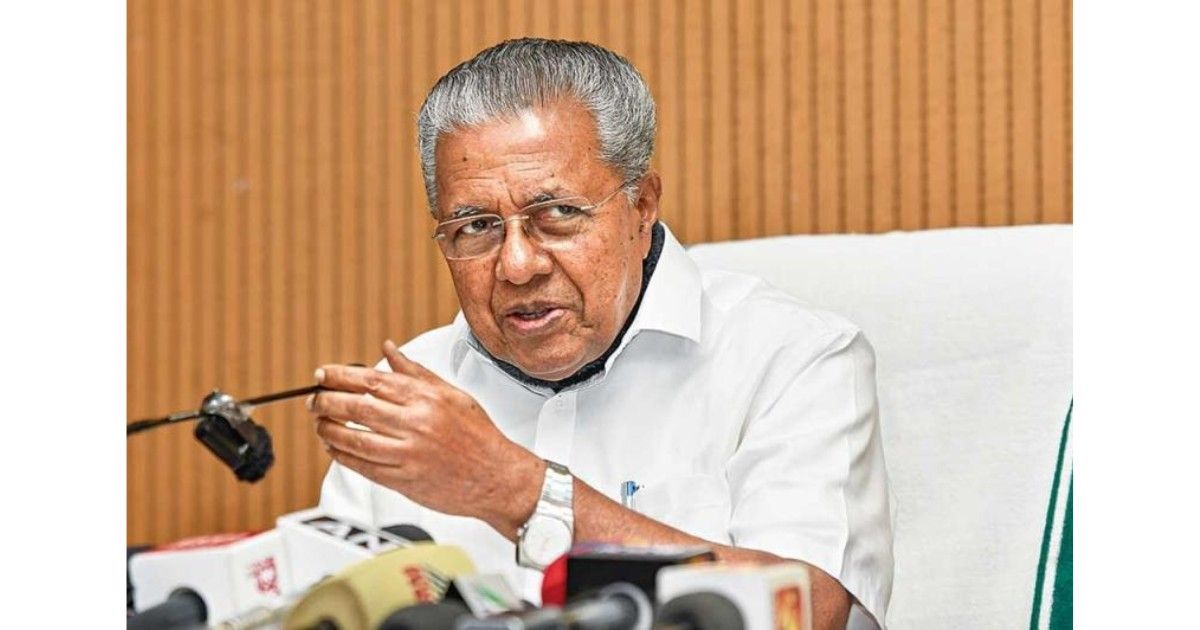
Thiruvananthapuram, March 30: Pinarayi Vijayan has accepted a public debate challenge posed by V. D. Satheesan, intensifying political exchanges in Kerala ahead of the upcoming Assembly elections.
The Chief Minister responded through a social media post, where he not only agreed to the proposal but also presented a detailed account of his government’s performance over the past decade. The development has added momentum to the political discourse in the state, with both the ruling and opposition sides sharpening their narratives.
Key Developments in the Political Exchange
The debate proposal was initially put forward by V. D. Satheesan, who invited the Chief Minister to engage in a direct discussion on Kerala’s development record.
In response, Vijayan accepted the challenge and framed the exchange as an opportunity to assess the state’s progress. His post, titled along the lines of initiating a debate, included references to what he described as the government’s “report card.”
However, the Opposition has maintained that a social media response alone is not sufficient. It has called for a structured, in-person debate with a fixed schedule.
Government’s Development Claims
In his response, Pinarayi Vijayan highlighted several initiatives undertaken by the Left Democratic Front (LDF) government.
Among the key projects cited was the Vizhinjam International Seaport, which has been positioned as a major infrastructure development aimed at boosting trade and connectivity.
The Chief Minister also pointed to the expansion of national highways across the state, improvements in transportation infrastructure, and efforts to streamline logistics networks.
Additionally, he referenced large-scale land title distribution programmes, which aim to provide ownership rights to eligible beneficiaries, particularly those from economically weaker sections.
Welfare Measures and Social Initiatives
Beyond infrastructure, the Chief Minister emphasised welfare schemes and social security measures as key achievements of his administration.
He cited the continuation of welfare pension schemes, which provide financial support to vulnerable sections of society, including the elderly, widows, and persons with disabilities.
Vijayan also highlighted initiatives focused on women’s safety and empowerment, along with broader social welfare programmes aimed at improving quality of life.
Another point raised was the claim of a “load-shedding-free” power scenario in the state, suggesting improvements in energy management and supply stability.
Opposition’s Response and Demand
Despite the Chief Minister’s acceptance of the challenge, the Opposition has insisted on a formal debate format.
The office of V. D. Satheesan stated that a direct, face-to-face debate with a fixed date and time is necessary for a meaningful discussion.
The Opposition has argued that such a debate would allow for a comprehensive examination of the government’s claims and provide clarity to voters.
This demand reflects a broader strategy to shift the political contest into a public forum where both sides can present their arguments in detail.
Political Context Ahead of Elections
The exchange comes at a crucial time as Kerala prepares for Assembly elections. Political parties are increasingly focusing on performance narratives, governance records, and future promises.
The ruling Left Democratic Front has been highlighting its achievements over the past decade, while the Opposition has sought to challenge these claims and present alternative perspectives.
Public debates between top leaders are relatively rare in Kerala politics, making this development particularly noteworthy.
Public Interest and Political Significance
The possibility of a direct debate between the Chief Minister and the Leader of the Opposition has generated considerable public interest.
Such an event could provide voters with an opportunity to compare competing claims on development, governance, and policy outcomes.
Political observers note that a structured debate could influence public perception, especially among undecided voters, by offering a clearer understanding of each side’s position.
Governance, Accountability, and Democratic Discourse
Public debates are often seen as a tool for enhancing transparency and accountability in democratic systems.
By agreeing to engage in a debate, political leaders can present their records and respond to criticisms in a structured manner.
At the same time, the effectiveness of such debates depends on their format, moderation, and the willingness of participants to engage constructively.
Key Issues Likely to Dominate Debate
If a formal debate takes place, several key issues are expected to feature prominently:
- Infrastructure development and major projects
- Welfare schemes and social security initiatives
- Economic growth and employment
- Public services such as healthcare and education
- Governance and administrative efficiency
These topics reflect the broader concerns of voters and are central to the state’s political discourse.
Broader Electoral Implications
The ongoing exchange between Pinarayi Vijayan and V. D. Satheesan underscores the intensifying political competition in Kerala.
As campaigning gains momentum, both sides are likely to continue emphasising their strengths while critiquing each other’s records.
The debate issue itself may become a focal point, shaping campaign narratives and influencing voter engagement.
Outlook Ahead
The acceptance of the debate challenge by Pinarayi Vijayan has added a new dimension to Kerala’s pre-election political landscape.
Whether the exchange leads to a formal, face-to-face debate remains to be seen. If it materialises, it could become a defining moment in the campaign, offering voters a direct comparison of competing visions.
For now, the focus remains on how both the ruling alliance and the Opposition navigate this opportunity to present their case to the electorate.
Inputs & Images: Hindusthan Samachar
Edited By: Akshaya Polepalli