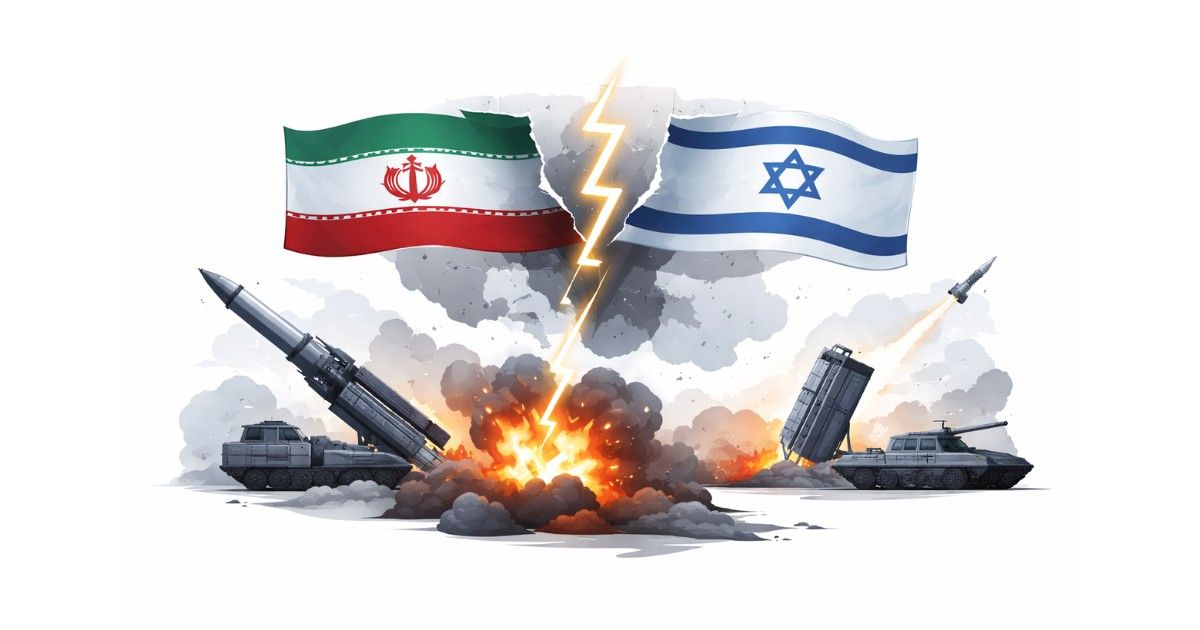
Iran–Israel Tensions trigger 5 major global reactions, raising serious security fears. Experts explain diplomatic moves, military signals, oil risks and global market impact.
Iran–Israel Tensions have sharply escalated in recent weeks, drawing swift reactions from global powers and international institutions. What began as targeted military exchanges and strong diplomatic statements has now evolved into a broader geopolitical concern. Governments across continents are closely monitoring developments, fearing that Iran–Israel Tensions could destabilize the Middle East and disrupt global trade, energy markets, and security alliances.
The situation has triggered emergency meetings, travel advisories, military repositioning, and urgent diplomatic outreach. Analysts warn that prolonged Iran–Israel Tensions may carry consequences far beyond the immediate region.
Here are five major global reactions that are shaping the international response.
1. United Nations Calls for Immediate De-Escalation
The United Nations has urged both Iran and Israel to exercise restraint. Senior UN officials have called emergency Security Council consultations, warning that Iran–Israel Tensions risk triggering a wider regional conflict.
The UN Secretary-General emphasized the importance of dialogue and respect for international law. Diplomatic sources indicate that multiple member states pushed for a joint resolution encouraging de-escalation. However, divisions among permanent Security Council members have made consensus difficult.
Peacekeeping experts note that Iran–Israel Tensions are unfolding in an already fragile regional landscape. Ongoing conflicts in neighboring areas complicate mediation efforts. The UN has increased monitoring operations and humanitarian preparedness in case of further escalation.
2. United States Reinforces Strategic Presence
The United States has responded by reinforcing its military posture in the region. Defense officials confirmed repositioning of naval assets and air defense systems to protect American personnel and allied interests.
Washington has reiterated its commitment to Israel’s security while also urging caution to prevent broader war. Analysts say Iran–Israel Tensions place the United States in a delicate position. On one hand, it must reassure allies. On the other, it seeks to avoid direct confrontation with Iran.
Financial markets reacted quickly to statements from US officials. Oil prices saw volatility amid fears that Iran–Israel Tensions could threaten key shipping routes. The US State Department has also issued travel advisories and activated contingency planning for diplomatic facilities.
Experts believe that American involvement, even if limited to deterrence, significantly influences how Iran–Israel Tensions evolve.
3. European Union Pushes Diplomatic Engagement
The European Union has focused on diplomacy. EU foreign ministers convened emergency talks, expressing concern over rising Iran–Israel Tensions and potential refugee flows.
European leaders have urged both sides to avoid actions that could ignite full-scale conflict. Several EU states have offered to mediate indirect communication channels. Energy security is a major concern for Europe. Any disruption linked to Iran–Israel Tensions could impact fuel supplies and inflation across the continent.
European markets have shown sensitivity to developments in the Middle East. Insurance premiums for shipping routes have increased. Trade analysts warn that prolonged Iran–Israel Tensions may affect supply chains that pass through regional corridors.
The EU’s approach centers on preventing escalation through coordinated diplomatic pressure and economic engagement.
4. Russia and China Call for Strategic Stability
Both Russia and China have issued statements calling for restraint. Moscow emphasized the risks of destabilizing the broader region, while Beijing highlighted the importance of respecting sovereignty and avoiding unilateral action.
Observers note that Iran–Israel Tensions intersect with broader global rivalries. Russia maintains ties with Iran, while also communicating with Israel on security matters. China, heavily dependent on Middle Eastern energy supplies, is concerned about disruptions.
Energy analysts suggest that Iran–Israel Tensions could affect oil export routes and raise freight costs. Both Moscow and Beijing advocate diplomatic solutions, warning that military escalation would harm global economic recovery.
Their reactions reflect not only regional concern but also strategic calculations linked to global power balances.
5. Global Markets and Energy Sector React Sharply
One of the fastest reactions to Iran–Israel Tensions has come from global financial and energy markets. Oil prices experienced sudden spikes amid fears of supply disruption. Investors moved toward safe-haven assets, including gold and government bonds.
Shipping companies reviewed routes near sensitive maritime zones. Aviation authorities adjusted flight paths to avoid risk areas. Insurance costs for cargo shipments increased significantly.
Economists warn that sustained Iran–Israel Tensions could impact inflation worldwide. Countries dependent on imported fuel would face higher costs. Emerging markets may experience currency volatility if energy prices remain unstable.
Stock exchanges in Asia and Europe recorded fluctuations following reports of military activity. Traders closely track every development linked to Iran–Israel Tensions, recognizing that even limited escalation can trigger global ripple effects.
Broader Security Concerns
Security experts argue that Iran–Israel Tensions are not confined to direct military exchanges. Cybersecurity agencies worldwide are on alert. Governments fear potential cyberattacks targeting financial systems, infrastructure, or defense networks.
Regional allies are also recalibrating their positions. Several Middle Eastern states have strengthened border surveillance and increased intelligence coordination. Defense analysts believe that miscalculation remains the greatest risk factor in Iran–Israel Tensions.
Nuclear non-proliferation concerns have resurfaced in policy debates. Diplomatic observers warn that any collapse in communication could complicate future arms control discussions.
Humanitarian and Civilian Impact
International aid organizations are preparing contingency plans. Although Iran–Israel Tensions are primarily strategic in nature, civilian populations could face indirect consequences. Travel disruptions, economic slowdowns, and regional instability often have humanitarian effects.
Airlines have suspended or rerouted certain flights. Tourism operators report cancellations. Migrant worker communities in affected areas are monitoring advisories closely.
Human rights groups stress the need to protect civilians and avoid rhetoric that could inflame tensions further.
What Happens Next?
Policy analysts suggest three possible scenarios for Iran–Israel Tensions. The first involves limited exchanges followed by diplomatic cooling. The second includes prolonged low-intensity confrontation. The third, considered most dangerous, involves wider regional involvement.
Diplomatic channels remain active despite public statements. Back-channel negotiations often play a crucial role in de-escalation. The coming weeks will likely determine whether Iran–Israel Tensions stabilize or intensify.
Global leaders appear aware that escalation would carry heavy costs. Energy security, trade flows, financial markets, and regional alliances all depend on stability.
Final Assessment
Iran–Israel Tensions have prompted strong global reactions, underscoring the interconnected nature of modern geopolitics. From the United Nations to major powers and financial markets, stakeholders are signaling concern.
The five major responses outlined above show how Tensions are influencing diplomacy, military strategy, economic planning, and humanitarian preparedness. Each reaction reflects both immediate security fears and long-term strategic calculations.
While uncertainty remains high, one conclusion is clear: Iran–Israel Tensions are no longer a localized issue. They carry implications for global stability, energy markets, and international relations.
The world now watches closely, hoping that diplomacy prevails over escalation.
Edited By: Akshaya Polepalli
Also Read: 5 Safe Holi Travel Destinations in India That Promise a Joyful Experience in 2026
Follow us on google news: Click Here