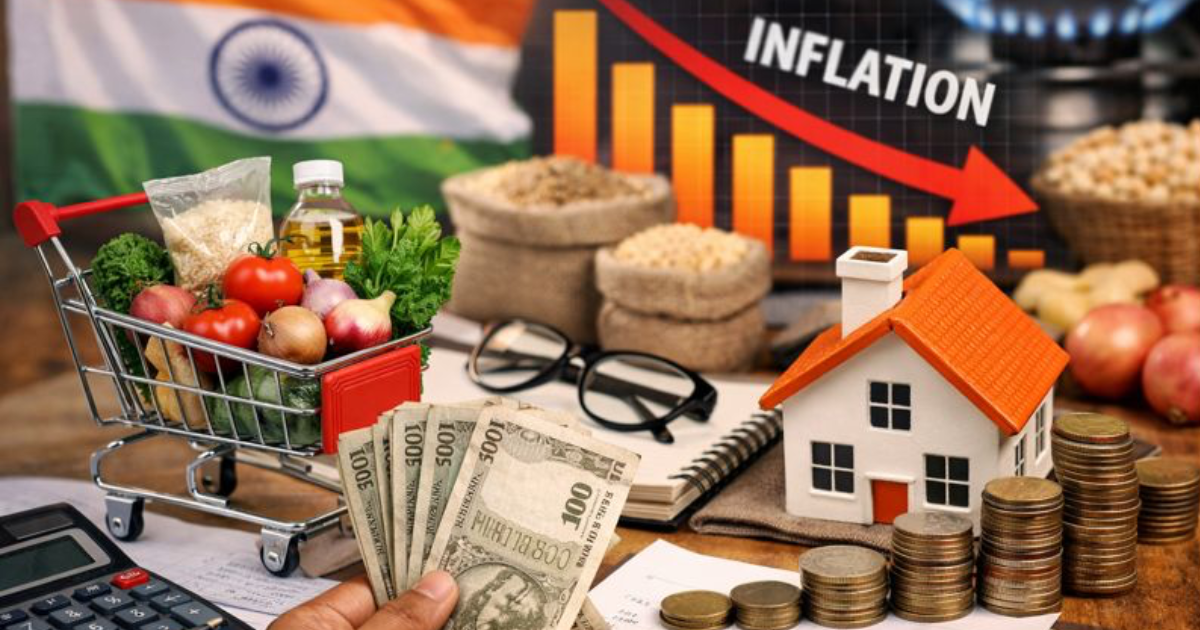
New Delhi: India’s inflation landscape in 2025‑26 is witnessing a rare period of unusually subdued price pressures, providing some relief to households across the country. Official data and forecasts show that consumer price inflation remains near multi‑year lows, largely driven by soft food prices, tax rationalisation, and moderate demand growth. Economists say this period of low inflation could influence both monetary policy and household budgets, even as certain costs continue to rise.
Headline Inflation Stays Low
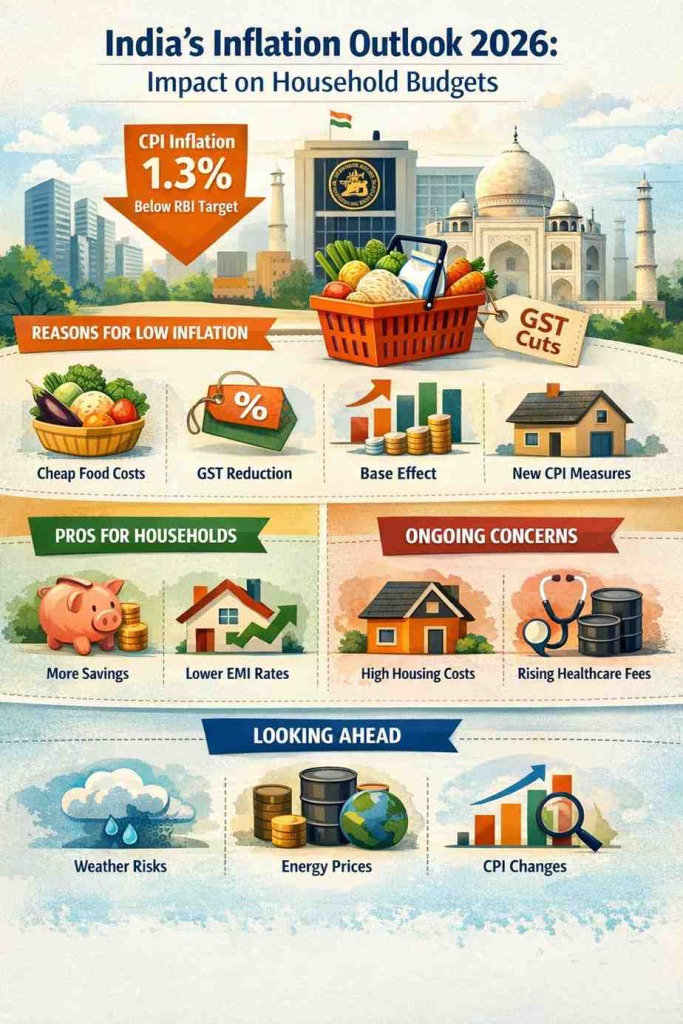
Headline Consumer Price Index (CPI) inflation has remained well below the Reserve Bank of India’s target band of 2–6%. In December 2025, CPI inflation edged up slightly to around 1.3% year-on-year, still far below historical averages. Earlier in the year, some months even recorded near-deflationary trends, particularly in food and essential goods. Wholesale price inflation has also stayed subdued, reflecting weak pressures at the producer level. Analysts note that India’s inflation trajectory is a relative exception compared with global trends, where many economies have faced persistent price increases.
Food Prices and Tax Rationalisation Drive Soft Inflation
A key factor behind the low inflation numbers is the sustained weakness in food prices. Items such as vegetables, cereals, and pulses have experienced significant price corrections, contributing to the overall softness in CPI. Food accounts for nearly half of the CPI basket, meaning even modest declines have a notable impact on headline inflation.
Government measures, including Goods and Services Tax (GST) rationalisation, have further supported lower prices. Cuts in tax rates on essential and daily-use items have helped reduce costs for households, allowing families to stretch their budgets further. Economists also cite statistical effects, including base-year comparisons and forthcoming revisions to CPI calculation methodologies, as contributing to the current picture of low inflation.
RBI’s Monetary Policy Response
With inflation running at unusually low levels, the Reserve Bank of India has adopted a cautiously supportive monetary policy stance. Policy repo rate cuts over the past year have made borrowing cheaper and credit more accessible, helping support economic growth amid soft price pressures. At the same time, the RBI’s Monetary Policy Committee (MPC) is expected to monitor data closely before making further decisions, balancing the twin objectives of keeping inflation expectations anchored while sustaining domestic demand. High-frequency indicators suggest continued economic resilience, despite subdued inflation.
Global and Institutional Perspectives
International institutions, including the International Monetary Fund (IMF), have highlighted India’s relatively strong macroeconomic position. The IMF recently raised India’s GDP growth forecast for FY26 to 7.3% while projecting inflation to remain within the RBI’s target range. Analysts attribute India’s insulation from global commodity shocks to robust domestic supply chains and policy measures. This combination of low inflation and solid growth is expected to influence both fiscal planning and household finances in the months ahead.
Union Budget 2026: Implications for Households
As the country prepares for the Union Budget 2026, households are anticipating measures that could directly affect disposable income. Discussions are focused on potential tax relief and rationalisation of indirect taxes, which would immediately ease the cost of essential goods. Expectations also include targeted spending on healthcare, education, and basic services — sectors where price pressures typically weigh heavily on family budgets. Analysts note that such interventions, combined with soft inflation, could provide tangible benefits for middle- and lower-income households.
What Low Inflation Means for Daily Life
For most Indian households, slower price increases on food and essential items mean a welcome reprieve. Families are able to plan budgets with more certainty, and cheaper credit translates into lower costs for loans and mortgages. However, not all living expenses have slowed equally. Urban housing costs, healthcare, and education continue to rise, often outpacing the headline CPI. Economists warn that the official inflation figures may under-represent these segments, a gap expected to be addressed with the upcoming CPI revisions.
Looking Ahead: Balancing Risks and Opportunities
While low inflation eases immediate pressure on household finances, risks remain. Agricultural shocks, such as delayed monsoons or crop failures, can quickly reverse soft food prices. Global commodity fluctuations, particularly in oil and energy, could also affect transport and utility costs. Statistical revisions to CPI and GDP bases will further influence how inflation trends are reported, potentially altering the economic narrative.
Conclusion
India’s inflation story in early 2026 reflects a rare period of soft price pressures amid solid economic growth. This environment has provided temporary relief for households, particularly in terms of food and everyday essentials, while keeping credit costs manageable. However, costs in key areas such as housing, education, and healthcare remain high, underscoring the need for continued fiscal and policy support. As the Union Budget unfolds and inflation measurement methodologies are updated, households will be closely watching how these developments affect their real-world budgets and spending power.
Add indiapioneer.in as a preferred source on google – click here