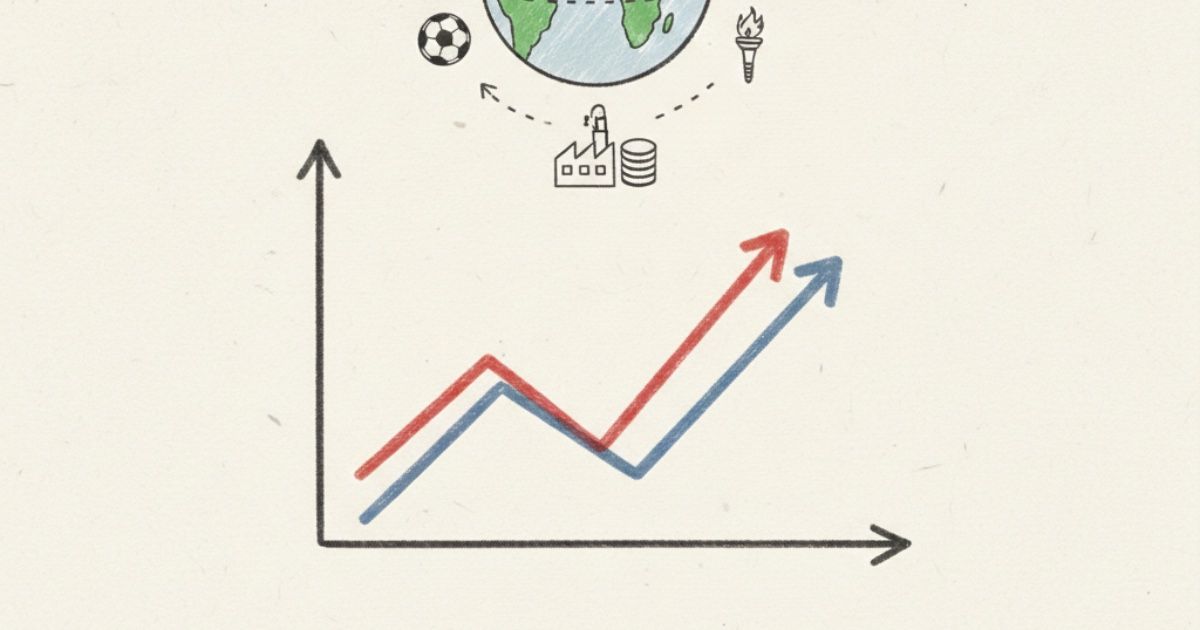
India’s stock markets do not move in isolation. Along with global economic signals, an often-overlooked factor also shapes short-term sentiment—global sports events. From cricket world tournaments to the Olympics and major football leagues, global sports buzz can influence investor mood, trading volumes, and sector-wise movement.
At a time when markets are closely tracking inflation, interest rates, and global growth, understanding how Nifty and Sensex respond to both economic signals and mass public events has become important for Indian investors. This article explains the difference, the impact, and what it means today.
Why This Topic Matters Right Now
India’s equity markets are seeing higher retail participation than ever before. Many new investors track news beyond balance sheets, including global events that affect public sentiment.
Key reasons this matters today:
- Retail trading volumes are rising
- Markets react faster to news and sentiment
- Global sports events attract mass attention
- Investor psychology plays a bigger role
Nifty and Sensex often reflect mood as much as money flow in the short term.
Nifty vs Sensex: What Is the Difference?
Before understanding impact, it is important to know how the two indices work.
What Is Sensex?
- Represents 30 large companies
- Listed on the BSE (Bombay Stock Exchange)
- Considered a barometer of India’s economy
- Heavily influenced by large-cap stocks
What Is Nifty 50?
- Tracks 50 major companies
- Listed on the NSE (National Stock Exchange)
- Covers more sectors than Sensex
- More widely used for derivatives trading
Both indices move together most of the time, but their reactions can differ.
How Global Sports Buzz Enters Market Sentiment
Sports Events Influence Public Mood
Major sports events create national and global excitement. When public mood is positive, risk-taking often rises.
Examples include:
- ICC Cricket World Cup
- Olympics
- FIFA World Cup
- IPL and major league finals
During such periods, markets often see:
- Higher retail participation
- Increased intraday trading
- Sector-specific movement
Psychology Plays a Role
Market experts say sports victories boost national confidence, while defeats can create short-term disappointment.
This does not change fundamentals but can affect:
- Day trading sentiment
- Small-cap and mid-cap activity
- Consumer-facing stocks
Sensex usually remains more stable, while Nifty shows sharper intraday reactions.
Nifty vs Sensex: Reaction to Sports-Driven Sentiment
Sensex: Stable but Symbolic
Sensex companies are mostly large, global-facing firms. These stocks:
- React more to earnings and policy
- Show limited reaction to short-term emotion
- Attract institutional investors
Sports-related sentiment impact on Sensex is usually mild and symbolic.
Nifty: Faster to Reflect Sentiment
Nifty includes more consumer, media, and service companies.
This leads to:
- Faster intraday movement
- Higher volume during high-interest events
- Stronger reaction in FMCG, media, and travel stocks
Nifty often reflects sentiment changes before Sensex does.
Economic Factors Still Drive the Core Market Trend
While sports create short-term buzz, economic data remains the main driver.
Key economic factors include:
- Inflation trends
- RBI interest rate decisions
- Global crude oil prices
- US Federal Reserve signals
- GDP growth outlook
Markets may react emotionally for a day, but economic data decides direction.
When Sports Buzz Meets Economic News
Positive Economy + Positive Sports Mood
This combination often results in:
- Broad-based buying
- Strong closing for indices
- Improved investor confidence
Retail investors are more active during such phases.
Weak Economy + Sports Buzz
In this case:
- Gains remain limited
- Markets turn volatile
- Profit booking increases
Sports sentiment cannot override economic weakness.
Sector-Wise Impact During Major Sports Events
Media and Broadcasting Stocks
During global tournaments:
- Ad revenue expectations rise
- Viewership-linked stocks gain interest
- Short-term rallies are common
FMCG and Consumer Goods
- Snack and beverage demand rises
- Branding activity increases
- Stocks may see mild positive movement
Travel, Hospitality, and E-Commerce
- Travel bookings increase
- Online sales campaigns run during events
- Hospitality stocks gain attention
These sectors show short-term momentum, mostly visible on Nifty.
Foreign Investors and Sports Sentiment
Foreign Institutional Investors (FIIs) usually:
- Focus on macro data
- Ignore emotional factors
- Trade based on global risk outlook
This is why Sensex movements stay grounded even during emotional phases.
Domestic investors, however, are more influenced by sentiment-driven news.
Role of Social Media in Market Reaction
Sports discussions dominate social media during global events.
This leads to:
- Rapid spread of optimism or fear
- Increased app-based trading
- Short-term speculation
Markets now react faster because information travels faster.
Data vs Emotion: What History Shows
Market data from past events shows:
- Sentiment-driven moves are short-lived
- Economic trends decide long-term returns
- Indices normalise within days
Experienced investors treat sports-driven moves as noise, not trend.
Nifty or Sensex: Which Is More Sensitive?
Nifty Is More Reactive
- Higher derivative participation
- Broader sector mix
- More retail traders
Nifty reacts quickly but also corrects quickly.
Sensex Is More Resilient
- Lower volatility
- Institutional dominance
- Stronger focus on fundamentals
Sensex is often used as a long-term economic indicator.
What Retail Investors Should Understand
Do Not Confuse Sentiment with Signal
Experts advise:
- Avoid impulsive trades
- Stick to asset allocation
- Use sentiment rallies to book profits
Emotional trading increases risk.
Use Sports Buzz as a Learning Tool
Sports-linked rallies can help investors understand:
- Market psychology
- Sector rotation
- Volume behaviour
But they should not guide long-term investment decisions.
Why Markets React Even When Logic Says They Should Not
Markets are driven by humans, not machines alone.
Key reasons for emotional reactions:
- Herd behaviour
- Short-term speculation
- News overload
This explains why Nifty and Sensex sometimes move even without hard data.
How Economic Stability Limits Emotional Impact
India’s stronger fundamentals now act as a buffer.
Key stabilising factors:
- Strong domestic demand
- Improved corporate balance sheets
- Higher domestic institutional flows
These reduce the long-term impact of emotional events.
What to Watch in the Coming Months
Investors should focus on:
- Corporate earnings
- Inflation and interest rates
- Global growth outlook
- Policy decisions
Sports events may add volatility, but economic signals will dominate.
Key Takeaways for Indian Investors
- Nifty reacts faster to sentiment than Sensex
- Sensex reflects long-term economic strength
- Sports buzz affects mood, not fundamentals
- Short-term volatility is normal
- Disciplined investing remains key
Final Word
The impact of global sports buzz on India’s markets is real but limited. Nifty and Sensex both reflect investor emotion, yet their core movement remains tied to economic reality.
Sports events may bring excitement, confidence, and short-term trading action. But India’s markets ultimately follow earnings, growth, and policy, not match results.
For investors, the message is clear: enjoy the sports, respect the sentiment, but invest based on fundamentals.
Also Read: Stock Market Today, 6 February 2026: Sensex, Nifty Open Flat; Top Movers List
Follow us on google news: Click Here