Free flight seat rule brings relief as government mandates 60% seats on flights to be free, reducing extra charges for passengers.
In a significant move aimed at reducing air travel costs, the government has introduced a new free flight seat rule, mandating that airlines must offer at least 60% of seats on every flight without any additional charge. The directive, issued by the Ministry of Civil Aviation, is expected to bring relief to millions of passengers who have been paying extra fees for seat selection.
The decision marks a shift from earlier policies that allowed airlines greater flexibility in charging for seat preferences. Officials said the new free flight seat rule is intended to improve transparency and affordability in the aviation sector.
Free Flight Seat Rule Explained
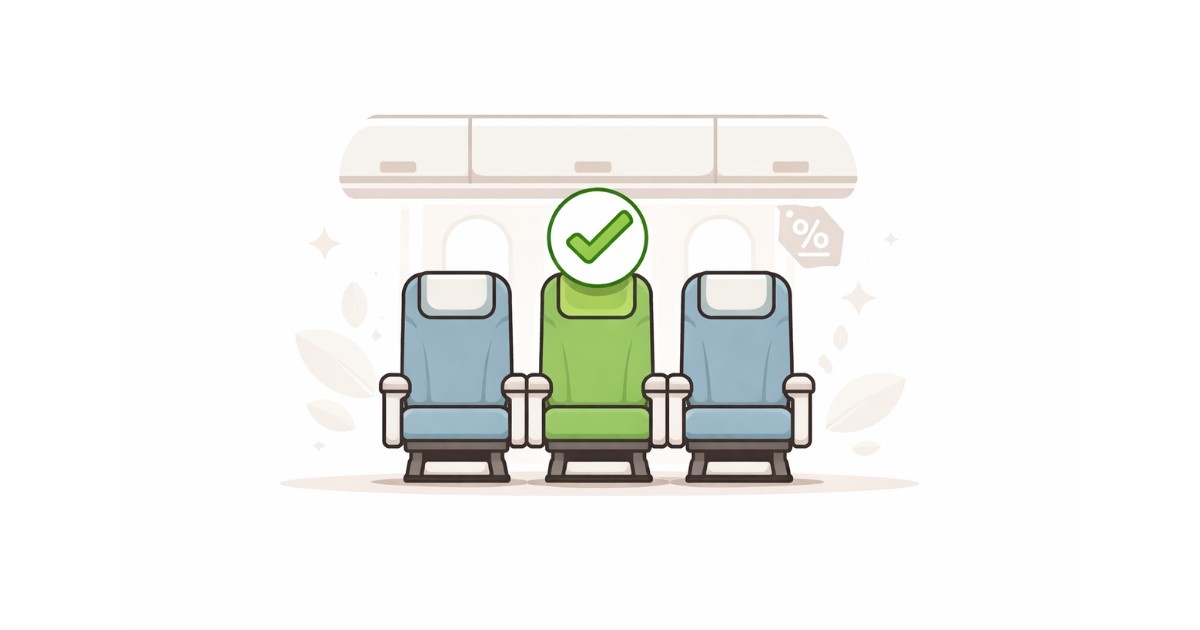
Under the new free flight seat rule, airlines are required to provide a minimum of 60% of seats free of cost at the time of booking.
This means that passengers will be able to select a majority of seats without paying additional fees. The rule applies across domestic flights and is expected to standardize pricing practices among airlines.
Officials clarified that while premium seats such as extra legroom or front-row seats may still carry additional charges, a significant portion of regular seats must be made available free.
Change from Previous Policy
The introduction of the free flight seat rule replaces earlier guidelines under Air Transport Circular (ATC)-01 of 2024.
Under the previous system, airlines were allowed to follow an “unbundling of services” model. This meant that seat selection was separated from the base fare, enabling airlines to charge extra for preferred seating options.
As a result, passengers often faced higher costs when choosing window or aisle seats. The new free flight seat rule aims to address these concerns by limiting such charges.
Relief for Air Travelers
The free flight seat rule is expected to provide substantial relief for air travelers, particularly those who frequently fly for business or personal reasons.
Passengers have long raised concerns about additional fees for basic services such as seat selection. The new policy ensures that a majority of seats are included in the base fare.
This could lead to more predictable pricing and reduce the overall cost of air travel for consumers.
Impact on Airlines
While the free flight seat rule benefits passengers, it may have implications for airlines’ revenue models.
Airlines have relied on ancillary revenue streams, including seat selection fees, to boost earnings. The new rule could limit this source of income.
However, industry experts suggest that airlines may adjust by optimizing other revenue channels or revising fare structures.
Ensuring Transparency in Pricing
A key objective of the free flight seat rule is to enhance transparency in airline pricing.
By including a majority of seats in the base fare, passengers can better understand the total cost of their tickets.
This move aligns with broader efforts to make pricing practices more consumer-friendly.
Implementation and Monitoring
The government is expected to monitor the implementation of the free flight seat rule to ensure compliance by airlines.
Officials said that airlines will need to clearly indicate which seats are available free of charge during the booking process.
Any violations of the rule could lead to regulatory action.
Passenger Awareness Crucial
Experts emphasize that passenger awareness will play an important role in the success of the free flight seat rule.
Travelers are encouraged to review seat selection options carefully while booking tickets.
Understanding the new policy can help passengers avoid unnecessary charges.
Industry Response
The aviation industry has acknowledged the introduction of the free flight seat rule, with some stakeholders expressing concerns about its impact on revenue.
However, others have welcomed the move as a step toward improving customer satisfaction.
Balancing consumer interests with industry sustainability will be key to the policy’s success.
Global Comparison
The free flight seat rule brings India closer to international practices where basic seat selection is often included in the ticket price.
In several countries, airlines provide standard seats without additional charges, reserving fees for premium options.
The new policy reflects a shift toward aligning with global norms.
Long-Term Benefits
The free flight seat rule could have long-term benefits for the aviation sector.
Improved customer satisfaction may lead to increased demand for air travel.
Transparent pricing can also enhance trust between airlines and passengers.
Challenges in Implementation
Despite its advantages, the free flight seat rule may face challenges during implementation.
Airlines will need to update their booking systems and pricing structures.
Ensuring consistent compliance across carriers will require effective oversight.
Government’s Consumer-Focused Approach
The introduction of the free flight seat rule highlights the government’s focus on consumer protection.
By addressing concerns related to hidden charges, the policy aims to create a more passenger-friendly environment.
Officials said the move is part of broader efforts to improve the overall travel experience.
What Passengers Should Expect
With the free flight seat rule in place, passengers can expect greater flexibility in choosing seats without incurring extra costs.
However, premium seating options may still be priced separately.
Travelers are advised to check seat availability and terms during booking.
Conclusion
The implementation of the free flight seat rule, mandating 60% free seats on flights, marks a significant development in India’s aviation sector.
By reducing additional charges and enhancing transparency, the policy aims to benefit passengers while encouraging fair pricing practices.
As airlines adapt to the new guidelines, the success of the initiative will depend on effective implementation and continued monitoring.
Edited By: Akshaya Polepalli