FASTag annual pass fee hike announced as NHAI raises price to ₹3,075 from April 1, 2026. Check validity and key details.
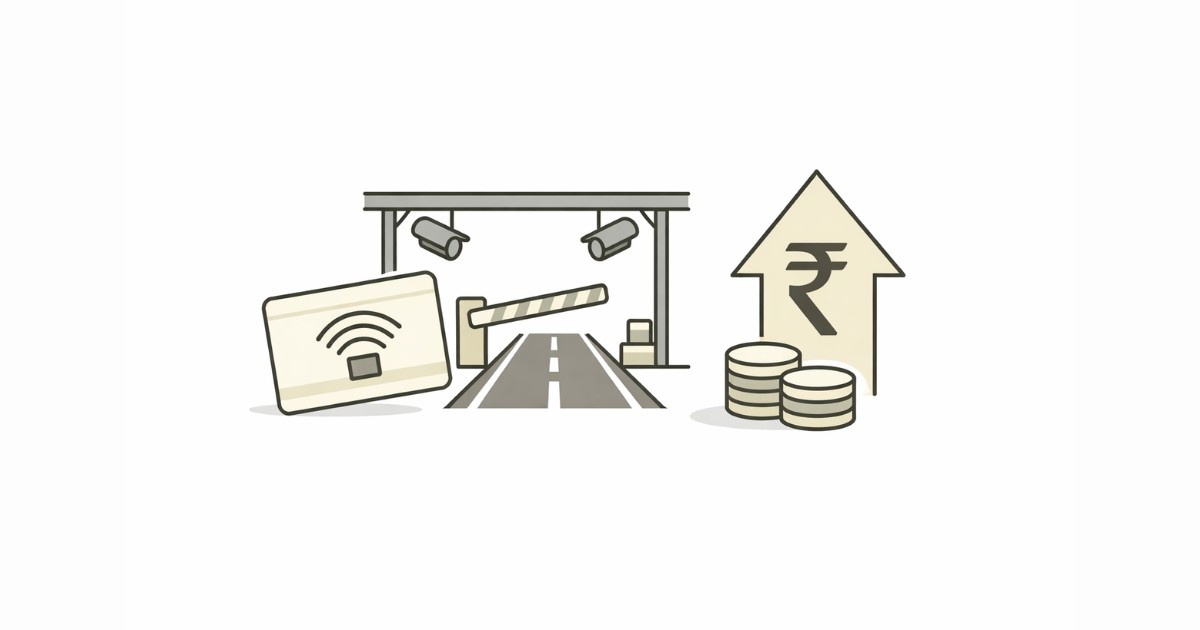
In an important update for highway commuters, the FASTag annual pass fee hike has been officially announced for the financial year 2026–27. The National Highways Authority of India has revised the annual pass fee from ₹3,000 to ₹3,075.
According to the announcement, the revised price will come into effect from April 1, 2026. The change has been introduced in accordance with the provisions under the National Highways Fee Rules, 2008, which govern toll collection and periodic fee revisions on India’s national highways.
The FASTag annual pass fee hike is part of the routine annual adjustment of toll charges that occurs across national highway toll plazas. These revisions are typically linked to inflation and other economic factors affecting highway maintenance and infrastructure development.
For commuters who frequently travel through toll plazas, the annual pass remains an option that offers convenience and cost predictability.
What Is FASTag and How It Works
The FASTag annual pass fee hike has drawn attention to the broader FASTag system used on India’s highways.
FASTag is an electronic toll collection system introduced to allow vehicles to pass through toll plazas without stopping for manual payments.
The system uses radio-frequency identification technology that automatically deducts toll charges from a prepaid account linked to the vehicle.
The initiative was introduced by the National Payments Corporation of India in partnership with highway authorities to streamline toll payments.
Today, FASTag has become mandatory for most vehicles traveling on national highways across India.
Because the system allows faster vehicle movement at toll plazas, it helps reduce traffic congestion and waiting times.
The FASTag annual pass fee hike therefore affects users who rely on this system for frequent highway travel.
New FASTag Annual Pass Fee
Under the revised policy, the FASTag annual pass fee hike will increase the annual pass cost by ₹75.
From April 1, 2026, the fee will rise to ₹3,075 from the earlier ₹3,000.
Authorities said the change reflects the formula used to adjust toll rates annually.
These adjustments are implemented in accordance with the National Highways Fee Rules, which provide the framework for toll pricing across the country’s highway network.
Although the increase is relatively small, it reflects the periodic revision applied to various toll charges nationwide.
Commuters who use the annual pass will therefore pay the new rate beginning with the 2026–27 financial year.
Validity of the FASTag Annual Pass
Despite the FASTag annual pass fee hike, the validity and usage conditions of the annual pass remain unchanged.
Typically, the annual pass is valid for one year from the date of activation.
During this period, eligible vehicles can use designated toll plazas on specific highway stretches without paying toll each time they pass.
The annual pass is particularly beneficial for local residents and commuters who frequently travel through the same toll plaza.
Instead of paying toll charges for each trip, the annual pass allows unlimited crossings for the specified duration.
This convenience continues to be one of the main reasons why many motorists opt for the FASTag annual pass.
Why Toll Fees Are Revised
The FASTag annual pass fee hike reflects the standard procedure used for revising toll rates on national highways.
Under the National Highways Fee Rules, 2008, toll charges are periodically updated to account for changes in economic conditions.
These revisions help support the maintenance and development of highway infrastructure.
Highway authorities use toll revenue for activities such as road repairs, safety improvements, and expansion projects.
Because maintaining a large highway network involves significant costs, periodic adjustments to toll charges are considered necessary.
The annual revision that led to the FASTag annual pass fee hike is therefore part of an established regulatory framework.
Impact on Highway Commuters
For many motorists, the FASTag annual pass fee hike represents a modest increase in transportation costs.
Drivers who frequently use national highways may notice the revised charge when renewing their annual passes.
However, for regular commuters, the annual pass still offers convenience compared to paying toll charges individually on every trip.
Frequent travelers often prefer the annual pass because it simplifies payments and reduces delays at toll plazas.
The FASTag system also ensures that toll payments are deducted electronically, eliminating the need for cash transactions.
Despite the FASTag annual pass fee hike, the system continues to provide a streamlined payment experience for highway users.
Benefits of Electronic Toll Collection
The introduction of FASTag has transformed toll collection across India.
The FASTag annual pass fee hike therefore affects a system that has become central to modern highway management.
Electronic toll collection offers several benefits, including faster vehicle movement and reduced traffic congestion.
Because vehicles no longer need to stop for manual payments, travel time on highways has improved.
The system also reduces fuel consumption caused by idling vehicles waiting in toll queues.
Additionally, digital toll payments improve transparency in toll collection.
Authorities can track transactions more efficiently, helping ensure that revenue is recorded accurately.
These advantages have made FASTag a widely accepted solution for toll payments across the country.
Expansion of India’s Highway Network
The FASTag annual pass fee hike comes at a time when India continues to expand its highway infrastructure.
Large-scale highway projects are underway to improve connectivity between cities and rural areas.
The government has invested heavily in road development to support economic growth and logistics efficiency.
Improved highways facilitate faster transportation of goods and people across the country.
Because road transport plays a major role in India’s economy, maintaining a strong highway network remains a key priority.
Toll revenue collected through FASTag contributes to funding these infrastructure initiatives.
Digital Payments and Transportation
The FASTag system also reflects the broader shift toward digital payments in India.
The FASTag annual pass fee hike therefore affects a platform that is part of the country’s growing digital economy.
Digital payment systems have expanded rapidly in recent years, supported by government initiatives and technological advancements.
Electronic toll collection aligns with these trends by enabling automated and secure transactions.
Motorists can recharge their FASTag accounts through mobile apps, banking platforms, and online payment systems.
Such integration with digital services has made toll payments more convenient for users.
The FASTag system continues to evolve as transportation networks adopt more advanced technologies.
What Motorists Should Know
With the FASTag annual pass fee hike set to take effect from April 1, 2026, motorists should be aware of the revised pricing when planning renewals.
Drivers who currently use the annual pass will pay the new rate during the next renewal cycle.
Apart from the revised fee, the overall structure of the FASTag annual pass remains unchanged.
Commuters can continue using the system for toll payments through linked FASTag accounts.
For regular highway travelers, the annual pass may still provide cost efficiency and convenience compared to individual toll payments.
Motorists are therefore advised to check renewal dates and updated fee details when renewing their passes.
Conclusion
The FASTag annual pass fee hike announced by the National Highways Authority of India will increase the cost of the annual pass to ₹3,075 starting April 1, 2026.
The revision follows the guidelines outlined in the National Highways Fee Rules, 2008, which regulate toll pricing across India’s national highway network.
Although the increase is relatively small, it reflects the periodic adjustments made to maintain and develop the country’s highway infrastructure.
For motorists who frequently travel on national highways, the FASTag annual pass continues to offer a convenient and efficient payment solution.
As India’s transportation network continues to expand, electronic toll collection systems like FASTag are expected to remain an important part of highway operations.
Also Read: IPL 2026 BIG Relief for RCB: Karnataka Government Allows Matches at Chinnaswamy Stadium