OpenAI India AI Collaboration is reshaping AI research, student careers, and academic innovation across leading Indian institutes through advanced projects, internships, and responsible AI development.
OpenAI India AI Collaboration is emerging as one of the most discussed developments in India’s higher education and technology sectors. As artificial intelligence becomes central to careers in engineering, research, business, and public policy, students are closely tracking how global AI leaders are working with Indian academic institutions.
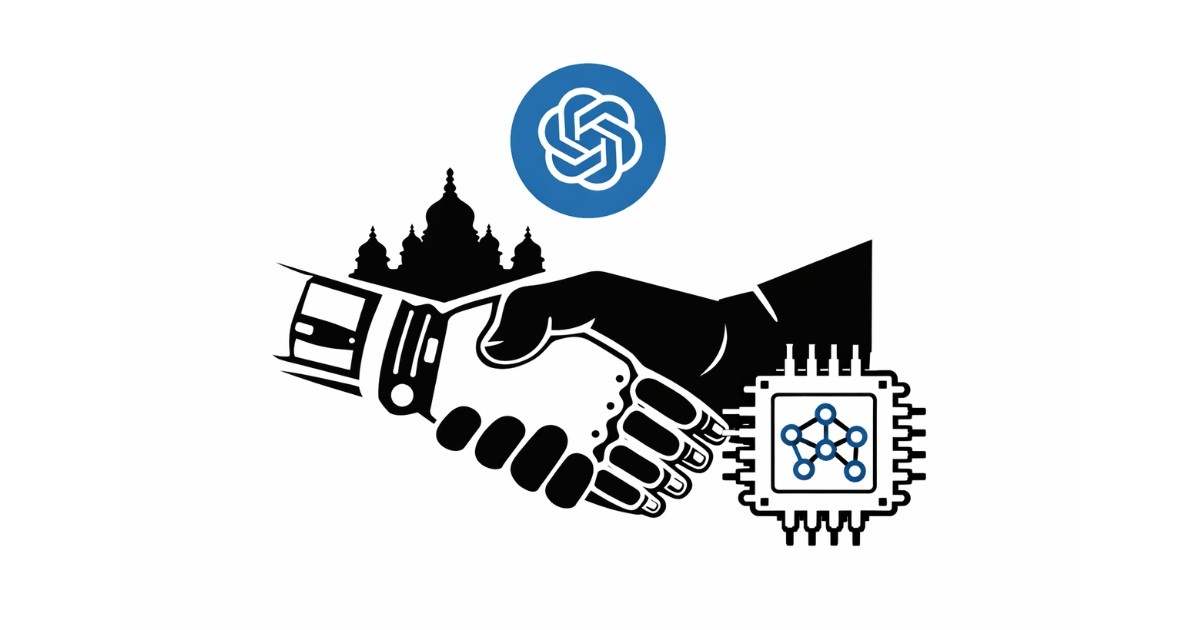
The OpenAI India AI Collaboration reflects a structured effort to deepen research ties between OpenAI and premier Indian institutions such as the Indian Institute of Technology system and the Indian Institute of Science. This partnership aims to strengthen AI research, improve curriculum design, and create global-level exposure for Indian students.
With rising search interest around AI careers and education pathways, understanding the OpenAI India AI Collaboration is becoming essential for students planning their future in technology.
1. OpenAI India AI Collaboration Focuses on Advanced Research Labs
A key pillar of the OpenAI India Collaboration is the development of joint research labs and structured AI projects. These labs are expected to work on areas such as machine learning systems, large language models, safety research, and applied AI solutions for public use.
Indian institutes already have strong foundations in mathematics, computing, and engineering research. By combining this academic strength with OpenAI’s applied AI expertise, the OpenAI India AI Collaboration aims to produce practical research outcomes with global impact.
Students may gain opportunities to contribute to supervised research projects. These projects could include building prototypes, evaluating model performance, or contributing to published academic papers. Exposure to real research environments gives students practical knowledge that goes beyond classroom learning.
2. Curriculum Changes Under OpenAI India AI Collaboration
Another major impact of the OpenAI India Collaboration is curriculum modernisation. AI is no longer treated as a niche subject. It is becoming central to engineering, computer science, management, and even social sciences.
Through the OpenAI India Collaboration, institutes may revise coursework to include:
- Large-scale AI model architecture
- Responsible AI design
- AI ethics and governance
- Bias detection and evaluation
- Data privacy and compliance
These changes ensure students learn both technical skills and social implications of AI systems. The OpenAI India AI Collaboration supports balanced learning where innovation and responsibility move together.
Students preparing for AI careers benefit from updated syllabi that align with global industry trends.
3. Indian Language and Public Sector Innovation in OpenAI India AI
India’s linguistic diversity presents unique challenges and opportunities in artificial intelligence. A notable feature of the OpenAI India Collaboration is research focused on Indian languages and inclusive digital access.
Developing AI systems that understand regional languages can improve access to education, governance services, and healthcare support. Through the OpenAI India AI, research may target multilingual datasets and culturally relevant AI applications.
Students participating in such projects gain exposure to real-world challenges rather than purely theoretical exercises. This strengthens their problem-solving skills while contributing to national development goals.
The OpenAI India AI Collaboration therefore extends beyond campus research and connects AI innovation with public benefit.
4. Internship and Fellowship Pathways in OpenAI India AI Collaboration
For students, one of the most practical benefits of the OpenAI India AI is structured internship and fellowship access. Collaborative research environments often include internship opportunities for selected candidates.
Through the OpenAI India AI Collaboration, students may work on advanced AI models, evaluation systems, or application prototypes under expert supervision. Such experience strengthens technical profiles and improves global competitiveness.
Research fellowships may also support postgraduate and doctoral students. Funding support, conference exposure, and cross-institution mentorship are likely outcomes of sustained cooperation.
Students who actively follow announcements and prepare strong research portfolios can increase their chances of benefiting from the OpenAI India AI.
5. Responsible AI at the Core of OpenAI India AI Collaboration
Artificial intelligence development requires careful governance. The OpenAI India AI places strong emphasis on responsible innovation and ethical deployment.
Research discussions within the OpenAI India Collaboration are likely to address:
- Fairness in AI decision-making
- Transparent evaluation benchmarks
- Risk mitigation strategies
- Privacy and data protection frameworks
Indian institutes bring strengths in public policy and interdisciplinary research. By combining technical and social research expertise, the OpenAI India Collaboration aims to build AI systems that are both advanced and accountable.
For students, this means understanding that AI careers require ethical awareness alongside technical skills.
6. Career Growth Through OpenAI India AI Collaboration
Search interest in AI jobs continues to grow across India. Roles such as AI engineer, data scientist, AI researcher, and AI policy analyst are becoming more visible.
The OpenAI India AI aligns academic training with industry expectations. Students exposed to collaborative research gain familiarity with large-scale model development, evaluation tools, and responsible deployment standards.
Career pathways influenced by the OpenAI India AI Collaboration may include:
- AI startups
- Technology consulting
- Climate technology firms
- Healthcare analytics
- Government digital initiatives
By strengthening domestic research ecosystems, the OpenAI India AI Collaboration reduces the need for students to seek all advanced exposure abroad.
7. Long-Term National Impact of OpenAI India AI Collaboration
Beyond student careers, the OpenAI India AI Collaboration has broader national significance. India is positioning itself as a major player in global digital innovation. Strong academic partnerships support this ambition.
Through joint research publications, innovation projects, and international academic exchanges, the OpenAI India AI Collaboration can elevate India’s presence in global AI discussions.
Building domestic AI research capacity ensures long-term sustainability. Students trained under this framework may later contribute to startups, public sector reforms, or advanced research centres within India.
The OpenAI India AI Collaboration therefore represents both an educational and strategic development.
What Students Should Do to Benefit from OpenAI India AI Collaboration
Students aiming to benefit from the OpenAI India AI Collaboration should take proactive steps:
- Strengthen mathematics and programming fundamentals.
- Participate in AI research groups on campus.
- Build practical AI projects to demonstrate applied skills.
- Follow official announcements from participating institutes.
- Engage in interdisciplinary learning involving ethics and policy.
Preparation plays a key role. The OpenAI India AI Collaboration creates opportunity, but students must build strong academic foundations to access it.
The Future Outlook for OpenAI India AI Collaboration
The OpenAI India AI Collaboration signals a long-term research relationship rather than a short workshop series. Sustainable partnerships can reshape how AI is taught, researched, and deployed in India.
If implemented effectively, the OpenAI India AI Collaboration may:
- Increase AI research output
- Improve international academic visibility
- Expand student mobility and exchange
- Encourage innovation-driven entrepreneurship
As artificial intelligence becomes central to global economies, structured collaborations like the OpenAI India AI Collaboration are likely to grow in importance.
For students across engineering, science, and policy disciplines, understanding the OpenAI India AI Collaboration is essential. It represents a shift toward integrated research, responsible innovation, and expanded career pathways within India’s evolving AI ecosystem.
With strong institutional backing and increasing academic participation, the OpenAI India AI Collaboration may shape the next generation of AI professionals and researchers across the country.
Also Read: 7 Big Highlights from ITF Bengaluru Open 2026: Women’s Tennis Action Heating Up in India
Follow us on google news: Click Here