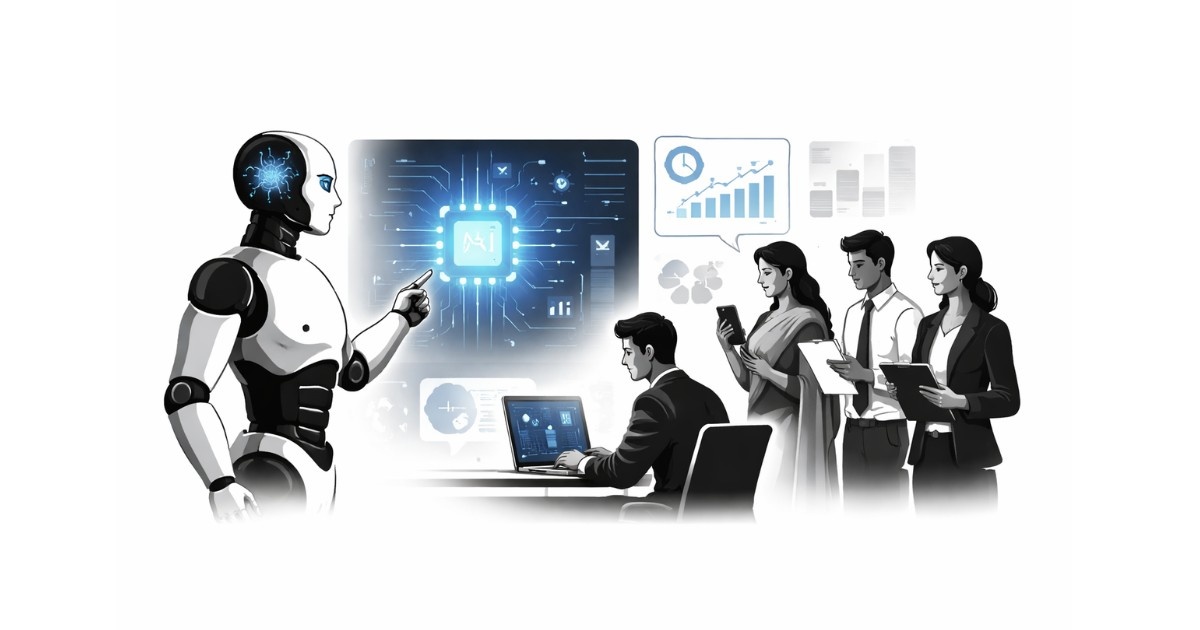
Artificial Intelligence is no longer a future idea for India. In 2026, AI tools are part of daily work across offices, factories, startups, and government departments. From automated customer support to smart data analysis, AI is changing how Indian companies operate.
This shift matters because India has one of the world’s youngest workforces. Businesses are under pressure to improve speed, reduce costs, and compete globally. AI tools are helping them do exactly that.
Here is a clear look at how AI in Indian workplaces is evolving in 2026, which sectors are leading the change, and what it means for employees.
Why AI Tools Are Gaining Speed in India
India’s digital economy is expanding quickly. More companies are moving to cloud systems. Remote and hybrid work models are common. Data volumes are growing every day.
In this environment, AI tools help in three main ways:
- Saving time
- Reducing manual errors
- Improving decision-making
Businesses now see AI as a support system, not just a technology experiment.
IT and Tech Companies Lead AI Adoption
Automation in Software Development
Indian IT firms are using AI tools to:
- Generate code faster
- Detect bugs early
- Test software automatically
This reduces project timelines. It also improves accuracy.
AI-powered coding assistants are becoming common across large tech companies and startups.
AI in Cybersecurity
Cyber threats are rising. Indian firms now use AI systems to:
- Monitor network activity
- Detect unusual patterns
- Prevent data breaches
These tools work in real time and reduce risk.
AI in Banking and Financial Services
The banking sector in India is rapidly adopting AI tools in 2026.
Fraud Detection Systems
Banks use AI to track suspicious transactions. The system studies customer behavior and flags unusual activity instantly.
This improves customer trust and reduces financial loss.
Chatbots and Virtual Assistants
Many banks now offer 24/7 customer support through AI chatbots.
Customers can:
- Check account balance
- Request statements
- Apply for loans
All without waiting for human agents.
This improves service speed and lowers operational costs.
AI in Manufacturing and Factories
Manufacturing units in India are using AI to improve production efficiency.
Predictive Maintenance
Machines now have sensors. AI systems analyze machine data and predict breakdowns before they happen.
This helps factories:
- Avoid sudden shutdowns
- Reduce repair costs
- Increase output
Downtime reduction has become a major advantage.
Quality Control Through AI Vision
AI-powered cameras inspect products on assembly lines.
They detect:
- Surface defects
- Size errors
- Packaging mistakes
This improves product quality and reduces waste.
AI in Retail and E-Commerce
Online shopping continues to grow in India.
Retailers use AI tools for:
- Product recommendations
- Price optimization
- Inventory management
AI studies customer behavior and suggests products based on past purchases.
This increases sales and improves customer experience.
AI in Healthcare Workplaces
Hospitals and health startups are using AI carefully and responsibly.
Medical Data Analysis
AI tools help doctors:
- Study medical reports
- Analyze scan images
- Detect early signs of illness
However, AI supports doctors. It does not replace medical professionals.
Hospital Management Systems
AI helps manage:
- Patient appointments
- Bed availability
- Medicine inventory
This improves hospital efficiency.
AI in Media and Content Production
Newsrooms and digital platforms in India are using AI tools to support reporting.
AI helps in:
- Data research
- Transcription of interviews
- Headline suggestions
However, editorial decisions remain with journalists.
AI speeds up production but does not replace human judgment.
AI in Human Resources and Hiring
HR departments are using AI tools to:
- Screen resumes
- Match candidates to job roles
- Schedule interviews
This reduces hiring time.
However, companies are careful to ensure fairness and avoid bias in automated systems.
Impact on Jobs: Change, Not Replacement
One of the biggest concerns around AI in 2026 is job security.
The reality is more balanced.
AI is:
- Automating repetitive tasks
- Supporting skilled workers
- Creating new tech roles
Roles growing in demand include:
- AI engineers
- Data analysts
- Machine learning specialists
- Cybersecurity experts
Employees are being encouraged to upskill rather than fear change.
Upskilling and Training Become Essential
Companies are investing in training programs.
Employees are learning:
- Data skills
- AI basics
- Automation tools
- Cloud systems
Online certification programs have seen rising enrollments in the last two years.
Digital skills are now important across industries, not just IT.
Small Businesses Also Using AI
AI tools are no longer limited to large companies.
Small and medium enterprises (SMEs) are using affordable AI solutions for:
- Accounting automation
- Customer service bots
- Sales analytics
Subscription-based AI tools make adoption easier.
Even small startups can access advanced technology at low cost.
Government and AI in Workplaces
Government departments are also adopting AI for:
- Public service delivery
- Data analysis
- Traffic management
- Tax processing
Digital India initiatives are pushing smart systems across states.
AI helps reduce paperwork and improve transparency.
Challenges in AI Adoption
Despite growth, challenges remain.
Data Privacy Concerns
Companies must protect user data. Strong data rules are important.
Businesses are focusing on secure systems and responsible AI use.
Skill Gap
Not all employees are ready for AI-based systems.
Training is needed across sectors.
Cost of Implementation
While AI tools are more affordable now, advanced systems still require investment.
Companies must balance cost and benefit.
How AI Is Changing Daily Work Life
In many offices today:
- Reports are generated automatically
- Meetings are transcribed instantly
- Emails are sorted by AI systems
- Performance data is analyzed quickly
Employees spend less time on repetitive tasks and more time on strategy and creativity.
What 2026 Means for the Future of Work in India
AI in Indian workplaces is no longer optional. It is becoming standard practice.
Businesses that adopt AI tools early often see:
- Higher productivity
- Faster service delivery
- Better customer satisfaction
However, responsible use remains key.
AI should support human skills, not replace critical thinking.
Final Takeaway: AI Is Reshaping Indian Work Culture
In 2026, Artificial Intelligence is changing how India works. From IT and banking to healthcare and retail, AI tools are improving speed, accuracy, and efficiency.
The focus now is on:
- Smart adoption
- Employee training
- Ethical AI practices
For Indian professionals, the message is clear: adapt, learn, and grow with technology.
AI is not just a trend. It is becoming a core part of India’s workplace ecosystem.
Edited By: Akshaya Polepalli
Also Read: Top Trending Motorcycles & Bike Searches in India February 2026: 10 Most Popular Models Riders Are Exploring Right Now
Follow us on google news: Click Here