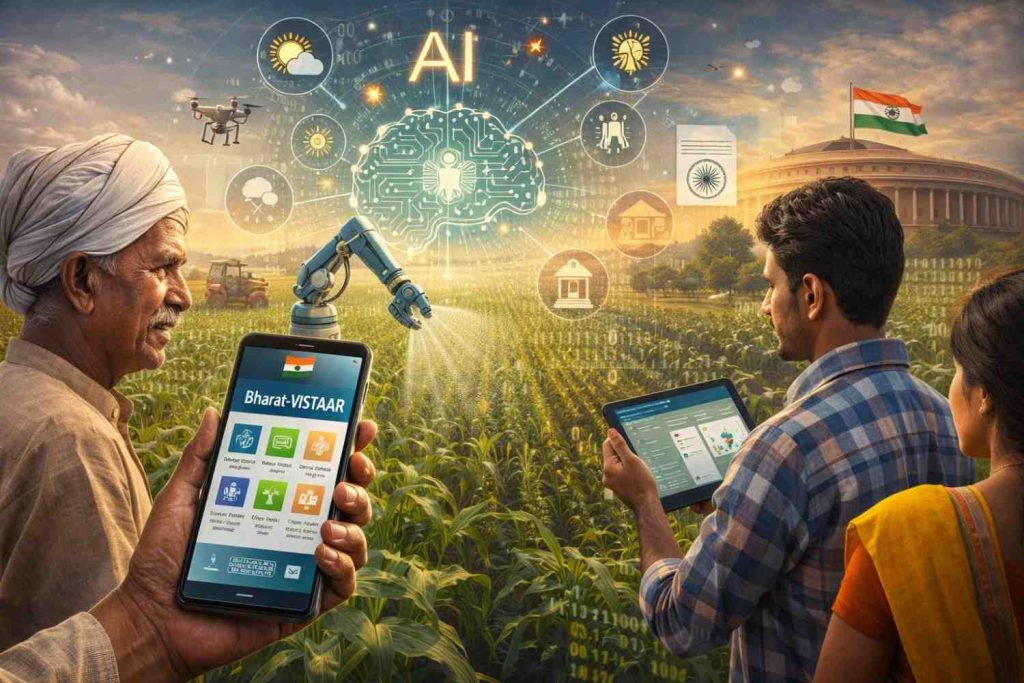
Artificial intelligence is no longer a distant technological shift for India’s IT services industry — it is rapidly becoming a defining force. As generative AI, automation platforms and large language models integrate into enterprise workflows worldwide, India’s $200+ billion IT outsourcing ecosystem is confronting a structural transition.
With global clients accelerating AI adoption to reduce costs and increase efficiency, Indian IT firms — long known for application development, maintenance and back-office services — are recalibrating strategies. For professionals, policymakers and investors, the central question is clear: Is AI automation disrupting India’s IT outsourcing sector, or reshaping it into something more advanced?
Search interest around AI-led job disruption has surged in early 2026, reflecting growing concern across India’s technology workforce. This report examines what is changing, what remains resilient, and how India’s IT industry may evolve in the years ahead.
Why the AI–IT Jobs Debate Is Intensifying
India’s IT services industry employs millions directly and indirectly. Major companies such as Tata Consultancy Services, Infosys, Wipro and HCLTech generate substantial revenue from global clients in North America and Europe.
Historically, the industry’s growth model has relied on:
- Large teams of software engineers
- Application development and maintenance contracts
- Business process outsourcing (BPO)
- Long-term enterprise service agreements
However, AI-powered coding assistants, automation tools and generative AI platforms are enabling companies to complete certain tasks with fewer human hours. This has sparked widespread debate over the future of entry-level IT roles and back-office operations.
What AI Is Actually Automating
AI is not eliminating all IT jobs, but it is automating specific categories of work:
1. Code Generation and Testing
AI coding assistants can now:
- Generate boilerplate code
- Identify bugs
- Suggest optimisations
- Automate unit testing
This reduces the manual effort traditionally required in early-stage development cycles.
2. IT Support and Helpdesk Operations
AI-powered chatbots and automated ticketing systems are increasingly capable of:
- Handling common troubleshooting requests
- Resetting credentials
- Resolving routine service desk issues
This impacts entry-level technical support roles.
3. Business Process Automation
In outsourcing-heavy segments such as finance and HR processing, AI tools can:
- Extract and process invoices
- Perform compliance checks
- Automate report generation
Such tasks were historically labour-intensive and form part of India’s BPO backbone.
Is Job Loss Inevitable?
Industry analysts caution against oversimplifying the transformation as a straightforward job loss narrative.
Short-Term Pressure
In the near term, companies may:
- Slow fresh hiring
- Consolidate roles
- Emphasise productivity per employee
Some global clients are renegotiating contracts to reflect AI-driven efficiency gains.
Long-Term Structural Shift
Over time, however, the industry may transition toward:
- AI system integration
- Model training and validation
- Cybersecurity services
- Cloud architecture
- AI governance and compliance consulting
This implies job transformation rather than wholesale elimination.
How IT Majors Are Responding
India’s leading IT companies are not resisting AI — they are embedding it into service offerings.
Upskilling Initiatives
Major firms have announced large-scale internal training programs in:
- Generative AI tools
- Data science
- Cloud-native architecture
- Responsible AI frameworks
Upskilling is becoming central to corporate survival.
AI as a Revenue Opportunity
Rather than viewing AI solely as a cost threat, companies are positioning it as:
- A consulting opportunity
- A managed services revenue stream
- A productivity enhancement tool
Enterprises globally require implementation support, integration expertise and governance advisory — areas where Indian IT firms aim to remain competitive.
Impact on Entry-Level IT Jobs
One of the biggest concerns is the impact on fresh engineering graduates.
Traditionally, IT services firms absorbed large numbers of campus recruits into:
- Testing roles
- Maintenance projects
- Back-end support
AI’s ability to automate repetitive coding and testing tasks could reduce demand in these segments.
However, new roles may emerge in:
- Prompt engineering
- AI model monitoring
- Ethical AI auditing
- Data annotation and quality assurance
The skill threshold for entry-level roles may rise.
Policy Implications for India
For policymakers, the AI transition intersects with:
- Employment stability
- Skill development
- Higher education reform
India produces hundreds of thousands of engineering graduates annually. Aligning curriculum with AI-era demands — including data literacy, machine learning basics and cybersecurity — is becoming urgent.
Government-backed digital skilling programs may need expansion to prevent widening skill gaps.
Global Context: Not Just an India Story
AI automation is affecting outsourcing industries globally. However, India’s exposure is higher due to the scale of its IT services workforce.
Key factors that could influence outcomes:
- Pace of global AI adoption
- Regulatory frameworks governing AI use
- Enterprise appetite for outsourcing versus in-house AI teams
If enterprises continue to outsource AI integration rather than internalising it, Indian IT firms may benefit.
The Productivity Paradox
AI promises productivity gains. But history shows that productivity improvements do not always translate directly into job losses.
In previous technological shifts:
- New industries emerged
- Service complexity increased
- Higher-skilled roles replaced lower-skilled ones
The real challenge lies in transition speed. If AI adoption outpaces workforce reskilling, temporary dislocation could occur.
Investor and Market Signals in 2026
Market watchers are analysing:
- Hiring trends among major IT firms
- Revenue from AI-driven service lines
- Margin pressures linked to automation
Investors are particularly focused on whether AI improves operating margins or compresses them due to pricing pressure.
In early 2026, sentiment remains cautious but not alarmist. The transformation is visible, but not yet catastrophic.
Skills That May Define the Next Phase
For professionals in India’s IT sector, adaptability is key. Skills gaining prominence include:
- Machine learning fundamentals
- Data engineering
- Cloud infrastructure
- Cybersecurity
- AI ethics and compliance
Soft skills such as client consulting and domain expertise are also becoming critical, as automated tools handle routine tasks.
The Human Factor in AI
Despite automation advances, AI systems require:
- Supervision
- Bias monitoring
- Continuous optimisation
- Regulatory compliance
Human oversight remains essential, especially in sectors like finance, healthcare and defence.
India’s IT firms may reposition themselves as trusted AI governance partners rather than pure coding vendors.
The Bottom Line
AI automation is undeniably reshaping India’s IT outsourcing sector in 2026. Routine tasks are becoming increasingly automated, and hiring patterns are evolving. However, the evidence so far suggests transformation rather than collapse.
India’s IT industry has historically adapted to technological waves — from Y2K remediation to cloud migration. AI may represent a more profound shift, but it also opens opportunities in high-value services, consulting and advanced technology integration.
For professionals, the message is clear: continuous learning is no longer optional. For companies, investment in upskilling and innovation will determine competitiveness. And for policymakers, managing the transition thoughtfully could ensure that India’s IT sector remains a global leader — not a casualty — in the AI era.
As 2026 unfolds, the real question is not whether AI will change India’s IT outsourcing model, but how quickly and how effectively the sector evolves to meet the challenge.