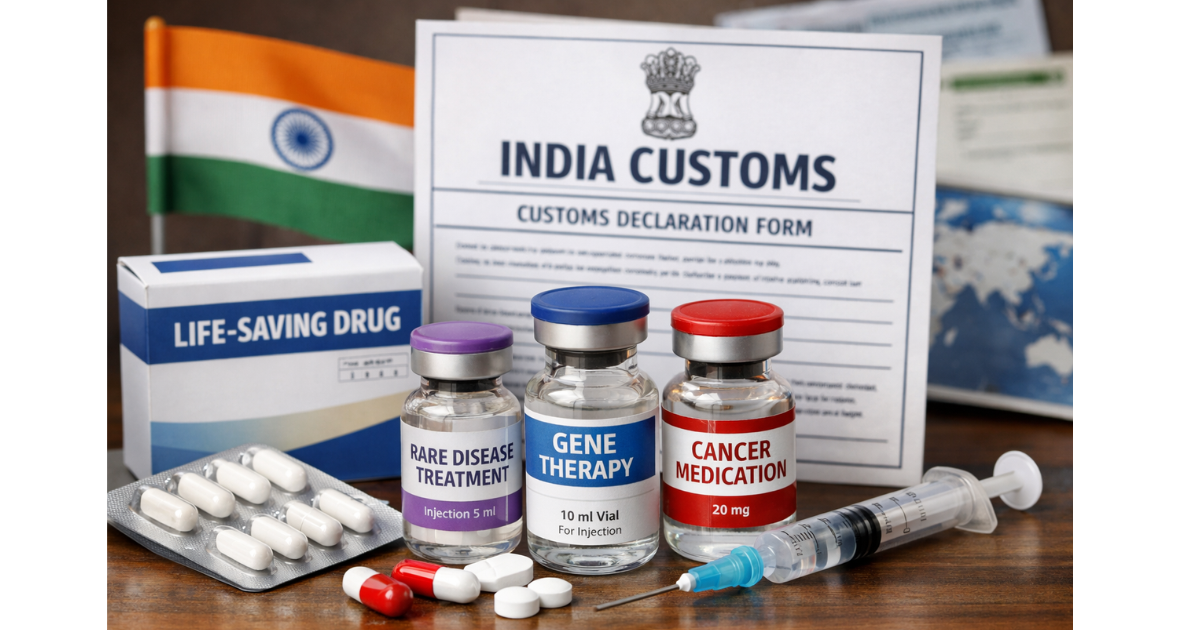
In a significant move with far-reaching implications for patients, families, and the healthcare ecosystem, the government has announced fresh custom duty exemptions on a range of life-saving drugs and medicines used for the treatment of rare diseases. The decision reflects a growing policy focus on reducing the financial burden of critical healthcare and improving access to advanced therapies that are often priced beyond the reach of most households.
For years, patient groups and medical professionals have highlighted how import duties and related levies sharply increase the cost of specialised medicines, many of which are not manufactured domestically. The latest exemption is being seen as a corrective step, aligning public health priorities with fiscal policy.
What the New Exemptions Mean in Practice
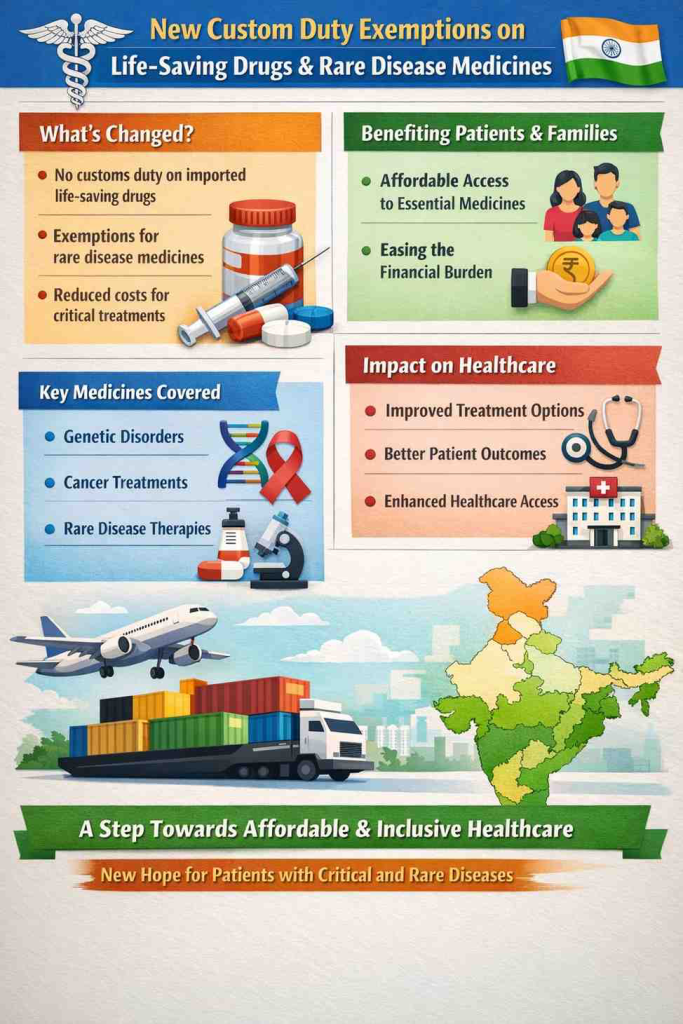
Under the updated customs framework, several imported medicines used to treat rare and chronic conditions will now be allowed into the country without the earlier customs duty burden. These include drugs used for genetic disorders, metabolic diseases, certain cancers, and other conditions that require highly specialised treatments.
By removing customs duty, the government aims to directly lower the landed cost of these medicines. For patients who rely on long-term or lifelong treatment, even a small reduction in price can translate into substantial savings over time. Hospitals and pharmacies are also expected to benefit from smoother procurement and reduced logistical costs.
Relief for Rare Disease Patients and Families
Rare diseases often demand imported drugs, as domestic alternatives are either unavailable or still under development. Many of these medicines are sourced from Europe, the United States, or Japan, and their prices can run into several lakhs or even crores of rupees annually.
For families already grappling with the emotional and physical toll of rare illnesses, the financial stress has been overwhelming. The new custom duty exemptions are expected to ease this pressure, making essential medicines more accessible and reducing delays caused by affordability issues. Patient advocacy groups have welcomed the move, calling it a long-awaited acknowledgment of the unique challenges faced by the rare disease community.
Impact on the Healthcare System
The exemption is also likely to have a positive ripple effect across the healthcare system. Doctors may find it easier to prescribe the most effective treatment without constantly weighing cost constraints. Hospitals that specialise in oncology, genetic disorders, and advanced therapies could see improved treatment outcomes as patients adhere more consistently to prescribed regimens.
From a broader perspective, the policy supports India’s goal of strengthening its healthcare infrastructure while ensuring that economic barriers do not prevent access to essential medicines. It also complements ongoing efforts to improve early diagnosis and treatment of rare diseases.
Balancing Imports and Domestic Manufacturing
While the exemptions focus on imported drugs, policymakers have reiterated that the long-term objective remains the promotion of domestic pharmaceutical manufacturing. India already has a strong generic drug industry, but complex biologics and orphan drugs often require advanced technology and smaller production volumes, making local manufacturing challenging.
The current exemptions are being viewed as a transitional measure—providing immediate relief to patients while encouraging research, innovation, and technology transfer that could eventually lead to affordable domestic production of these critical medicines.
What Citizens Should Know Going Forward
Patients and caregivers are advised to stay informed through hospitals, authorised importers, and healthcare providers about which medicines fall under the new exemption rules. In many cases, proper documentation and prescriptions from recognised medical institutions may still be required to avail the benefits.
Healthcare experts also stress the importance of monitoring whether the reduced duty translates into lower retail prices. Transparency in pricing and timely implementation will be key to ensuring that the intended benefits reach patients on the ground.
A Step Toward More Inclusive Healthcare
The new custom duty exemptions on life-saving drugs and rare disease medicines mark an important shift toward patient-centric healthcare policy. While challenges remain in terms of awareness, implementation, and long-term sustainability, the move sends a clear signal that access to essential treatment is being treated as a national priority.
For thousands of patients and families across the country, this update is more than a policy change—it is a measure of hope, relief, and renewed faith in a healthcare system that is slowly becoming more inclusive and responsive to their needs.
Add indiapioneer.in as a preferred source on google – click here